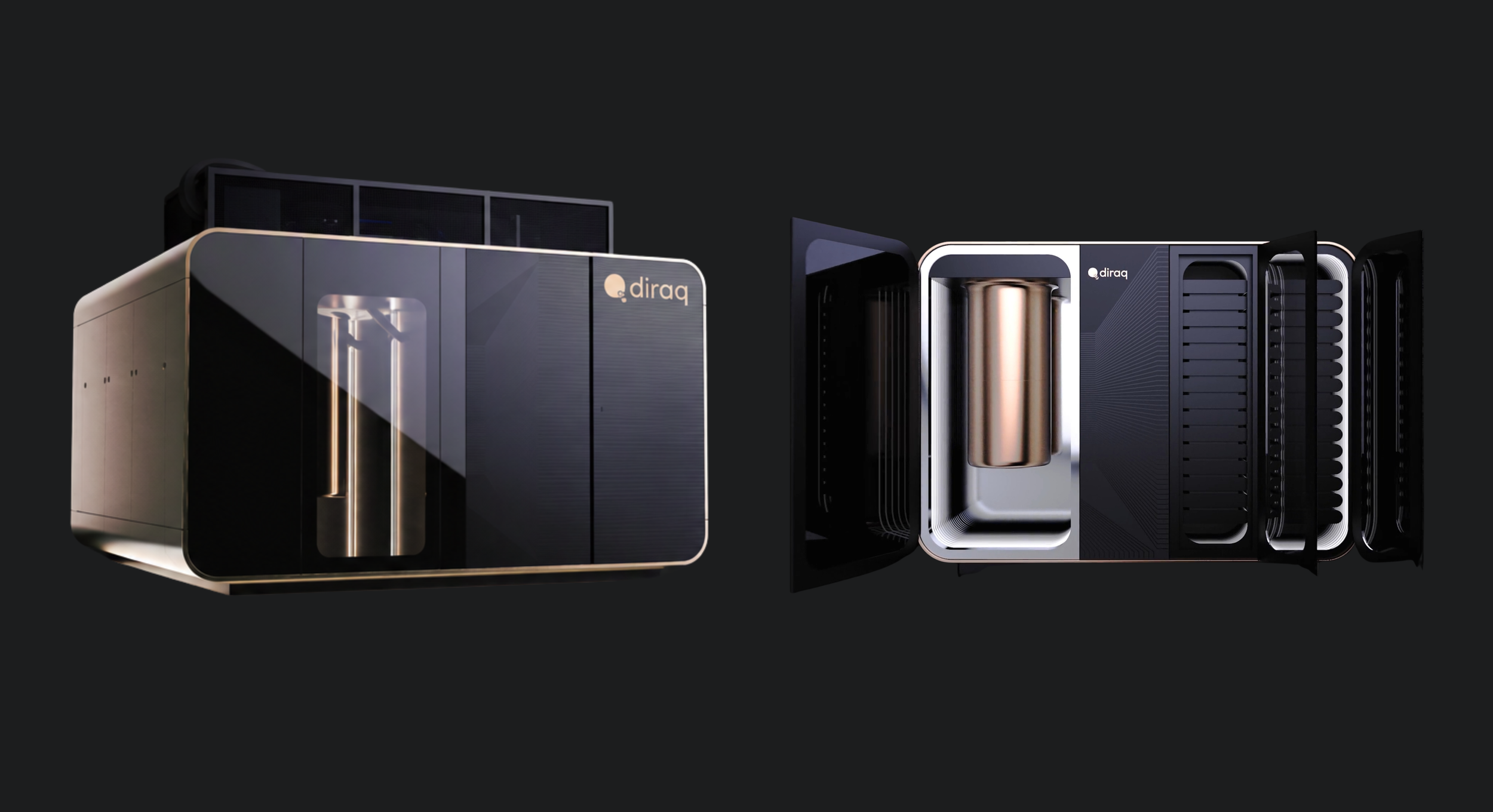
In 2012, researchers at the University of Toronto inadvertently sparked the modern AI era by training the AlexNet neural network on two NVIDIA graphics cards. This unlikely origin, repurposed gaming hardware becoming the engine of artificial intelligence, now informs the strategy of Diraq, a quantum computing company. Unlike other approaches, Diraq designs quantum systems to maintain the same footprint and power envelope as they scale, a key to widespread deployment. And Diraq is positioning itself to follow that same trajectory by focusing on silicon spin qubits and partnering with NVIDIA.
CUDA Launchpad: NVIDIA’s GPU Success Fueled AI Advancement
NVIDIA’s early investment in programmable graphics processing units (GPUs) inadvertently created a foundation for modern artificial intelligence, a parallel Diraq aims to replicate with its quantum computing approach. In 2006, NVIDIA launched CUDA, a general-purpose computing platform included on every graphics card sold, effectively placing programmable parallel computers within reach of a broad audience. Prior to CUDA, using a GPU for tasks beyond graphics required significant adaptation of the problem to fit graphics operations; the platform allowed developers to write code resembling standard programming languages and distribute it across hundreds of cores.
This accessibility was important when AI researchers required substantial parallel computing power, as NVIDIA’s hardware was already present in their labs and its use was well understood. Researchers had been using graphics cards for simulations, spanning fluid dynamics to protein folding, for nearly a decade before CUDA, but the platform broadened the potential applications significantly.
The low entry barrier to widespread use, fueled by affordable and accessible hardware, distinguishes NVIDIA’s success, and is a key consideration for Diraq, the company says. Diraq sees NVIDIA as both a partner and a blueprint for how to change the world through compute.
Diraq’s Silicon Spin Qubits Mirror NVIDIA’s Scalability Strategy
Diraq is connecting its quantum processors with existing GPU compute infrastructure using NVIDIA’s NVQLink and CUDA-Q, mirroring a strategy that unlocked artificial intelligence’s potential. The company’s approach centers on compatibility with established platforms, recognizing that widespread adoption requires integration with tools already in use by the computing world. This focus on accessibility echoes the impact of NVIDIA’s early investment in programmable graphics, which lowered the barrier to entry for researchers exploring parallel computing.
Diraq’s design philosophy prioritizes maintaining a consistent footprint and power envelope as the system scales, a departure from many quantum computing architectures that demand increasingly larger and more energy-intensive infrastructure. Scaling up for Diraq means increasing qubit density per chip, rather than adding more cryostats, a significant factor in positioning the company for broader deployment.
The prototype system currently occupies approximately 16 square meters, largely to facilitate research and development access, but is projected to shrink to around 5 square meters once that access is no longer needed. Error correction is also central to Diraq’s scaling strategy. Collaboration with Iceberg Quantum has yielded a pathway to 1,000 error-corrected logical qubits from 150,000 physical qubits on Diraq’s hardware. This represents a significant reduction from previous estimates, potentially lowering the hardware and energy demands for practical quantum computation.
“It will be the one that’s cheap to run, easy to access, and compatible with the tools that people already use,” a company spokesperson stated, highlighting the importance of affordability and usability. Like the researchers who used NVIDIA graphics cards in 2012 to train AlexNet, Diraq aims to build upon existing technology rather than reinventing the entire system.
NVQLink and CUDA-Q Integrate Diraq Processors with Existing Systems
NVIDIA’s NVQLink and CUDA-Q platforms now directly interface with Diraq’s quantum processors, streamlining integration with existing computational infrastructure. This connection allows Diraq to use the established ecosystem of tools and programming languages already familiar to developers working with NVIDIA’s graphics processing units, according to the company. Diraq’s collaboration with Iceberg Quantum uses NVIDIA CUDA-Q Logical to map error-correction architecture directly onto Diraq’s silicon spin qubits.
Compact Diraq Design Achieves High Logical Qubit Count with Low Power
Diraq’s design choices are yielding a substantial reduction in the number of physical qubits needed for practical quantum computation. This represents roughly a tenfold improvement over previous estimates, directly addressing a major obstacle to scaling quantum systems beyond theoretical demonstrations. The reduction in physical qubit count translates to lower hardware costs and, importantly, reduced energy consumption for maintaining qubit coherence and performing computations.
Unlike many quantum approaches requiring increasingly larger and more energy-intensive infrastructure, Diraq’s systems are designed for practical deployment within existing constraints. A utility-scale Diraq system will occupy just 5 square meters, a footprint comparable to standard server racks. Diraq’s qubits operate at around one kelvin, a significantly warmer temperature than many competing qubit technologies, further minimizing cooling requirements and overall energy demands. This deliberate focus on compatibility and efficiency positions Diraq to broaden access to quantum computing beyond specialized research facilities.

See today’s quantum computing news on Quantum Zeitgeist for the latest breakthroughs in qubits, hardware, algorithms, and industry deals.