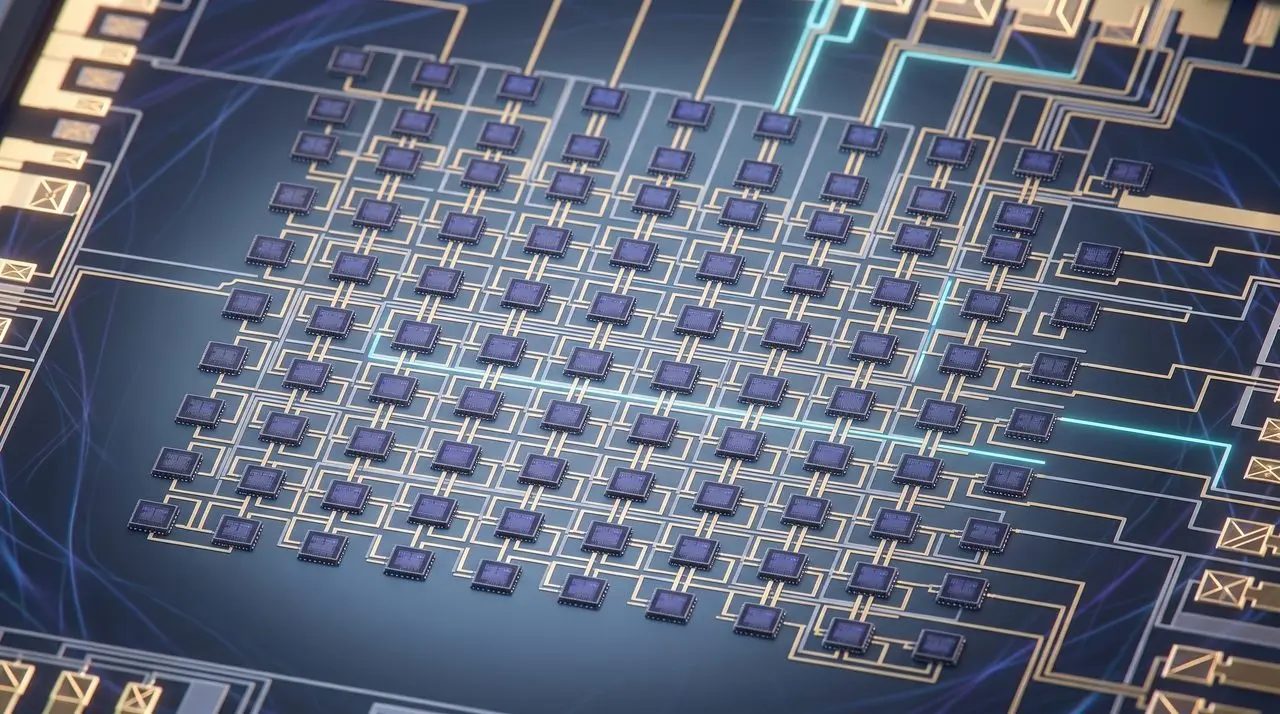
IQM Quantum Computers announced an upgrade program for its Halocene error-correction product line, establishing a pathway to systems exceeding 1,000 qubits. Building on experience integrating quantum computers into high-performance computing centers, IQM’s Halocene now offers a progression toward fault-tolerant quantum computing. The company’s included HPC integration service connects each new system to existing infrastructure, enabling immediate productivity; as Leibniz Supercomputing Centre’s experience demonstrates, “the real value lies in continuity.” New and existing customers can upgrade systems without downtime, preserving software and workflows.
Halocene Roadmap: Scaling IQM Systems to Over 1,000 Qubits
IQM’s Halocene product line now includes a defined upgrade path to systems exceeding 1,000 qubits, a capability the company intends to deliver as it progresses toward fault-tolerant quantum computing. This expansion builds on IQM’s existing integrations of quantum computers within high-performance computing environments. Customers can run hybrid workloads alongside their AI and HPC systems and upgrade to each new Halocene system without downtime as they move toward fault-tolerant quantum computing.
IQM’s HPC integration service is included with every upgrade; this service connects new Halocene systems directly to existing infrastructure, schedulers and GPU platforms. This direct connection allows researchers and companies to immediately run hybrid workloads, combining quantum processing with conventional computing resources, while simultaneously building toward fully error-corrected systems.
The company emphasizes that this approach focuses on smoothly integrating quantum capabilities into established workflows, IQM says. “Solving the physics is only half the challenge. The other half is making quantum computing work commercially, inside the infrastructure organizations already run,” said Dr. Jan Goetz, Co-Founder and CEO of IQM. The ability to upgrade systems without downtime is a key feature of the Halocene roadmap, designed to preserve continuity of software, workflows and the skills of personnel.
IQM installs new Halocene systems while the current ones keep running, and removes the previous system once the new one is in service. In each case, software, workflows and skills were carried forward from one system to the next. IQM’s experience in integrating quantum computers into supercomputing centers is central to this upgrade strategy.
The Leibniz Supercomputing Centre (LRZ) has integrated four IQM systems into its infrastructure, consistently carrying forward software, workflows and expertise with each new installation. This continuity is a deliberate design choice, reflecting the needs of organizations investing in long-term quantum computing capabilities.
“Integrating quantum computers into our supercomputing environment has shown us that the real value lies in continuity,” said Dr. Tobias Guggemos, Quantum Technologies Team Lead at LRZ. “Each IQM system we have added has built on the integration, software and expertise we developed with the previous one, so our users keep working while the technology moves forward. An upgrade path designed around that continuity is what supercomputing centers need on the way to fault-tolerant quantum computing.” The Halocene upgrade program allows organizations to begin with a 150-qubit system, develop internal teams and intellectual property, and then scale toward fault-tolerant quantum computing on the same platform.
IQM introduced Halocene in November 2025, starting with a 150-qubit system and the LUMI AI Factory, coordinated by CSC, IT Center for Science, has since chosen it for LUMI-IQ which will be connected to the upcoming LUMI-AI supercomputer, according to the company. IQM reports having completed 10 integrations of quantum computers with supercomputing systems since 2021, a figure that exceeds that of any other manufacturer.
No one has integrated or upgraded more quantum computers than IQM, and that experience is what makes this path to fault tolerance work,” said Dr. Goetz. The company is showing the Halocene upgrade program at SC26 in Chicago, at booth #1243, providing a detailed look at the planned progression toward larger, more capable quantum systems.
Solving the physics is only half the challenge. The other half is making quantum computing work commercially, inside the infrastructure organizations already run.
Dr. Jan Goetz, Co-Founder and CEO of IQM

See today’s quantum computing news on Quantum Zeitgeist for the latest breakthroughs in qubits, hardware, algorithms, and industry deals.