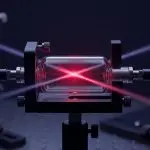
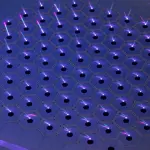
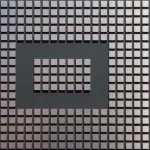
The U.S. Department of Commerce will provide Atom Computing with up to $100 million through the CHIPS and Science Act to advance neutral-atom quantum computing hardware. This research and development funding focuses on a critical challenge for the field: manipulating and validating the performance of tens of thousands of qubits. The investment supports initiatives for semiconductors and technology needed for commercially viable quantum computers, including systems integration.
CHIPS Act Funds Atom Computing’s Neutral-Atom Qubit Development
The funding will focus on scaling quantum hardware to tens of thousands of qubits, with the award finalized by the Department of Commerce. The $100 million research and development award, provided through the CHIPS and Science Act, directly supports initiatives to manipulate and validate the performance of these qubits, a critical step toward practical quantum computation. This investment targets hardware development and systems integration, essential for building commercially viable neutral-atom quantum computers.
The company’s efforts will address challenges in controlling a significantly larger number of qubits than currently demonstrated, pushing the boundaries of quantum system design. This research and development award signifies government backing for neutral-atom quantum computing, a technology that uses individual neutral atoms as qubits, and intends to accelerate the development of utility-scale quantum computers with this support.



See today’s quantum computing news on Quantum Zeitgeist for the latest breakthroughs in qubits, hardware, algorithms, and industry deals.