Quantum Cyber reports its first revenue of approximately $1.0 million, a figure driven by a concentrated customer base with four clients each contributing between 10 and 15 percent of the total. Alongside this initial financial milestone, Chief Executive Officer David Lazar personally committed $8.0 million to the company on November 11, 2026, signaling strong confidence in its future, Quantum Cyber says.
“The third quarter of 2026 is the quarter in which Quantum Cyber crossed from a pre-revenue strategy into an operating company,” Lazar stated, as the company also completed installation of an 80-unit 3D printing production farm in its Bridgeport facility this August.
$1.0 Million Revenue Marks Transition to Autonomous Defense Operations
This expansion of physical infrastructure supports the company’s stated goal of becoming a vertically integrated autonomous defense manufacturer, moving beyond platform development and into production. The facility, acquired in July 2026, now houses equipment intended for future drone manufacturing, with the company anticipating initial drone sales in early 2027 contingent on completing production line build-out and prototype development. This infusion of capital is designed to support the expansion of manufacturing capabilities and the ongoing development of the Project LightShift quantum antenna program, broadening its potential applications.
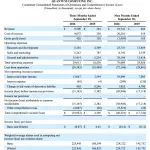
The company’s quarterly report for the period ending September 30, 2026, revealed $966,833 in revenue, a figure distributed across three product lines, electrical components, tooling and general metal stamping, and concentrated among four customers. Each of these customers accounted for between 10% and 15% of the total quarterly revenue, representing a degree of customer concentration that could present risks for the young company. The company views this shift as a key step in its vertical integration strategy, establishing a foundation of inventory, accounts receivable, and manufacturing assets.
Beyond financial and manufacturing developments, Quantum Cyber also secured an expanded license for its Project LightShift quantum antenna technology on November 6, 2026. The amendment to the existing license agreement now encompasses unmanned surface and underwater vehicles, maritime platforms, homeland security and law enforcement applications, significantly broadening the potential market for the technology.
This expansion positions Quantum Cyber to address a wider range of autonomous platform applications, extending beyond aerial drones into maritime and terrestrial security solutions, according to the company. The company also resolved a legacy legal dispute with Boustead Securities, LLC, settling the matter for $250,000 and terminating a 2021 engagement letter. This resolution removes a potential obstacle to future financing activities and allows Quantum Cyber to focus on executing its growth strategy.
As of September 30, 2026, the company reported total shareholders’ equity of approximately $16.2 million, a substantial increase from $0.6 million at the end of 2025, reflecting approximately $15.2 million in proceeds from warrant exercises. “We generated our first revenue, we installed the first production equipment at our Bridgeport facility, and we resolved a legacy legal claim that had affected our capital structure,” Lazar explained.
“In the Company’s view, each of these is a building block toward the vertically integrated autonomous defense manufacturer we have described to the market.” Despite entering an at-the-market offering facility on October 9, 2026, Quantum Cyber had not sold any shares under the agreement as of November 12, 2026, indicating a reliance on existing funding sources and warrant exercises to fuel its expansion. The company believes it is entering 2027 as an operating, revenue-generating business, equipped with the necessary manufacturing capacity, technology licenses and capital to pursue its next phase of development.
The third quarter of 2026 is the quarter in which Quantum Cyber crossed from a pre-revenue strategy into an operating company.
David Lazar



See today’s quantum computing news on Quantum Zeitgeist for the latest breakthroughs in qubits, hardware, algorithms, and industry deals.