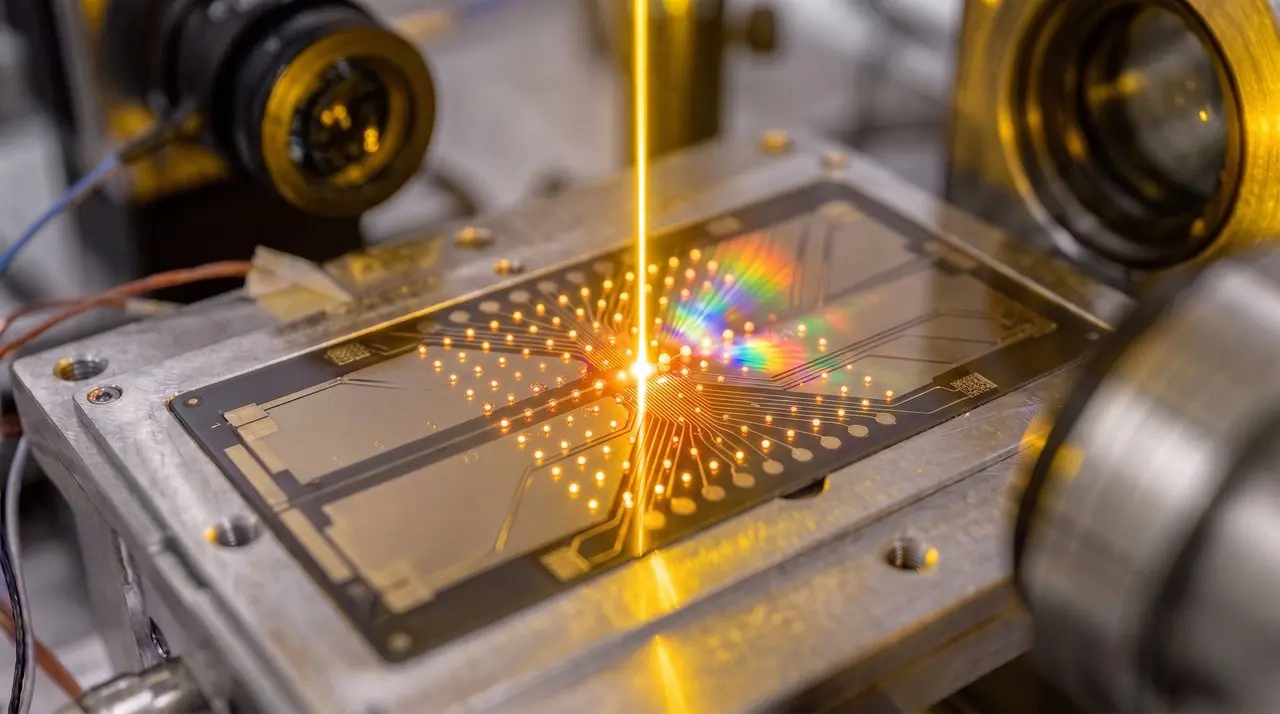
Paderborn University’s Institute for Photonic Quantum Systems will host the Quantum Photonics Spotlight 2026, from September 28 to October 2, at the Heinz Nixdorf MuseumsForum congress centre. The event focuses on the entire development chain of photonic quantum technologies, from theory to practical applications, and highlights a critical but often overlooked aspect of quantum research: detector selection.
According to organizers, choosing the wrong detector isn’t immediately apparent; “choosing badly is expensive in a way that only becomes visible months later, in the data.” The conference emphasizes that “the source sets what the detector has to resolve, and the measurement sets what counts as good enough,” shifting the focus from finding the “best” detector to one perfectly suited for the experiment.
Detector selection hinges on experimental parameters, not simply acquiring the highest-performing component. Pushing detection efficiency invariably increases the dark count rate, a trade-off demanding careful consideration of the entire measurement chain. Reducing timing jitter, which is important for resolving events, necessitates constraints on readout electronics, impacting overall system design and cost.
Extending the usable wavelength range alters cryogenic requirements, shifting expense from initial purchase to ongoing operation. Léa Carmagnolle and Jérémie Diboine will be available at the conference to discuss these trade-offs, emphasizing that bringing a detailed understanding of individual setup constraints, wavelength, count rate, timing resolution, and cryogenic budget yields more meaningful results than datasheet comparisons.



See today’s quantum computing news on Quantum Zeitgeist for the latest breakthroughs in qubits, hardware, algorithms, and industry deals.