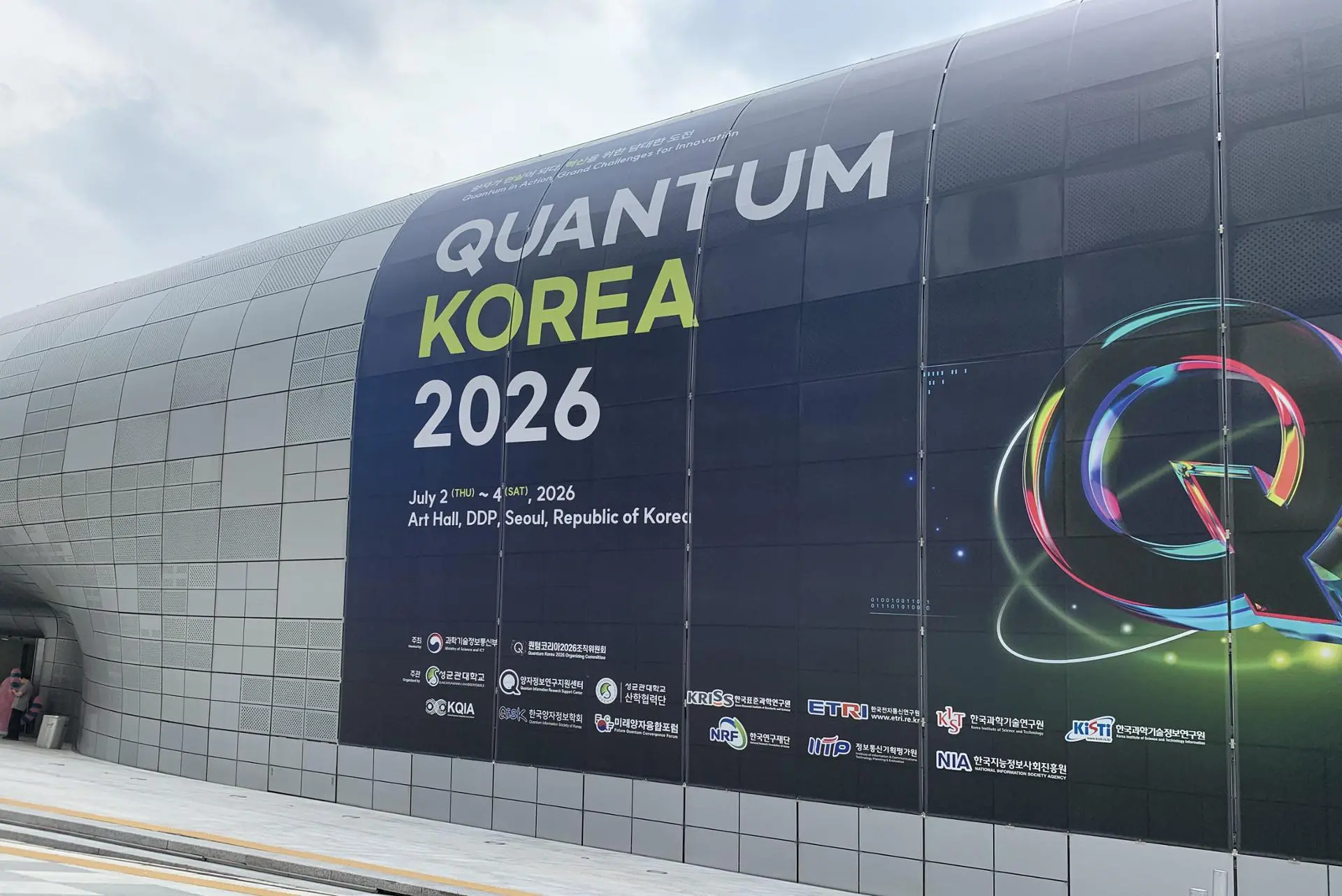
A focused Dutch national effort saw six leading quantum organizations, QDNL, TNO, QuTech, Qblox, QuantWare and Delft Circuits, return to Quantum Korea 2026, signaling a deepening commitment to collaboration with Korea beyond a single event. The Netherlands, alongside delegations from Australia and Canada, utilized embassy-backed pavilions at the Seoul event to foster research partnerships and explore business opportunities within Korea’s rapidly developing quantum ecosystem. The Dutch delegation operated a dedicated Netherlands Lounge specifically for meetings with Korean partners, facilitating concrete deals rather than simply showcasing technology. “We identified Korea as an interesting country in quantum technology,” said Peter Wijlhuizen, head of Innovation, Technology and Science at the Dutch Embassy in Seoul, recognizing the nation’s growing investment and infrastructure in the field. This marks the second consecutive year of government-supported participation for the Netherlands, building on positive outcomes from the 2025 event.
The Netherlands is demonstrating a sustained and focused commitment to quantum technology collaboration with Korea, returning to Quantum Korea for a second consecutive year with a government-supported program. Continued support from the Netherlands Enterprise Agency reflects the positive outcomes observed from the initial participation in 2025, with a significant number of organizations returning to follow up on existing contacts and pursue new opportunities. For QuTech, a Dutch research institute, Korea’s strength extends beyond theoretical research into crucial manufacturing capabilities. “We have developed many new ideas in quantum computing and networking, but now we are reaching the stage where scaling becomes critical,” said Milan Verbrugge, senior communication adviser for science and public outreach at QuTech. Verbrugge emphasized Korea’s expertise in semiconductor manufacturing as essential for translating quantum designs into tangible, scalable technologies, and noted that last year’s event already yielded concrete results, including visits from Korean researchers to QuTech’s laboratories and the expectation of deeper research collaborations.
We saw the government’s investments, research projects and infrastructure being built, and realized Quantum Korea was the biggest event where we could connect with the Korean ecosystem.
Peter Wijlhuizen, head of Innovation, Technology and Science at the Dutch Embassy in Seoul
Following momentum established in 2025, both Australia and Canada significantly broadened their presence at Quantum Korea 2026, deploying official national delegations to foster deeper ties within the rapidly evolving Korean quantum field. The Australian delegation comprised twelve organizations, including Quantum Australia, Q-CTRL, and several prominent universities like the University of Sydney and RMIT University, all seeking to solidify research and commercial partnerships. Organized by the Australian Trade and Investment Commission in collaboration with Quantum Australia, the group aimed to leverage Korea’s strengths in advanced manufacturing and engineering. Canada mirrored this expansion, bringing a delegation of fifteen entities, companies, nonprofits, and research institutions such as Anyon Systems and Applied Quantum Materials, to the event at Dongdaemun Design Plaza. Canadian Ambassador to Korea, Philippe Lafortune, articulated the strategic rationale behind this increased collaboration in a delegation booklet, stating, “Canada brings globally recognized leadership in quantum research, talent and early-stage innovation, while Korea offers world-class expertise in advanced manufacturing, engineering excellence and industrial scale.” He emphasized the potential for synergistic advancements in areas ranging from quantum-secure communications to next-generation semiconductors.
We know how to design quantum processors, but Korea has the production capabilities that can help make the quantum future a reality.
Milan Verbrugge, senior communication adviser for science and public outreach at QuTech
This focus on production capabilities explains QuTech’s particular interest in Korea, a nation renowned for its semiconductor manufacturing prowess. The institute views Korean expertise as essential for translating processor designs into tangible quantum systems. “Korea is extremely interesting because of its expertise in semiconductor manufacturing; we know how to design quantum processors, but Korea has the production capabilities that can help make the quantum future a reality,” Verbrugge stated, outlining a clear division where Dutch innovation complements Korean industrial strength. Verbrugge noted that Korean researchers had already visited QuTech’s laboratories in the Netherlands, suggesting a burgeoning exchange of knowledge and personnel. He expressed optimism that these initial connections would mature into sustained, collaborative research efforts, furthering the development of quantum computing through combined expertise and resources. This sustained engagement, with many organizations returning from the 2025 event, underscores a deepening commitment to Korean-Dutch quantum cooperation.
We have developed many new ideas in quantum computing and networking, but now we are reaching the stage where scaling becomes critical.
Milan Verbrugge, senior communication adviser for science and public outreach at QuTech


See today’s quantum computing news on Quantum Zeitgeist for the latest breakthroughs in qubits, hardware, algorithms, and industry deals.