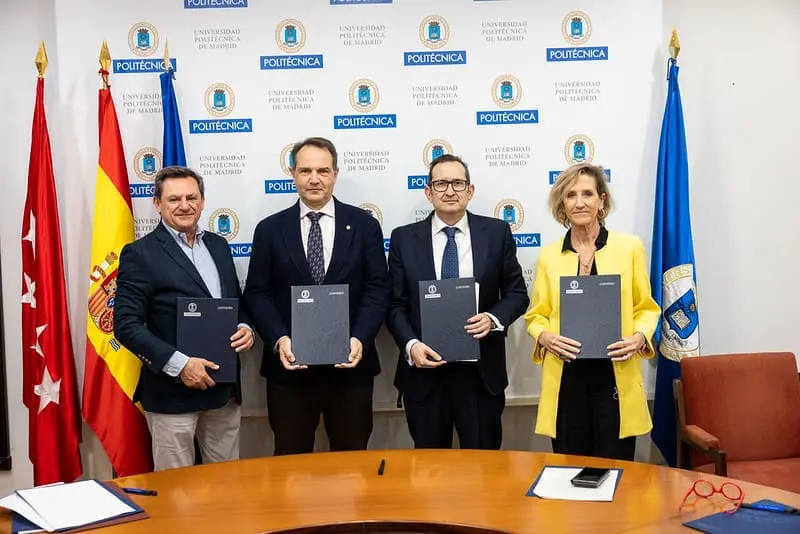
Telefónica and the Polytechnic University of Madrid (UPM) are strengthening a partnership lasting more than 12 years with the establishment of a new Joint Research Unit dedicated to quantum technologies. Based at the Higher Technical School of Computer Engineers at UPM, and linked to the Quantum Information group, GIICC, the unit builds upon a collaborative model already in place for data communications research. This second Joint Research Unit between the two entities aims to consolidate efforts in an emerging field where Telefónica and UPM have contributed to key European projects like CIVIQ and OPENQKD, supporting Europe’s digital sovereignty. “This agreement demonstrates Telefónica’s commitment to being the best way for companies, citizens and government agencies to access digital technologies,” said Juan José Marfil, director of Network, IT and TV at Telefónica.
Telefónica & UPM Formalize Quantum Technology Joint Research Unit
This formalized Joint Research Unit (JRU) builds upon an existing alliance stretching back more than 12 years, demonstrating a sustained commitment to advanced communications. The new unit is not an isolated venture; it represents Telefónica & UPM’s second such collaboration, following a previously established JRU focused on data communications, indicating a successful partnership model being expanded into the quantum field. This strategic positioning within a recognized research group suggests a deliberate effort to leverage existing expertise and infrastructure. Telefónica and UPM have jointly participated in several key European quantum communications projects, including CIVIQ, OPENQKD, DISCRETION, and EuroQCI-Spain, contributing to the strengthening of Europe’s technological capabilities and progress toward greater digital sovereignty. This involvement highlights the collaboration’s established role in shaping the European quantum landscape.
The partnership extends beyond academic research, actively integrating innovation through startups and SMEs like Qoolnet, a UPM spin-off, and QCentroid, a company specializing in quantum computing platforms. Óscar García Suárez, rector of the Polytechnic University of Madrid, states: “Quantum technologies are at the center of a new wave of innovation; with this agreement, UPM reinforces its leadership in the transfer of these technologies to industry.” By combining corporate resources with academic rigor and entrepreneurial ventures, the JRU aims to position Spain as a key player in the rapidly evolving field of quantum communications, both within Europe and globally.
European Projects Drive Collaboration: CIVIQ, OPENQKD, EuroQCI-Spain
The establishment of this second JRU signifies a deliberate strategy to leverage combined expertise for initiatives funded by the European Union, facilitating the development of impactful projects and accelerating knowledge transfer between academic research and commercial application. This model allows both entities to function as a unified team, streamlining efforts and maximizing resources in a rapidly evolving field. Beyond project participation, both organizations are actively involved in shaping the future of these technologies through international standardization processes, particularly within the European Telecommunications Standards Institute (ETSI).
Quantum technologies are at the centre of a new revolution; with this agreement, UPM reinforces its leadership in the transfer of these technologies to industry.
Óscar García Suárez, rector of the Polytechnic University of Madrid
Qoolnet & QCentroid Expand Quantum Communications Ecosystem
The creation of this JRU builds upon a sustained partnership of more than 12 years between Telefónica and UPM, demonstrating a long-term commitment to advanced communications technologies. This isn’t the first collaborative effort between the two organizations; a previous Joint Research Unit already focuses on data communications, establishing a proven model for successful research and development partnerships. Telefónica’s involvement in key projects like the deployment of a private experimental fibre network in Madrid, known as TEFQCI, and the MADQCI ecosystem has already yielded results in Europe, and this new unit aims to accelerate that progress.
This agreement demonstrates Telefónica’s innovative profile in fulfilling its purpose of being the best way for companies, citizens and government agencies to access digital technologies.
Juan José Marfil, director of Network, IT and TV at Telefónica
See today’s quantum computing news on Quantum Zeitgeist for the latest breakthroughs in qubits, hardware, algorithms, and industry deals.