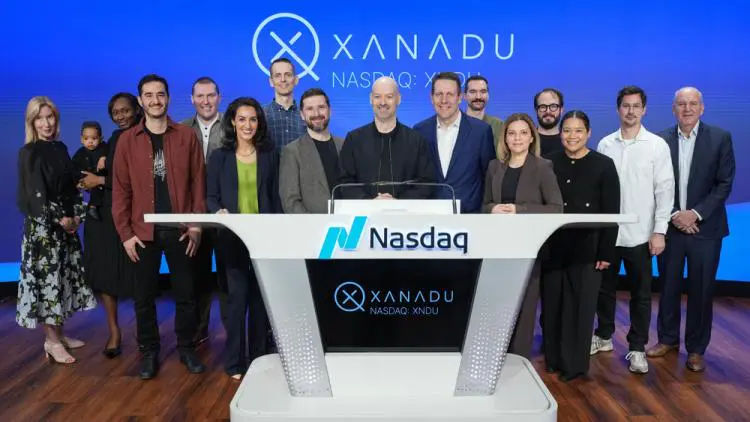
Christian Weedbrook stood at the Nasdaq MarketSite in Times Square on Friday morning and rang the opening bell. It was a moment that crystallised a decade of work building a quantum computing company around an idea that many in the industry once considered a long shot. Xanadu Quantum Technologies, the Toronto-based firm Weedbrook founded in 2016, began trading on both Nasdaq and the Toronto Stock Exchange under the ticker XNDU, becoming the first publicly listed pure play photonic quantum computing company in the world.
The listing followed the completion of a business combination with Crane Harbor Acquisition Corp., a special purpose acquisition company, alongside a US$275 million PIPE financing. The deal delivered approximately US$302 million in gross proceeds to Xanadu, lower than the initial US$500 million target due to SPAC redemptions, but still a substantial war chest for a pre-revenue quantum hardware company. The pro forma enterprise value sits at roughly US$3.1 billion with a market capitalisation of US$3.6 billion. Shares opened on the TSX at around C$14 in early trading.
Differentiated Market Positioning in Quantum Space
For investors already watching the quantum space, Xanadu’s arrival adds a genuinely differentiated player to the public roster. The five existing publicly traded quantum companies all pursue different technological approaches, and Xanadu is the only one betting on photonics at this scale. Wedbush Securities analyst Antoine Legault pointed out that the SPAC route allowed Xanadu to avoid the drawn-out roadshow process that can take more than a year, a meaningful consideration given how quickly sentiment shifts in emerging technology sectors. The timing may prove to be shrewd. Quantum computing has emerged as one of the dominant technology narratives heading into the second half of 2026, and public market appetite for exposure to the sector shows no sign of cooling.
Execution Challenges and Future Roadmap Goals
The question now is execution. Xanadu has a clear technical roadmap, a well-funded balance sheet and a goal it has stated publicly more than once: to build the world’s first quantum data centre by 2030. Revenue remains limited and there are no guarantees that enterprise customers will pay at scale for photonic quantum computing. But Weedbrook and his team have spent ten years converting scepticism into milestones, from founding to quantum advantage to a public listing. The next chapter, turning a research-stage quantum computer into a commercial product, will be the hardest yet. As Weedbrook put it at the bell ceremony, today is a moment to appreciate, but very quickly it is back to work.
Disclaimer. This article is for informational purposes only and does not constitute investment, financial or professional advice. The quantum technology industry evolves rapidly and information may become outdated. Always conduct your own research and consult qualified advisers before making investment decisions. Investing in quantum computing companies involves significant risk, including the potential loss of your entire investment, and past performance is not indicative of future results.




See today’s quantum computing news on Quantum Zeitgeist for the latest breakthroughs in qubits, hardware, algorithms, and industry deals.