Recent advances in machine learning are offering new tools to explore the complex world of materials science, and researchers are increasingly turning to generative neural networks for insights into many-body systems. Tarun Advaith Kumar from the University of Waterloo, along with Leon Balents from the Kavli Institute for Theoretical Physics and Timothy H. Hsieh from the Perimeter Institute for Theoretical Physics, and colleagues, present a novel approach to calculating the finite-temperature properties of materials. Their work introduces an autoregressive framework, building on established methods, to model thermal states, and addresses inherent numerical instabilities that arise when using these powerful neural networks. By carefully controlling the evolution of the system, the team demonstrates that this new method, termed autoregressive typical thermal states, accurately predicts thermal behaviour, offering a potentially scalable path towards simulating complex materials and understanding their properties.
Autoregressive Networks Model Quantum Thermal Properties
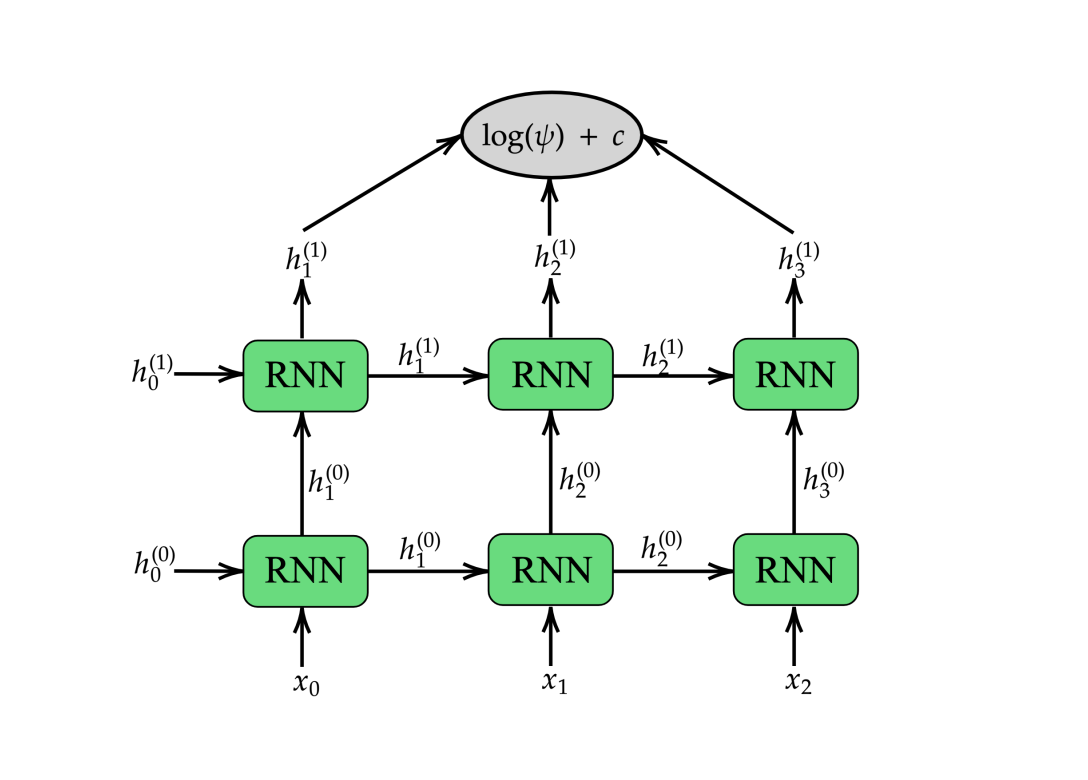
Researchers are now using techniques from machine learning, specifically autoregressive neural networks, to simulate the behaviour of complex quantum systems at finite temperatures. This work addresses a long-standing challenge in quantum physics: accurately calculating thermal properties, which describe how systems behave when energy is added, is often computationally demanding. The team’s approach builds upon the minimally entangled typical thermal states (METTS) algorithm, a method for representing the statistical properties of a quantum system using an ensemble of pure states.
Previous attempts to combine METTS with autoregressive neural networks suffered from numerical instabilities during simulations, hindering accurate calculations. The researchers overcame this obstacle by introducing two key modifications: a unitary operation to refine the initial ensemble of states and a threshold to control their evolution during the simulation. These adjustments effectively stabilized the process, preventing runaway behaviour and ensuring reliable results.
The team validated their improved algorithm by applying it to the spin 1/2 quantum XY model, a well-understood system for which exact solutions are known. The results demonstrate that the autoregressive typical thermal states accurately predict the thermal behaviour of this model, matching the established exact solutions. This represents a significant advancement, as it demonstrates the potential of autoregressive neural networks to tackle previously inaccessible problems in quantum simulation.
Importantly, this method offers a promising alternative to traditional quantum simulation techniques like quantum Monte Carlo or tensor networks, potentially expanding the range of quantum systems that can be studied numerically. By leveraging the expressive power and flexibility of neural networks, researchers can now explore thermal properties with greater efficiency and accuracy, opening new avenues for understanding complex quantum materials and phenomena. The success of this approach suggests that similar techniques could be applied to a wider range of quantum systems, paving the way for breakthroughs in materials science and fundamental physics.
👉 More information
🗞 Autoregressive Typical Thermal States
🧠 ArXiv: https://arxiv.org/abs/2508.13455



See today’s quantum computing news on Quantum Zeitgeist for the latest breakthroughs in qubits, hardware, algorithms, and industry deals.