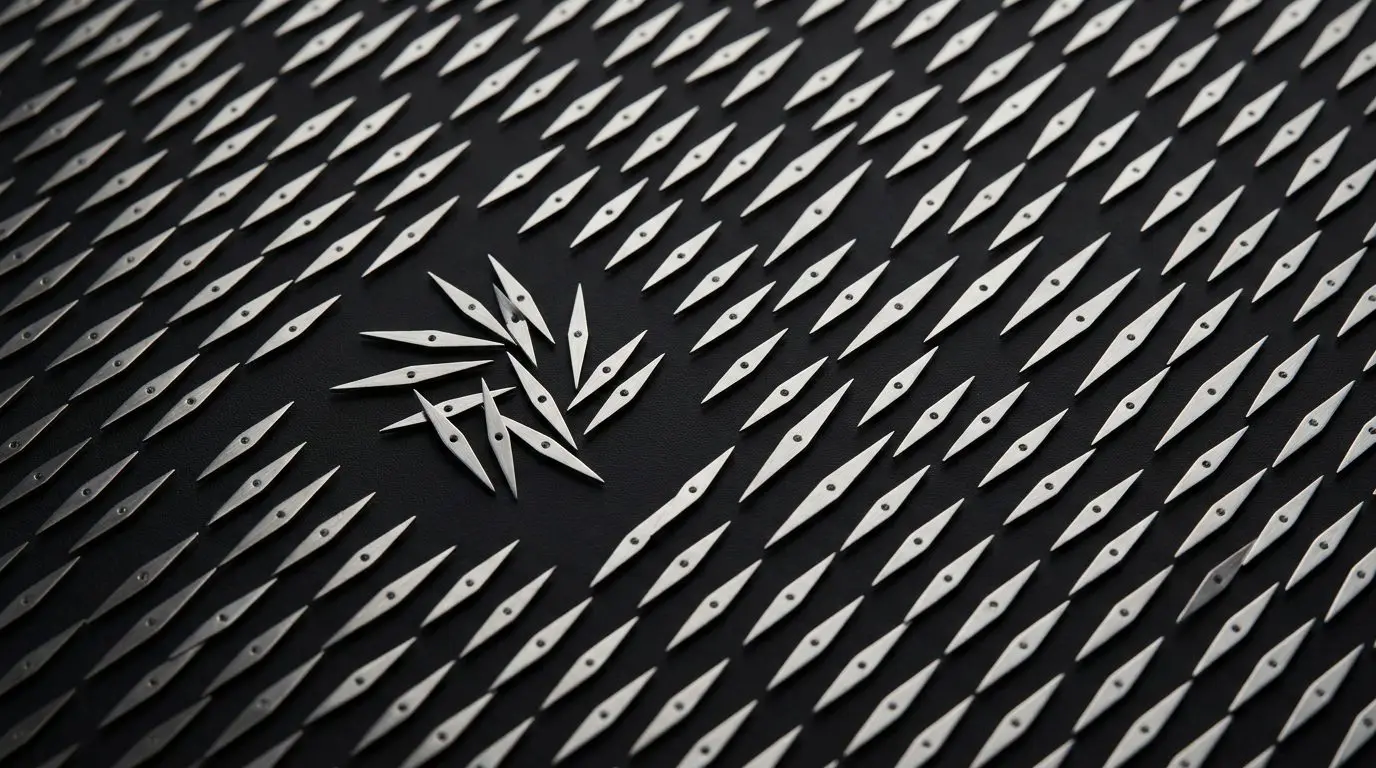
Generating unitary designs, mathematical tools for complex calculations in quantum physics, typically requires randomness or extensive system modification. A single local defect within an otherwise orderly quantum system can create these designs using a specific protocol called two-Pauli kicks with temporal sampling. Even a single disruption within an orderly quantum system generates behaviour usually associated with chaotic systems. Introducing controlled ‘defects’ breaks predictable patterns and creates useful properties called unitary k-designs using only minor disturbance.
The team achieved these designs utilising one local defect, simplifying previous methods which required more extensive disruptions or fully disordered systems. The University of Geneva researchers demonstrated how introducing controlled ‘defects’ disrupts predictable patterns and creates what are known as unitary k-designs using minimal disturbance.
A unitary k-design acts like a mathematical benchmark used to assess randomness in a quantum system; it is similar to checking if shuffling cards produces genuinely unpredictable sequences. This reveals that extensive disruption isn’t necessary for these designs, challenging previous assumptions about the need for fully disordered systems or many random operations. Importantly, this method utilises one local defect, a localised imperfection akin to adding dye into water which alters its colour locally but doesn’t affect the edges, simplifying existing techniques.
Localised Defects Enable Unitary Two-Design Generation in Spin Chains
A single local defect generates approximate unitary two-designs, representing an improvement over prior methods which required extensive system modification for similar results. Previously unattainable designs are now possible even with weak defects thanks to this new approach, circumventing limitations imposed by purely integrable systems and boundary conditions. Integrability obstructs the formation of these mathematical tools used in quantum physics calculations; introducing a bulk defect removes this obstruction, enabling design creation where it was previously impossible.
The team employed temporal sampling alongside a two-Pauli-kick protocol on XXZ spin chains featuring a localised imperfection away from boundaries, while also identifying analytical selection rules governing Pauli kicks during their investigation. A defect of any size generates approximate unitary two-designs from quantum systems normally restricted by integrability using XXZ spin chains with a single imperfection introduced into its structure. Analytical selection rules were derived to govern how designs form based on symmetry and domain wall counts, pinpointing specific conditions needed for successful design creation within the system.
An exhaustive search revealed numerous sequences of operations applied to the spins capable of producing designs in chaotic regimes, a feat impossible in integrable systems. Finite size scaling analysis indicates performance improves as the system grows larger, even with weak defects meaning minimal disruption is required.
Deterministic manipulation via Pauli kicks generates approximate unitary transformations
The two-Pauli-kick protocol was central to these findings; it applies precisely timed sequences of quantum operations called Pauli kicks. This technique repeatedly applies combinations of ‘kicks’ to a system’s constituent particles, effectively nudging it along different pathways within its possible states.
Temporal sampling then measures the average effect of these repeated applications over time, revealing whether the resulting behaviour mimics true randomness or remains predictable. Such an approach sidesteps the need for genuinely random processes, difficult to implement in practice, and instead relies on carefully controlled manipulations of a deterministic system, akin to building an approximation of unpredictability into a perfectly ordered set of billiard balls.
Single Internal Defects Generate Quantum Randomness Comparable To Boundary Imperfections
Generating complex quantum behaviour typically demands either inherently random systems or substantial disruption of natural order; however, minimal disturbance can suffice. These findings challenge established thinking by demonstrating how approximate unitary k-designs emerge from a system disrupted by just one localised imperfection. Previous work focused on boundary defects positioned at the edges of materials, but internal imperfections could produce comparable results. Demonstrating this behaviour within the core structure of a material rather than at its edges is vital because it offers new avenues for controlling and harnessing quantum randomness.
The researchers Vrije Universiteit Brussel and The International Solvay Institute have shown that introducing only one localised defect into an otherwise orderly quantum system generates behaviour typical of chaotic systems. Specifically, this enables creation of approximate unitary k-designs using a two-Pauli-kick protocol combined with temporal sampling applied to XXZ spin chains.
The research demonstrated that a single internal defect is sufficient to generate approximate unitary k-designs within an integrable quantum many-body system. This means controlled disorder inside a material can produce the same type of complex randomness previously thought to require significant disruption or boundary imperfections. Using a two-Pauli-kick protocol and temporal sampling on deterministic XXZ spin chains, researchers identified Pauli strings which facilitate design formation dependent on coupling and domain wall count. The authors suggest this mechanism remains effective as the size of the system increases.
👉 More information
🗞 Designs without disorder: unitary k-designs from a single-site bulk defect
✍️ Samudra Sur and Pratik Nandy
🧠 ArXiv: https://arxiv.org/abs/2609.16140




See today’s quantum computing news on Quantum Zeitgeist for the latest breakthroughs in qubits, hardware, algorithms, and industry deals.