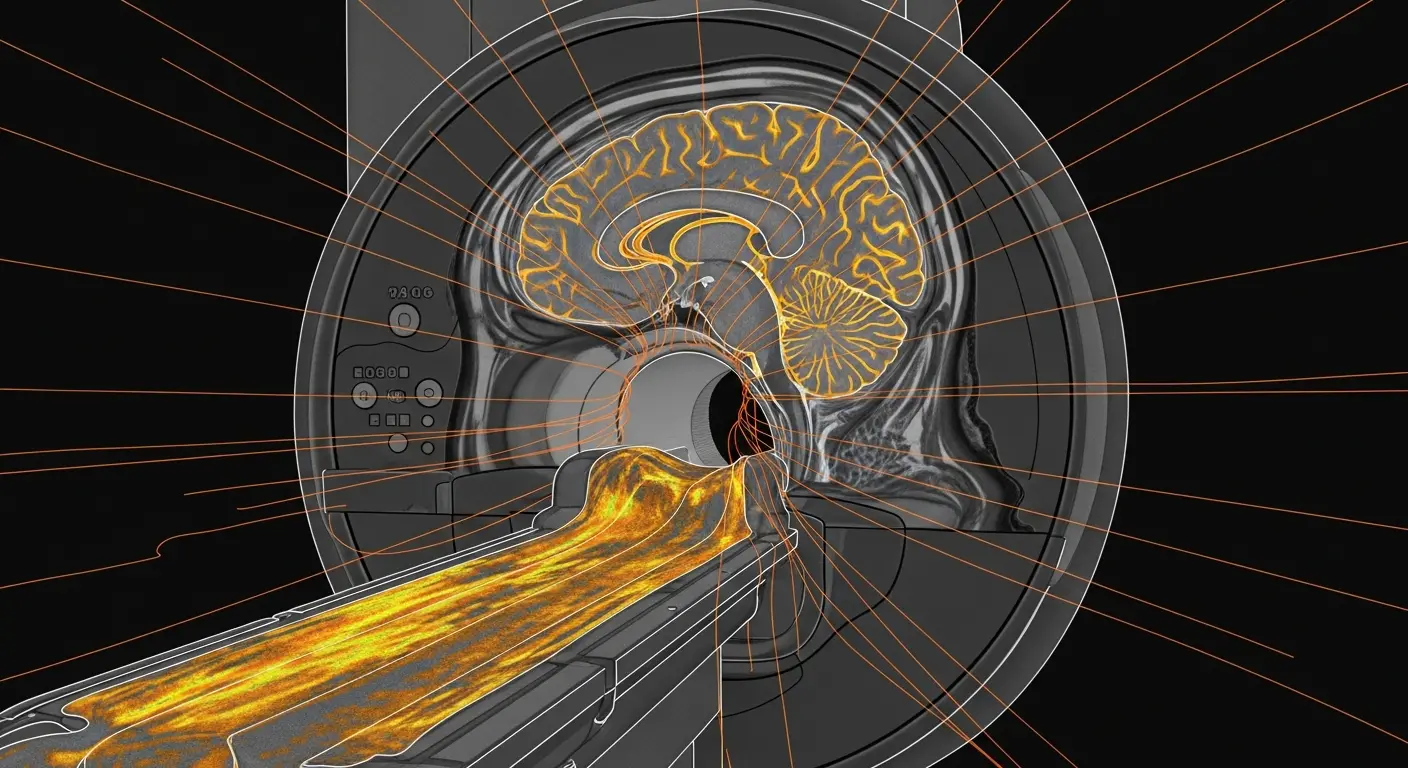
The Sciences and Exploration Directorate is developing an X-ray Quantum Calorimeter under the internal designation Code 662, revealing a level of focused project management rarely detailed in public announcements. This instrument is not being built in isolation; the project draws support from multiple directorate offices including the Science Proposal Support Office (Code 605), the Computational & Information Sciences and Technology Office (Code 606), and the Earth Sciences Division (Code 610). Within CISTO, four sub-offices, Networks and IT Security, High Performance Computing, Data Science, and the Scientific Visualization Studio, are contributing to the effort, highlighting the complex technological infrastructure required for data processing. This collaborative approach suggests the X-ray Quantum Calorimeter demands significant resources and expertise beyond simple hardware construction.
Sciences and Exploration Directorate Organization
This is not simply a hardware build, but a carefully monitored initiative drawing upon expertise from multiple offices across the directorate. This broad departmental involvement underscores the significant resource allocation dedicated to a single instrument, signaling a strategic prioritization within the directorate’s portfolio. Examining the internal divisions within Code 606, or CISTO, further reveals the depth of this collaboration. This granular breakdown highlights the substantial technological infrastructure and data processing demands inherent in the instrument’s operation. The project’s reliance on advanced technological infrastructure and data processing capabilities is evident in the internal divisions within Code 606, or CISTO, demonstrating the substantial demands inherent in the instrument’s operation. The instrument represents a convergence of diverse scientific and engineering disciplines, meticulously coordinated through the Sciences and Exploration Directorate’s organizational framework.
Earth Sciences Division Laboratories
The Earth Sciences Division at Goddard Space Flight Center maintains a complex network of specialized laboratories, extending far beyond simple research spaces. Internal designations like Code 610 reveal a highly structured organization, with dedicated groups focusing on specific Earth science disciplines. This division is not a monolithic entity; rather, it comprises numerous laboratories, each contributing unique expertise to missions ranging from atmospheric studies to oceanography. For example, the Climate and Radiation Laboratory (Code 613) and the Atmospheric Chemistry and Dynamics Laboratory (Code 614) operate as distinct units, each with specialized instrumentation and research focuses within the broader Earth science portfolio. Supporting these focused labs are further subdivisions, such as the Global Modeling and Assimilation Office (Code 610.1), which concentrates on large-scale data analysis and predictive modeling.
The breadth of this internal structure is further demonstrated by the inclusion of the Cryospheric Sciences Laboratory (Code 615), dedicated to the study of Earth’s frozen regions, and the Biospheric Sciences Laboratory (Code 618), which investigates biological processes impacting the planet. This inter-office synergy is particularly evident in projects like the X-ray Quantum Calorimeter, designated Code 662, which draws upon resources from multiple areas. The X-ray Quantum Calorimeter project exemplifies this collaborative approach, leveraging the capabilities of Code 606’s sub-offices. Specifically, the Networks and IT Security (Code 606.1) ensures data integrity, while the High Performance Computing (Code 606.2) division provides the processing power needed for complex data analysis. The Data Science (Code 606.3) and Scientific Visualization Studio (Code 606.4) groups further refine the data, transforming raw measurements into interpretable results.
The spectrometer utilizes a 36 pixel X-ray calorimeter array with 8 eV FWHM energy resolution that was designed and produced at GSFC.
Astrophysics Science Division Structure
Within the Sciences and Exploration Directorate at Goddard Space Flight Center, the X-ray Quantum Calorimeter project, internally designated Code 662, reveals a highly structured approach to mission development, extending beyond typical hardware builds. This internal tracking code suggests a level of focused, internal management rarely visible in public project announcements, indicating a deliberate strategy for resource allocation and oversight. This broad departmental involvement underscores the complexity of the instrument and the significant collaborative effort required for its realization. Further support comes from Code 606.3 (Data Science), responsible for extracting meaningful insights from the collected data, and Code 606.4 (Scientific Visualization Studio), which translates raw data into accessible visual representations. While seemingly disparate, these divisions contribute crucial modeling and analytical capabilities applicable to interpreting the data the calorimeter will collect.
Each pixel in the calorimeter array is relatively large at 2mm × 2mm, and has an energy resolution at O VII Ka of better than 8 eV FWHM.
Designated internally as Code 662, this project reveals a level of internal tracking and project specificity often unseen in public announcements, suggesting a highly focused, internally-managed initiative. The XQC relies on a network of specialized offices for its success. The instrument’s design benefits from the specialized capabilities of multiple laboratories. This is not a standalone effort, but a carefully monitored initiative drawing on the strengths of multiple institutions.
The spectrometer was built to differentiate the spectral components that are thought to make up the ubiquitous soft X-ray background, including emission from the Local Bubble, the Galactic halo, and solarwind charge exchange in the exo-atmosphere and the heliosphere.



See today’s quantum computing news on Quantum Zeitgeist for the latest breakthroughs in qubits, hardware, algorithms, and industry deals.