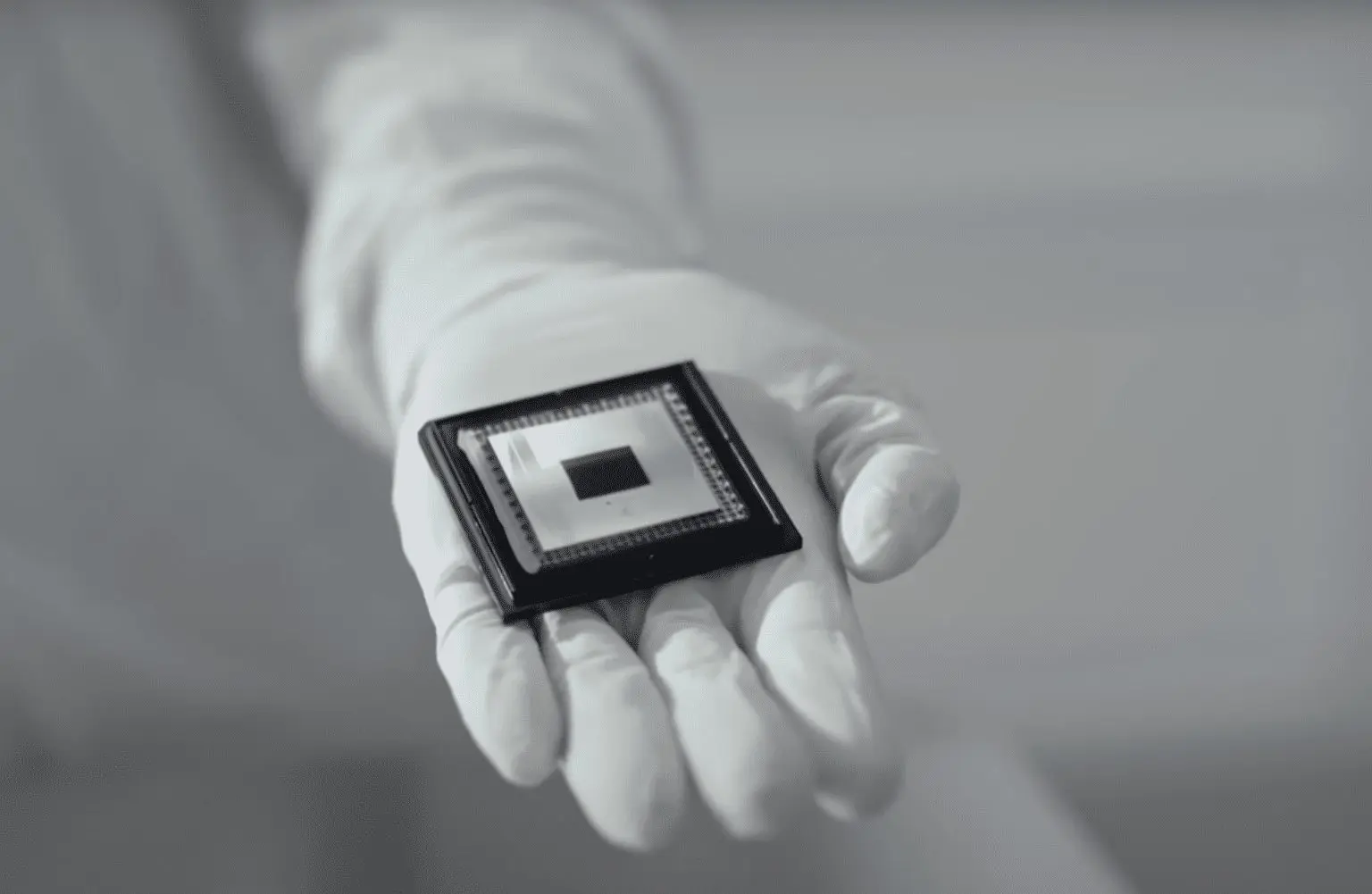
Scientists from King’s College London have become the first UK academic research team to access Google’s Willow quantum computer chip, a development stemming from a partnership launched last year with the UK’s national quantum lab. Google asserts Willow can theoretically solve a problem in five minutes that would take the world’s fastest supercomputers 10 septillion years to complete, a significant contrast in processing time. King’s lead for the project, Dr. Eleanor Crane, stated its use of Willow would answer questions about important natural processes, from photosynthesis to molecular bonding. The team, co-led by Dr. Alexander Schuckert from ENS Paris, intends to leverage Willow’s capabilities to create better solar cells, more efficient energy grids, and discover treatments for currently incurable diseases.
Google’s Willow Chip Enables Complex Problem Solving
A single quantum chip from Google possesses the theoretical capacity to perform a calculation that would require 10 septillion years on even the most powerful conventional supercomputers. This disparity in processing time underscores the potential of Google’s Willow chip, recently accessed by a research team at King’s College London, marking the first such UK academic collaboration. The team, co-led by Dr. Eleanor Crane alongside Dr. Alexander Schuckert from ENS Paris, will utilize Willow to investigate interactions between fundamental particles, aiming to unlock solutions for challenges ranging from sustainable energy to novel pharmaceuticals.
The core of this research focuses on understanding natural processes currently beyond the reach of existing computational power. “It would be useful if society could understand how plants transform sunlight into energy, find materials which transport electricity quickly, or how molecules bind to each other,” explained Dr. Eleanor Crane of King’s College London, highlighting the broad implications of their work. These processes, governed by the principles of quantum mechanics, rely on the behavior of particles that are notoriously difficult to model with classical computers. The team hopes to translate this understanding into tangible advancements. Google Quantum AI, in partnership with the National Quantum Computing Centre, initiated the program inviting proposals from UK research groups, ultimately selecting King’s College London for their compelling research proposal.
While acknowledging the experimental nature of the technology, Dr. Crane remains optimistic, suggesting that there might already be ways in which quantum computers could solve problems. This access to Willow signals a significant step toward realizing the promise of quantum computing.
The team, co-led by Dr. Eleanor Crane alongside Dr. Alexander Schuckert from ENS Paris, confirmed that King’s College London submitted a compelling research proposal, and NQCC Director Dr. Michael Cuthbert emphasized the initiative reflects the UK’s commitment to fostering quantum research, backed by a £2 billion investment in quantum technologies.
made a compelling research proposal,” according to Charina Chou, chief operating officer of Google Quantum.
Charina Chou, chief operating officer of Google Quantum
Quantum Computing Advances & Potential Security Impacts
Dr. Crane explained that the team’s work will focus on critical areas like photosynthesis and energy transport, aiming to understand the interactions of fundamental particles that underpin life itself. This research builds on the principles of quantum mechanics, which govern the behavior of these particles and provide the foundation for quantum computing’s power. However, the increasing sophistication of quantum computers also presents security challenges. While not intended to replace existing computers, these machines pose a future threat to current encryption methods protecting everything from financial transactions to personal communications. Some tech and finance companies are already proactively developing defenses against potential quantum-powered cyberattacks, acknowledging the dual-edged nature of this rapidly evolving field.
Willow broke new ground , opening the door for machines that were of real practical value.
Sir Peter Knight, Chair of the National Quantum Technology Programmes Strategy Advisory Board
See today’s quantum computing news on Quantum Zeitgeist for the latest breakthroughs in qubits, hardware, algorithms, and industry deals.