Analogs are crucial for understanding often tricky concepts. Classical computing relies fundamentally on binary or zeros, and one’s for its operation, an idea that at least has some human analogies (like a light switch). Quantum bits or qubits operate differently; therefore, such analogies break down. Enter the Bloch Sphere, which describes and works with quantum states that a qubit may take. We outline why this often neglected tool is overlooked in understanding quantum operations and quantum computing.
What is the Bloch Sphere?

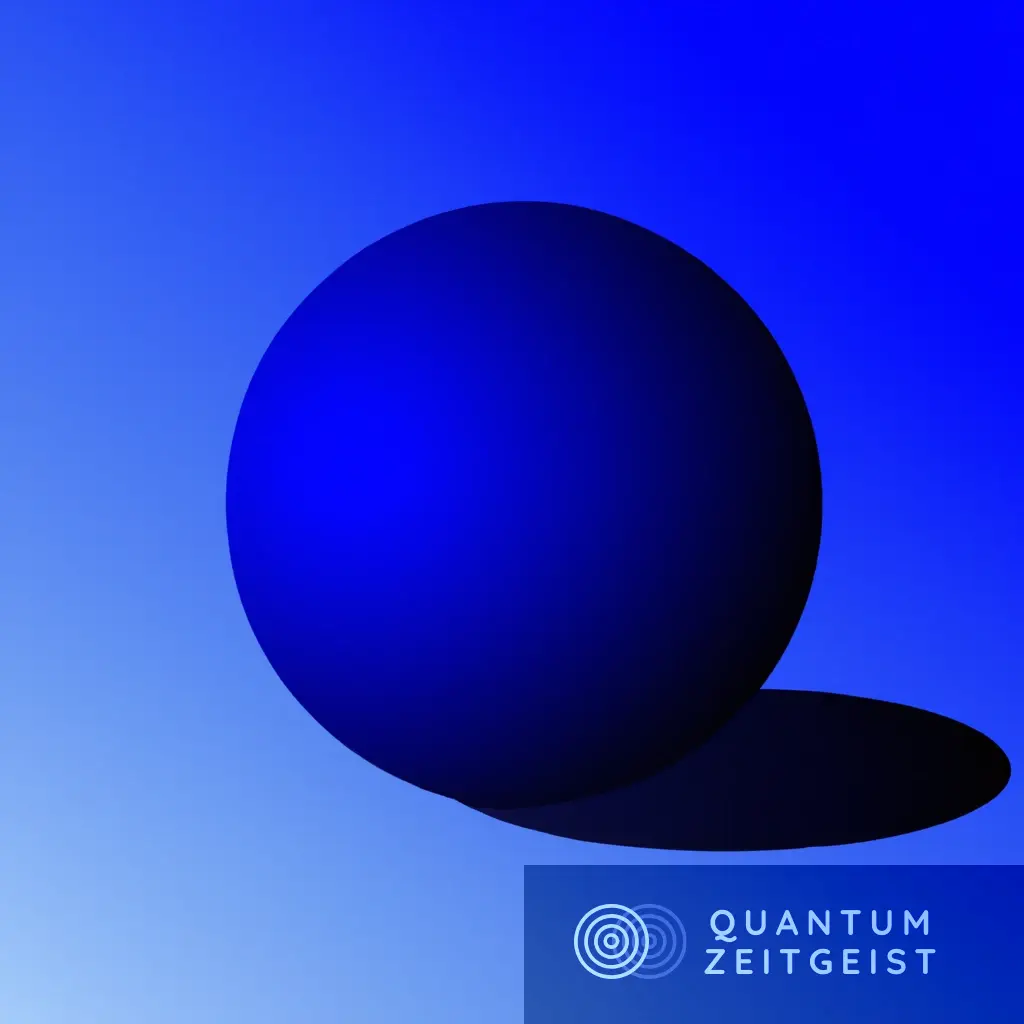
The Bloch sphere is a geometrical representation of a qubit’s state, a unit of quantum information. It is named after physicist Felix Bloch, who introduced the concept in a 1946 paper. Just like it is stated, it is a sphere, and we as humans can all see spheres in our daily lives and how they can be manipulated, for example, as we live on one (the Earth!). But whether it is a marble, a toy globe, or a football, it is a concept we can get on board with. Felix Bloch’s 1946 paper was called “Nuclear Induction” And was published in Physical Review Letters.
Who was Felix Bloch, the Inventor of the Bloch Sphere?
Felix Bloch was a Swiss-American physicist who was awarded the Nobel Prize in Physics in 1952 for his pioneering work on developing the nuclear magnetic resonance (NMR) method of studying the magnetic properties of atomic nuclei. He shared the Nobel Prize with Edward Mills Purcell, who had also made significant contributions to the development of NMR. He died in San Francisco in 1983.
He was born in Zurich, Switzerland, in 1905 and studied physics at the Swiss Federal Institute of Technology before earning his doctorate at the University of Leipzig in Germany in 1928. He later worked at the University of Leipzig, the University of Chicago, and the Swiss Federal Institute of Technology before joining the faculty at Stanford University in 1939.
In addition to his work on NMR, Bloch made essential contributions to solid-state physics and was one of the first scientists to study the behavior of electrons in solids. He is also known for his work on the Bloch Sphere, a geometrical representation of the state of a qubit, a unit of quantum information used in quantum computing and a vital tool for understanding qubits. We would not have a decent analogy for the qubit without his work.
Why should I use the Bloch Sphere?
In classical computing, a bit is a binary or boolean unit of information with one of two values: 0 or 1. A qubit can represent these two values and any linear combination in a superposition in quantum computing. This means that we could have a state that is 50% in a ‘zero’ state and 50% in a ‘one’ state. The state of a qubit can be represented by a vector, which can be represented on the surface of a sphere known as the Bloch sphere. It’s like us humans; we can inhabit all the places on the earth’s surface, which are valid states in quantum terms.
Changing the state of a Qubit with a Bloch Sphere
We won’t give you all the maths here, but simply a basic introduction to how the Bloch Sphere works. If you start at the sphere’s north pole, you can state that the quantum state is a zero. If you were to walk around to the South Pole, then the quantum state is a one. That means that rotating a vector that points from the center of the sphere to the north pole and 180 degrees through to the southern pole turns the quantum state of a qubit from zero to one.
Do you see how easy that was? We just changed the state of a qubit. There are more states than 0 or 1, but any place on the sphere is fair game for the vector. So, another operation might be to rotate only 90 degrees. This would put the qubit into an equal superposition of zero and one state.
So there you have it. The short guide to the Bloch Sphere. Hopefully, this will inspire those wanting to start with a compelling concept for graphically understanding quantum operations. There is much more to learn, but we hope you enjoyed this basic introduction to the Bloch Sphere.
Where to go now?
If you want to learn more about the Bloch Sphere, consider getting yourself one of the very good textbooks on quantum computing out there. We believe that understanding the fundamentals of quantum and qubits will give you a much better time of learning compared to just jumping into, say, quantum programming and focusing on the code alone. Qubits and the Bloch-sphere will stand you in perfect shape for understanding single input quantum gates and how they can be manipulated.
Consider looking at our short article on the gates you should understand. You’ll see that gates such as the NOT gate or X are very commonly used and, again, easy to visualize graphically with the Bloch-Sphere. But also, for example, Rx, where a vector is rotated around the x-axis an arbitrary amount.
Here are some jump-off points if this article has inspired you:
- Invest in one of the excellent quantum textbooks out there. Dancing with Qubits is a good one for those without much precursor knowledge of some of the maths and physics, as is Quantum Computing an Applied Approach by Jack Hidary.
- Take an online quantum course or tutorial. Some of these courses are not the monotonous style of learning you might be used to. For example, look at the excellent comic series for learning about the language Q# and the rudiments of quantum.
- Take part in a quantum hackathon (such as the excellent QHack organised by Xanadu)
- Classroom learning. More and more people are headed back to school in some form or another, even if it is just a short course. It might be remote but live. In other words, you can get the best of both worlds. See QubitbyQubit for learning about the Microsoft Quantum stack. It is aimed at high school students.
- Get stuck into the programming. Learn how to implement a single qubit gate with one of the excellent and popular quantum programming languages, such as Qiskit, Q# or Cirq. To see what is popular, we have compiled past stats on what quantum programming languages are popular.
For two input quantum gates, you’ll want to look at another concept, as the Bloch-sphere is not quite enough to handle these cases. But we hope you’ll get to grips with single qubit quantum gates or single input gate input gates like X, Y, Z for example.