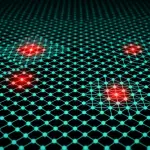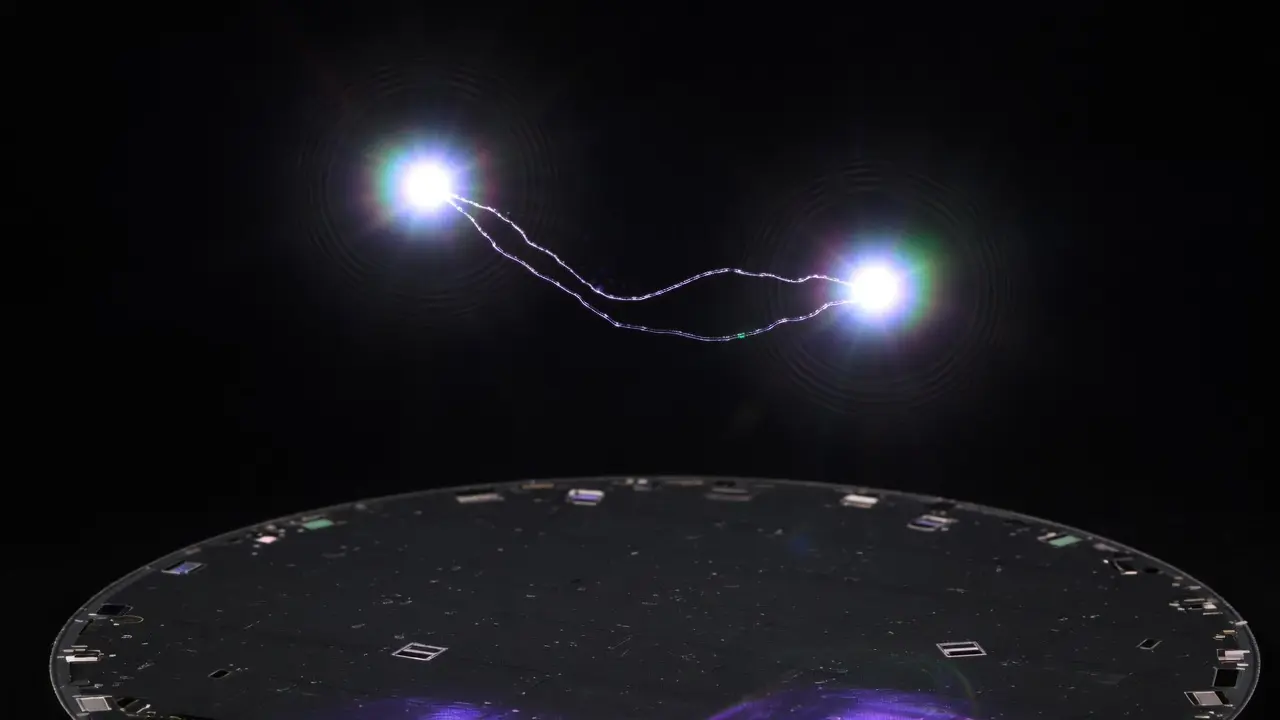
Researchers at Tribhuvan University in Nepal, collaborating with Ohio University, are modeling the interaction of light and matter within coupled optical cavities using hybrid quantum circuits. The team designed a quantum circuit to investigate the Jaynes-Cummings-Hubbard model, simulating real-time dynamics with a Matrix Product State backend. Simulations extended to a “two-excitation sector under a hard-core photon constraint,” examining excitation transport and symmetry. The work illustrates how hybrid qubit-boson circuits can study light-matter lattice dynamics and provides a benchmark for more complex quantum systems.
Trotterized Simulation of the Jaynes-Cummings-Hubbard Model
Bosonic Qiskit, combined with a Matrix Product State backend, enabled the simulation of a one-dimensional Jaynes-Cummings-Hubbard model across 8 sites with open boundaries, a feat demonstrating the potential of hybrid quantum systems for modeling complex light-matter interactions. Simulations tracked a single polariton’s behavior, revealing ballistic wavepacket spreading, boundary reflections, and finite-size revivals over thousands of time steps, validating the computational framework’s accuracy. This approach allowed for a detailed examination of how light and matter interact within coupled optical cavities, a cornerstone of quantum dynamics research.
The computational method relies on a “Trotterized gate scheme” combining Jaynes-Cummings interaction unitaries with beam-splitter hopping networks, a technique for managing the infinite-dimensional bosonic Hilbert space inherent in these systems. Researchers verified the implementation’s correctness by comparing the simulation results with an independent exact solution for a single excitation, establishing a benchmark for future studies.
All simulations were performed using Qiskit (v2. 0. 0), Qiskit Aer (v0. 17. 0), and Bosonic Qiskit (v15. 1), with the simulation code available upon request, ensuring reproducibility and facilitating further investigation. The study’s success in simulating the JCH model hinges on effectively addressing the challenges posed by hybrid systems, which combine discrete quantum degrees of freedom with continuous bosonic modes.
These systems demand computational frameworks capable of handling both qubit and bosonic degrees of freedom within a unified simulation environment, a requirement met by the Bosonic Qiskit and MPS combination. The JCH model itself is a well-known example of such a hybrid system, coupling two-level systems to continuous-variable cavity modes to explore phenomena like polaritonic wave transport and quantum phase transitions.
Further analysis focused on the dependence of bipartite entanglement entropy on the inter-cavity photon-hopping strength, revealing that the growth of entropy is governed by the hopping strength (J) with a fixed coupling strength (g). This finding provides insight into the relationship between system parameters and the entanglement characteristics of the simulated light-matter lattice. Researchers computed the entanglement entropy using the same simulation tools, demonstrating the versatility of the framework for probing different aspects of the JCH model’s quantum behavior.
The team’s ability to accurately simulate the JCH Hamiltonian, even with discretization and Trotter errors tightly bounded, represents a step toward modeling more complex interacting and open light-matter systems. 05 up to t = 60 with a Fock cutoff d = 2 demonstrating a balance between computational efficiency and accuracy.
The observed ballistic wavepacket spreading and boundary reflections align with theoretical predictions, further validating the simulation’s fidelity. Nabaraj Khatri of Tri-Chandra Multiple Campus, Tribhuvan University and Holographic Himalaya, contributed to the work alongside colleagues from Tribhuvan University and Ohio University. Dilip Ojha, Rajib Tripathi and Kismat K.C. are all affiliated with the Central Department of Physics, Tribhuvan University, while Ashish Khanal is, Ohio University, and Holographic Himalaya.
The international collaboration highlights the growing interest in using quantum simulation to advance their understanding of fundamental physics. The researchers acknowledge the JCH model’s potential to exhibit a Mott-insulator-to-superfluid-like transition, though their work focused specifically on simulating cavity site occupancies and entanglement entropy. This focused approach allowed for a detailed investigation of specific aspects of the model’s behavior, providing a numerical benchmark for extending hybrid simulation approaches.
The framework developed in this study offers a valuable tool for exploring the quantum dynamics of light and matter in coupled optical cavities. By successfully simulating the dynamics of an “atom excited at site i,” the team has demonstrated the power of hybrid qubit-boson circuits for unraveling the intricacies of light-matter interactions and establishing a foundation for exploring increasingly complex quantum systems.
Hybrid Qubit-Boson Circuits for Light-Matter Dynamics
Simulations using matrix product states reveal the dynamics of bipartite entanglement entropy as dependent on inter-cavity photon-hopping strength, extending the capabilities of hybrid quantum circuit modeling. The work demonstrates a method for numerically benchmarking approaches applicable to increasingly complex light-matter systems, an important step toward simulating scenarios where exact solutions are unavailable. Researchers evaluated the bipartite entanglement entropy across varying inter-cavity hopping rates, providing insight into how energy transfer impacts quantum correlations within the simulated lattice.
The framework successfully captured interaction-induced polariton scattering and photon-blockade effects when extended to the two-excitation sector, a result achieved despite limitations imposed by a hard-core photon constraint and a Fock cutoff of two. This constraint, enforcing a maximum of one photon per cavity, kept entanglement manageable for the matrix product state compression while still allowing examination of excitation transport and symmetry properties.
The study’s methodology involved a Trotterized quantum circuit designed to investigate real-time dynamics, and validation against exact diagonalization confirmed the accuracy of the quantum-circuit evolution. Residual deviations observed were consistent with finite-step Trotter error, indicating controlled accuracy over the simulated time window.
08, excitation delocalized faster than in previous simulations, reaching maximum entropy around time equals 15, before returning to zero by time equals 30 as the excitation moved off the central site. Increasing the hopping rate to 0. 2 resulted in even faster delocalization and entropy surges, with partial refocusing of the excitation to the central site after hitting the chain boundaries.
The team’s work builds upon recent advances in quantum computing and the development of software tools for simulating quantum systems, complementing gate-based qubit frameworks with primitives for continuous-variable modes and hybrid qubit-boson architectures. Bosonic Qiskit’s ability to handle both qubit registers and bosonic operations is a key feature, simplifying the simulation of complex coupled light-matter systems. The fundamental unit of quantum information, the qubit, exists in a superposition of states, and the software directly incorporates bosonic creation/annihilation operators, displacement/squeezing dynamics, and multi-mode interactions.
A dense statevector scales exponentially with the number of sites and cutoff dimension, but a matrix product state sidesteps this by representing the state as a chain of small tensors linked by bond indices. The simulations were restricted to small, one-dimensional open chains in the low-excitation sector, a deliberate choice to manage computational complexity and maintain the accuracy of the matrix product state representation.
Future work could incorporate open-system dynamics, such as cavity photon loss and atomic spontaneous emission, via Kraus operators or Lindblad master equations, allowing for benchmarking of real-world hardware noise and bosonic quantum error correction codes. Compiling these continuous-variable Trotterized circuits onto real continuous-variable hardware or hybrid oscillator-qubit quantum processing units could unlock scalable digital-analog quantum simulations of complex light-matter systems.
Bosonic Qiskit Implementation with Matrix Product States
The simulations, performed using Qiskit versions 2. 0 and 15. 1, were designed to assess the impact of discretization and the Trotter approximation, demonstrating that errors remained tightly bounded throughout the process. The computational framework’s ability to accurately model these dynamics relies on a specific initial state, an equal superposition of states, which is the origin of vacuum Rabi oscillations at a frequency of 2g.
This initial condition, combined with the conservation of excitation number within the JCH Hamiltonian, allowed for a restricted simulation sector that simplified calculations while maintaining physical accuracy. The team focused on a one-dimensional chain with open boundaries, a deliberate choice to explore the influence of edge effects on polariton transport and entanglement. The simulation code itself is available upon request, furthering the reproducibility and collaborative potential of the research.
Beyond validation, the approach facilitated the investigation of two-excitation dynamics, extending the simulations to a sector constrained by a hard-core photon condition. The researchers calculated von Neumann entanglement entropy to quantify the degree of quantum correlation between a central site and the remainder of the chain, revealing how entanglement evolves with varying inter-cavity photon-hopping strengths. The simulations also demonstrated the ability to track site occupation, revealing how a single polariton spreads across the chain.
Weak hopping rates resulted in slow, near-monotonic delocalization, while increased hopping strength accelerated the spreading process. These observations were consistent with theoretical predictions and provided a visual confirmation of the model’s accuracy.
05, allowing for the observation of both ballistic propagation and finite-size revivals. The work builds upon recent advances in continuous-variable quantum computing, specifically addressing the challenges posed by infinite bosonic spaces and exponential state-space growth. Bosonic Qiskit’s ability to directly operate on truncated Fock-space qumodes, alongside standard qubit operations, significantly reduces circuit overhead. The use of a Matrix Product State backend further minimizes memory usage, enabling the simulation of larger systems and longer time scales.
This combination of tools represents a powerful approach to studying light-matter interactions in complex lattices. The ability to accurately simulate these dynamics is essential for understanding a wide range of phenomena, from quantum optics to materials science.
Two-Excitation Dynamics and Photon Hopping Constraints
Simulations of the Jaynes-Cummings-Hubbard model now extend to scenarios with two excitations, a complexity achieved through a hard-core photon constraint that limits the number of photons each site can hold. The approach deliberately introduces limitations to focus computational resources on specific aspects of light-matter interaction. The team verified the accuracy of their implementation by comparing results with exact diagonalization, a standard benchmark for quantum simulations.
This comparison was initially performed for single-excitation dynamics before extending to the more complex two-excitation sector, demonstrating the framework’s scalability. The simulations reveal that a polariton wavepacket spreads and reflects off the boundaries of the modeled chain, exhibiting finite-size revivals, while maintaining a low and bounded Trotter error over thousands of time steps. Construction of the quantum circuit involved alternating layers of Jaynes-Cummings gates and beam-splitter gates, each with specific coupling and hopping parameters.
The Jaynes-Cummings gates, applied to each site, facilitate the exchange of excitation between photons and atoms, while the beam-splitter gates, with a hopping parameter of 0.15, allow bosonic excitations to interfere and distribute across neighboring modes. These gates were applied with a time step of 0.05 on a matrix-product-state backend, enabling the simulation of the system’s evolution. The initial state for the two-excitation simulations placed photons on sites two and four, with all atoms initially in the ground state, and the evolution was tracked up to a time of 150 with the aforementioned time step.
The resulting occupancy distribution remained mirror-symmetric around the central site, with the total number of excitations maintained to within 10-10 at all times. This symmetry suggests a stable and predictable pattern of excitation transport within the simulated system.
Beyond simply observing excitation transport, the researchers investigated interaction-induced polariton scattering and photon-blockade effects, phenomena arising from the two-excitation dynamics. These effects demonstrate the framework’s ability to capture subtle nuances in light-matter interactions that would be difficult to observe with simpler models. This limitation, while necessary for managing computational complexity, also keeps the entanglement modest enough for effective compression using matrix product states.
The simulation code is available upon request, allowing other researchers to verify and build upon these findings. The work demonstrates that hybrid qubit-boson software tools can be effectively checked against exact solutions for light-matter lattice models, establishing an important validation step.
This validation is particularly important before applying these tools to more complex regimes where no exact reference solutions are available. The researchers emphasize that this approach represents a first step toward simulating more detailed and open light-matter systems. The ability to accurately model these systems is essential for understanding complex interactions and developing new quantum technologies.
👉 More information
🗞 Trotterized hybrid qubit-boson simulation of the Jaynes-Cummings-Hubbard model
✍️ Nabaraj Khatri (Tri-Chandra Multiple Campus, Tribhuvan University, Ghantaghar, Kathmandu, Nepal); Dilip Ojha and Rajib Tripathi (Central Department of Physics, Tribhuvan University, Kirtipur, Kathmandu, Nepal); Ashish Khanal (Department of Physics and Astronomy, Ohio University, Athens, OH, USA); Kismat K. C
🧠 ArXiv: https://arxiv.org/abs/2611.32895v1



See today’s quantum computing news on Quantum Zeitgeist for the latest breakthroughs in qubits, hardware, algorithms, and industry deals.