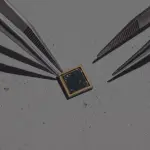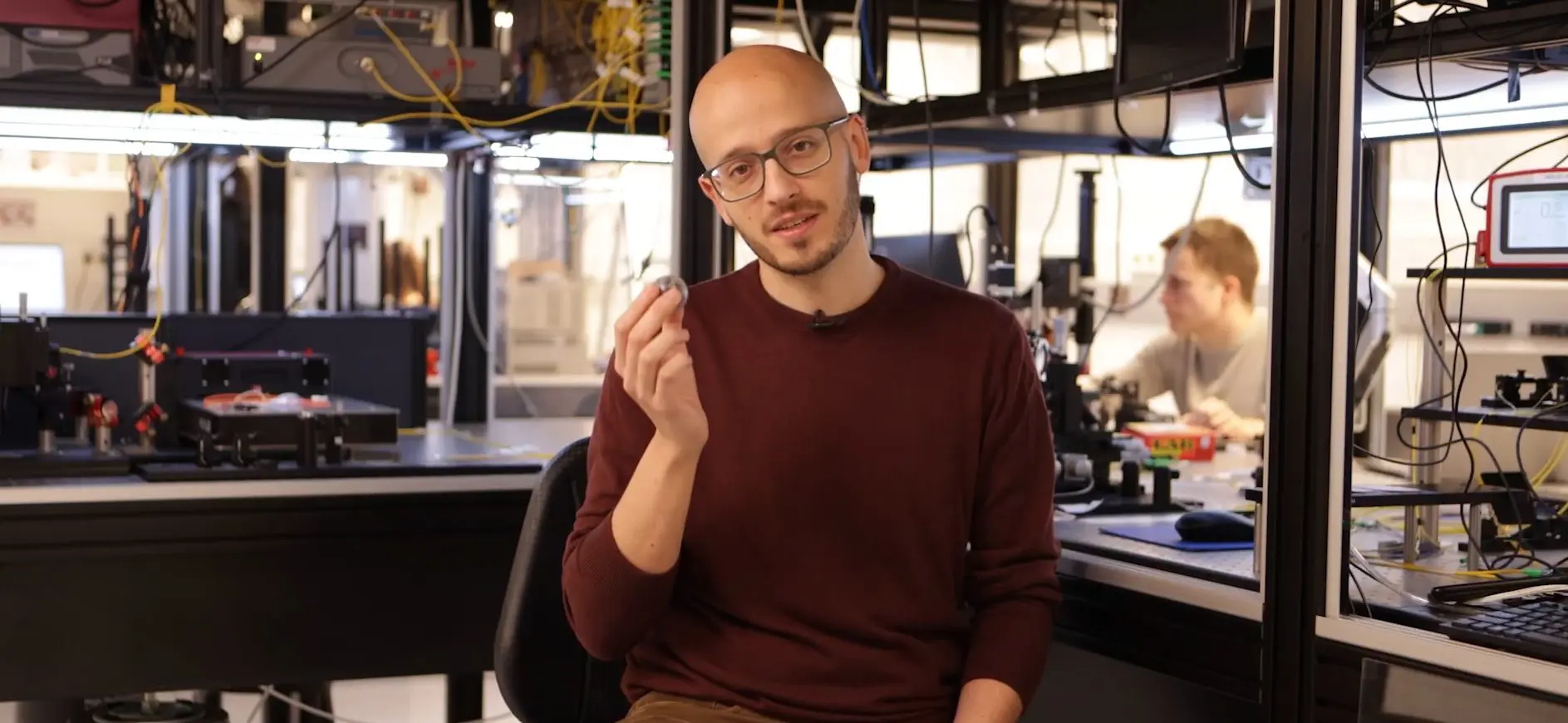
University of Massachusetts Amherst and Delft University of Technology have co-created the Qbead, a handheld device that makes the typically invisible world of quantum computing tangible. The Qbead utilizes LED lights to visually represent a qubit’s quantum state, allowing users to directly observe concepts like spin, superposition, and entanglement.
Users can also program the Qbead to create custom quantum experiments and learning scenarios, making it a hands-on tool for exploration from middle school through college. The team states that they are a group passionate about teaching science, building beautiful things, and harnessing quantum phenomena to create the technology of tomorrow.
Qbead Visualizes Qubit States with LED Lights and Bloch Sphere
The Qbead employs a visual representation of a qubit’s state using LED lights, allowing direct observation of quantum phenomena like spin and entanglement typically hidden from view. Resources range from introductory concepts to advanced coding tutorials, ensuring accessibility for a broad range of learners.
Central to the Qbead’s functionality is the Bloch Sphere, where the “0” state is represented by the north pole and the “1” state by the south pole; this illustrates that a qubit’s state isn’t limited to a binary choice, but can exist at any point on the sphere’s surface. This capability provides a great deal of new possible computational dynamics, as orchestrating the interactions of multiple qubits allows information processing beyond the limits of classical bits.
The device was designed as a learning tool available by request, catering to curious minds from middle school through college and offering different learning approaches to meet students where they are. Carlos, a member of the team, combines science, crafts, and art in his work, while Stefan has long enjoyed sharing the wonders of science through extracurricular courses and events. The Qbead is a not-for-profit initiative providing everything needed to learn with, teach with, and program the device, fostering a hands-on understanding of quantum computing principles.
Source: https://www.qbead.org/


See today’s quantum computing news on Quantum Zeitgeist for the latest breakthroughs in qubits, hardware, algorithms, and industry deals.