
Quantinuum (NASDAQ: QNT) is outlining a path for near-term value from quantum computing, collaborating with SoftBank Corp. to map practical applications to its evolving hardware. A newly published joint white paper focuses on use cases in quantum chemistry and graph analytics, assessing when these areas could become industrially feasible. The analysis examines how advances in both quantum hardware and algorithms might affect timelines for practical applications and informs Quantinuum’s exploration of future quantum AI data center services. “The key takeaway of this study is that organizations do not need to wait for large-scale, fault-tolerant systems to explore where quantum computing can begin creating value,” says Duncan Jones, General Manager, Applications Group at Quantinuum, suggesting businesses can begin building readiness now.
Quantum Chemistry & Graph Analytics Applications Roadmap
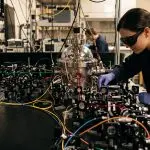
Demonstrating all-to-all connectivity between trapped ion qubits, Quantinuum (NASDAQ: QNT) and SoftBank Corp. are collaborating to advance quantum computing capabilities. They have detailed a roadmap for near-term quantum computing applications, focusing on quantum chemistry and graph analytics as areas ripe for early commercialization, even before fully fault-tolerant systems arrive. A newly published joint white paper assesses how advances in quantum hardware will impact the feasibility of industrial applications, moving beyond purely theoretical exploration. This collaborative effort signals a shift toward identifying practical use cases aligned with Quantinuum’s evolving hardware capabilities, rather than waiting for hypothetical future machines. The analysis presented focuses on understanding when specific applications might become economically viable. SoftBank’s involvement extends beyond research, with the company actively exploring future quantum AI data center services and related business models, a key focus of their partnership established last year.
Ryuji Wakikawa, Senior Vice President & CTO at SoftBank Corp., emphasizes this pragmatic approach: “The question is no longer whether quantum computing may deliver value, but rather which problem classes become executable at which stage of hardware maturity.” This suggests a strategic intent to integrate quantum computing into existing infrastructure, a surprising move for a telecommunications giant traditionally focused on network services. Quantinuum’s hardware roadmap is central to this vision, with the company highlighting its QCCD architecture and achieving industry-leading two-qubit gate fidelity. This collaborative roadmap aims to build technical and operational readiness for the next era of quantum-enabled computing, prioritizing development and benchmarking in areas like quantum chemistry and graph analytics.
The key takeaway of this study is that organizations do not need to wait for large-scale, fault-tolerant systems to explore where quantum computing can begin creating value.
Duncan Jones, General Manager, Applications Group at Quantinuum
Built on the QCCD, or quantum charge-coupled device, architecture utilizing trapped-ion technology, Quantinuum, now a publicly traded company on the NASDAQ (QNT), distinguishes itself in the quantum computing landscape. This approach has enabled the company to commercially deploy successive generations of quantum systems, consistently prioritizing accuracy as a key performance indicator. Quantinuum reports achieving industry-leading two-qubit gate fidelity levels, a critical metric for minimizing errors in quantum calculations and a significant factor in the viability of near-term applications. The company’s focus on QCCD isn’t merely academic; it underpins their strategy for delivering deployable quantum computing solutions to industries like pharmaceuticals, materials science, and finance. The white paper’s examination of application maturity and market opportunities is guided by the premise that hardware development must be paired with advancements in quantum algorithms and integration with artificial intelligence and high-performance computing.
The question is no longer whether quantum computing may deliver value, but rather which problem classes become executable at which stage of hardware maturity.
Ryuji Wakikawa, Senior Vice President & CTO at SoftBank Corp.


See today’s quantum computing news on Quantum Zeitgeist for the latest breakthroughs in qubits, hardware, algorithms, and industry deals.