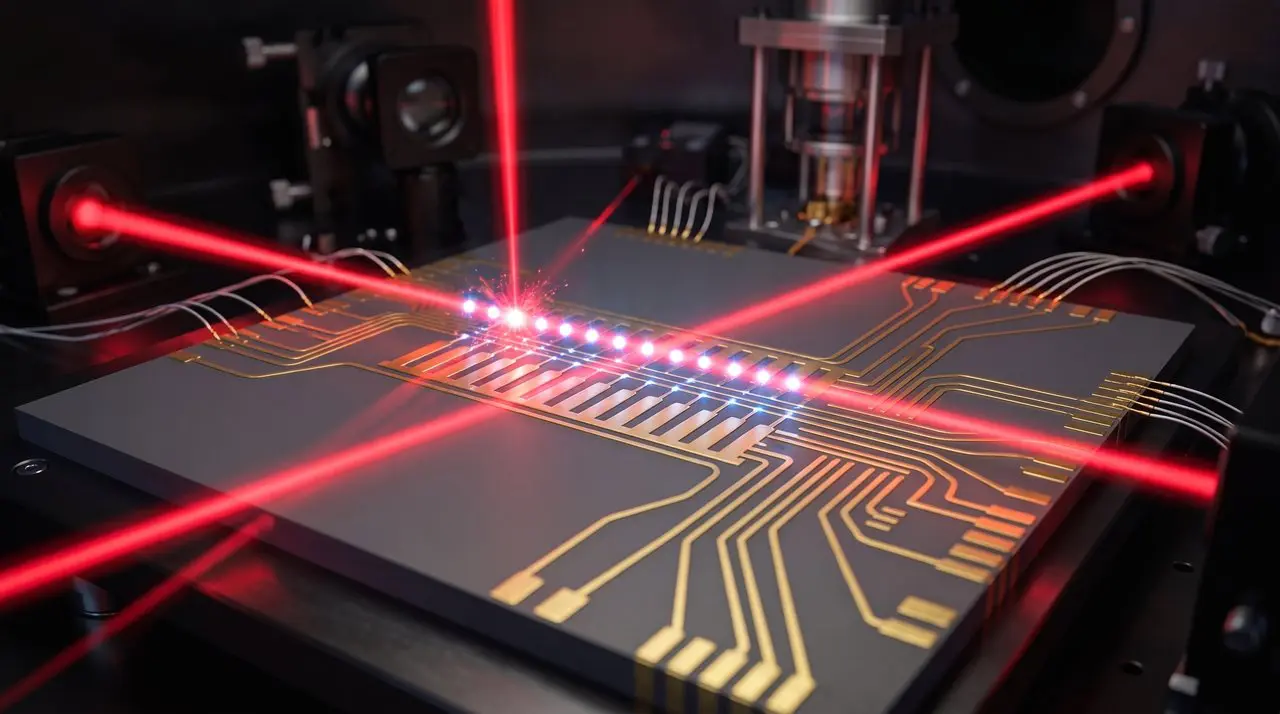
EuroHPC has launched a series of quantum computing initiatives, including a call for proposals to develop superconducting quantum processing units (QPUs) utilizing chiplet technology. The HORIZON-JU-EUROHPC-2026-SPT-10 call specifically targets the creation of a QPU with at least 1,000 individually addressable physical qubits, prioritizing long coherence times, fast read-outs, and error correction. Simultaneously, a separate call, HORIZON-JU-EUROHPC-2026-TIPT-09, seeks to advance trapped-ion quantum computing with the same 1,000-qubit target, fully integrated with existing high-performance computing infrastructure and cloud access, the company says.
Budgets vary across calls, with EUR 24 million allocated to the NQKD call, EUR 20 million to the QTI call, and EUR 15 million to the QEXP call. All projects are expected to run for 3.5 years.
Trapped-Ion & Superconducting QPU Development with 1,000+ Qubits
EuroHPC has issued calls for proposals targeting the development of quantum processing units with over 1,000 individually addressable physical qubits, simultaneously pursuing both superconducting and trapped-ion technologies. This dual approach signifies a substantial investment in scaling quantum computing hardware, moving beyond smaller prototype systems toward more complex and potentially powerful machines. A budget of EUR 20 million will support the development of a full-stack trapped-ion quantum computer, with projects expected to last 3.5 years.
These projects must develop integrated cryogenic systems, advanced error correction protocols, and standardized interfaces to ensure compatibility and interoperability. The call specifically aims to establish European standards for quantum computing and facilitate the creation of practical applications for industry and society. Application submissions are due by November 17, 2026, at 17:00 CET, according to the EuroHPC Joint Undertaking.
Superconducting qubit development will also receive EUR 20 million in funding over the same 3.5-year timeframe, but with a specific emphasis on chiplet technology. This approach aims to achieve long coherence times, fast read-outs, and robust error correction capabilities, all critical for building stable and reliable quantum computers.
The selected proposal will construct a complete quantum computing system, including cooling infrastructure, control electronics, and comprehensive software, while also supporting the creation of a European supply chain for essential quantum technology components. According to the call documentation, “The system should be cloud accessible for researchers and industry users, with a focus on demonstrating practical applications for businesses.” The emphasis on chiplet technology for superconducting QPUs suggests a move toward modularity and scalability, allowing for easier manufacturing and potential expansion of qubit counts, unlike monolithic designs which can be more challenging to fabricate and scale.
Both the trapped-ion and superconducting calls require the resulting systems to be cloud-accessible, indicating a commitment to democratizing access to quantum computing resources for a wider range of users and fostering innovation across Europe. The EuroHPC Joint Undertaking anticipates these investments will position Europe as a key player in the rapidly evolving quantum landscape.
EuroHPC Funding for QKD, Testing & Pilot Production Lines
Beyond quantum processors, EuroHPC is also investing in the infrastructure needed to support and validate these emerging technologies. The HORIZON-JU-EUROHPC-2026-QTI-13 call will establish a pan-European, open-access testing infrastructure for quantum technologies, creating a framework for systematic validation and certification of quantum components and systems. This initiative aims to deploy distributed testing facilities across multiple EU Member States, developing interoperable testing methodologies and a digital platform for remote test execution and data management.
With a total budget of EUR 20 million, the project seeks to strengthen Europe’s competitiveness by ensuring robust quality assurance mechanisms and standardized protocols. The EuroHPC Joint Undertaking is funding the creation of quantum experimental pilot lines through the HORIZON-JU-EUROHPC-2026-QEXP-14 call. This action seeks to bridge the gap between academic research and established pilot lines, focusing on technological innovation, manufacturing reproducibility, and scalability. Projects will concentrate on advancing quantum hardware technologies from technology readiness level 4 to 6, with a particular emphasis on quantum processors, sensors, and cryo-compatible packaging.
According to the call documentation, “Qu-Pilot will function as a testbed for developing and validating quantum technologies.” The total indicative budget for this pilot line initiative is EUR 15 million, with projects expected to demonstrate scalable quantum fabrication processes and standardized workflows. The application deadline for all six calls is November 17, 2026, at 17:00 CET.


See today’s quantum computing news on Quantum Zeitgeist for the latest breakthroughs in qubits, hardware, algorithms, and industry deals.