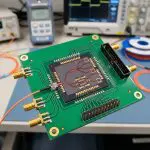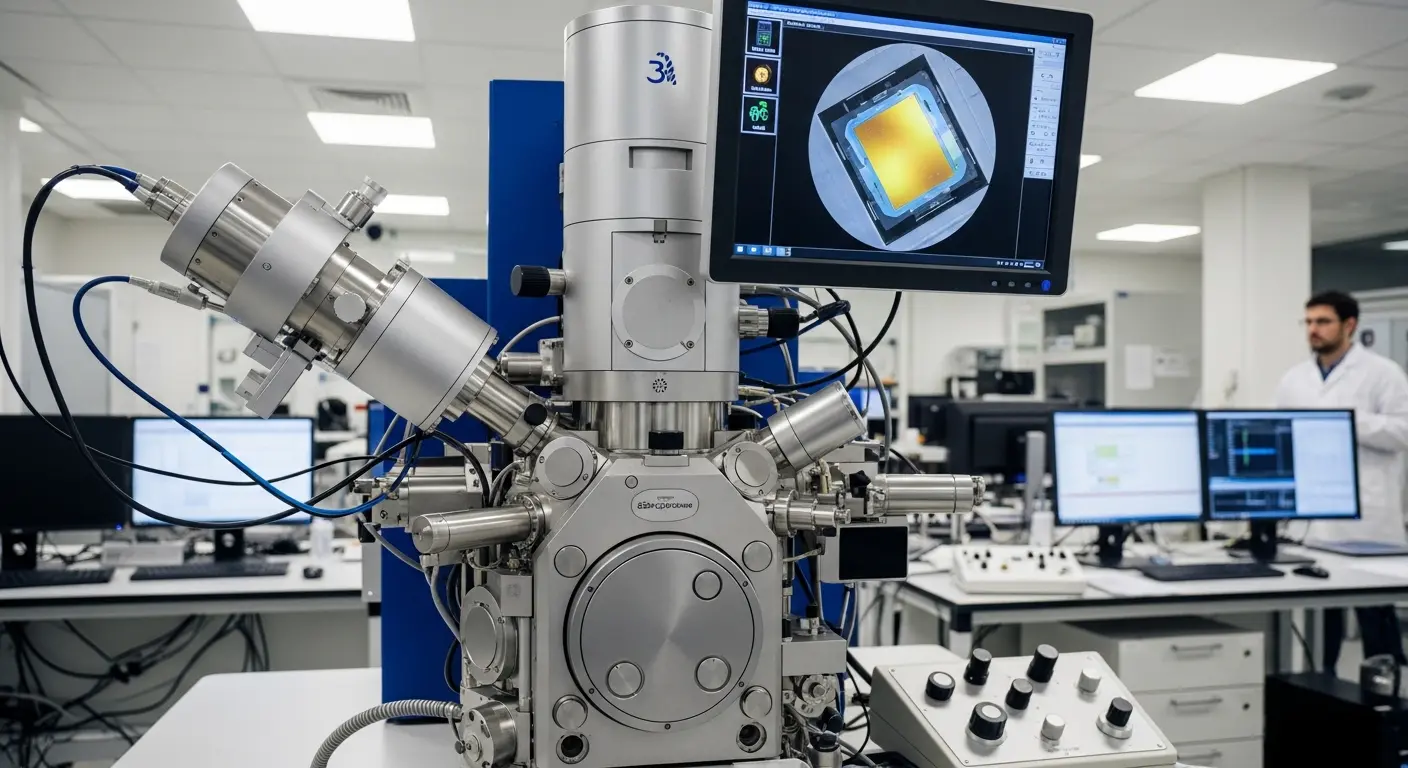
Silicon Quantum Computing (SQC) has launched Quantum Twins™, a revolutionary application-specific quantum simulator poised to accelerate breakthroughs in materials and chemistry. Showcasing an impressive 15,000 qubit registers patterned on pure silicon with atomic precision – accurate to 0.13 nanometers – Quantum Twins offers an unprecedented ability to model complex quantum systems beyond the reach of classical computers. “Quantum Twins represents a window into the quantum world that customers can use for materials discovery today,” said SQC’s Founder and CEO, Michelle Simmons. This world-first product, detailed today in Nature, leverages SQC’s full-stack approach and rapid manufacturing capabilities, paving the way for advancements in areas like superconductivity and novel information storage.
15,000 Qubit “Quantum Twins” Enable Quantum System Simulation
This breakthrough, detailed in a recent Nature publication, offers an unprecedented capability to model complex quantum systems previously intractable for even the most powerful classical computers. The system utilizes large arrays of quantum dots, physically replicating the interactions customers seek to analyze, offering enhanced understanding of quantum phenomena like magnetism and superconductivity. This innovation promises to accelerate discovery in materials science and low-power electronics, potentially revolutionizing information storage technologies. SQC demonstrated the ability to pattern 250,000 qubit registers within eight hours in November 2025, validating the scalability of their manufacturing process. SQC’s full-stack approach, designing, producing, and testing chips in under a week, is a key advantage in the race towards commercially viable quantum computing, following the success of their quantum machine learning system, Watermelon.
Atomic-Scale Manufacturing Achieves 0.13 Nanometer Precision
Silicon Quantum Computing (SQC) has achieved a breakthrough in manufacturing precision, patterning 15,000 qubit registers on pure silicon with an accuracy of 0.13 nanometers – effectively at the atomic level. This level of control allows for the creation of “Quantum Twins,” custom chips designed to replicate and analyse physical systems and chemical interactions, surpassing the capabilities of classical computers. The company published details of this system today in Nature, demonstrating a significant step toward simulating complex quantum phenomena. This atomic-scale semiconductor manufacturing process isn’t just about miniaturization; it’s about encoding physical reality into a quantum substrate.
In November 2025, SQC showcased its scalability by patterning 250,000 qubit registers within an eight-hour period, addressing crucial manufacturing yield concerns. SQC’s Chair, Simon Segars, added: “Expanding our product offering…brings SQC’s atomic-scale advantage to the global materials and chemistry sectors.” The company’s 14|15 platform enables rapid chip design, production, and testing – all within a week.
Quantum Twins represents a window into the quantum world that customers can use for materials discovery today.
Watermelon System & 99.99% Fidelity Drive Early Impact
The foundation of Quantum Twins lies in the precise engineering of localized quantum energy states within semiconductor heterostructures. By leveraging colloidal quantum dots patterned onto silicon, the system encodes qubits not as abstract bits, but as electron spin states governed by localized confinement potentials. This physical realization allows for direct Hamiltonian simulation, meaning the device is designed to calculate the time evolution of complex molecular orbitals or lattice dynamics, directly mirroring the physical interactions, such as electron-phonon coupling, that dictate material behavior.
A critical challenge in quantum simulation is maintaining quantum coherence across thousands of coupled qubits. SQC’s architecture addresses this by focusing on robust coupling elements that minimize environmental noise and associated decoherence rates. The methodology requires sophisticated readout techniques that distinguish the intended quantum signal from thermal noise, necessitating precise cryogenic control and advanced pulse sequencing. The inherent parallelism enabled by the large, addressable qubit array significantly reduces the required computational time for time-intensive quantum mechanical calculations.
It is important to distinguish this advanced simulator from a universal fault-tolerant quantum computer. While Quantum Twins achieves unparalleled depth in simulating specific physical systems, it is specialized for analog modeling. This distinction positions the technology as a powerful tool for hypothesis generation and parameter space mapping, identifying optimal chemical structures or superlattice parameters. The data derived informs the theoretical development of novel quantum algorithms, guiding the eventual transition toward scalable, error-corrected, and generalized quantum processors.
Silicon Quantum Computing (SQC) is extending its reach beyond quantum machine learning with the launch of Quantum Twins™, following the early success of its Watermelon system. The Watermelon system is already yielding results in sectors like telecommunications and defence, demonstrating a tangible impact from SQC’s technology. This expansion highlights SQC’s increasing manufacturing capabilities and a strategic move to address diverse computational needs. SQC recently achieved industry-leading fidelities of up to 99.99% with its multi-qubit, multi-register processor, a crucial step towards reliable quantum computation. This performance actually improves as the system scales, a significant advantage in building practical quantum devices.
See today’s quantum computing news on Quantum Zeitgeist for the latest breakthroughs in qubits, hardware, algorithms, and industry deals.