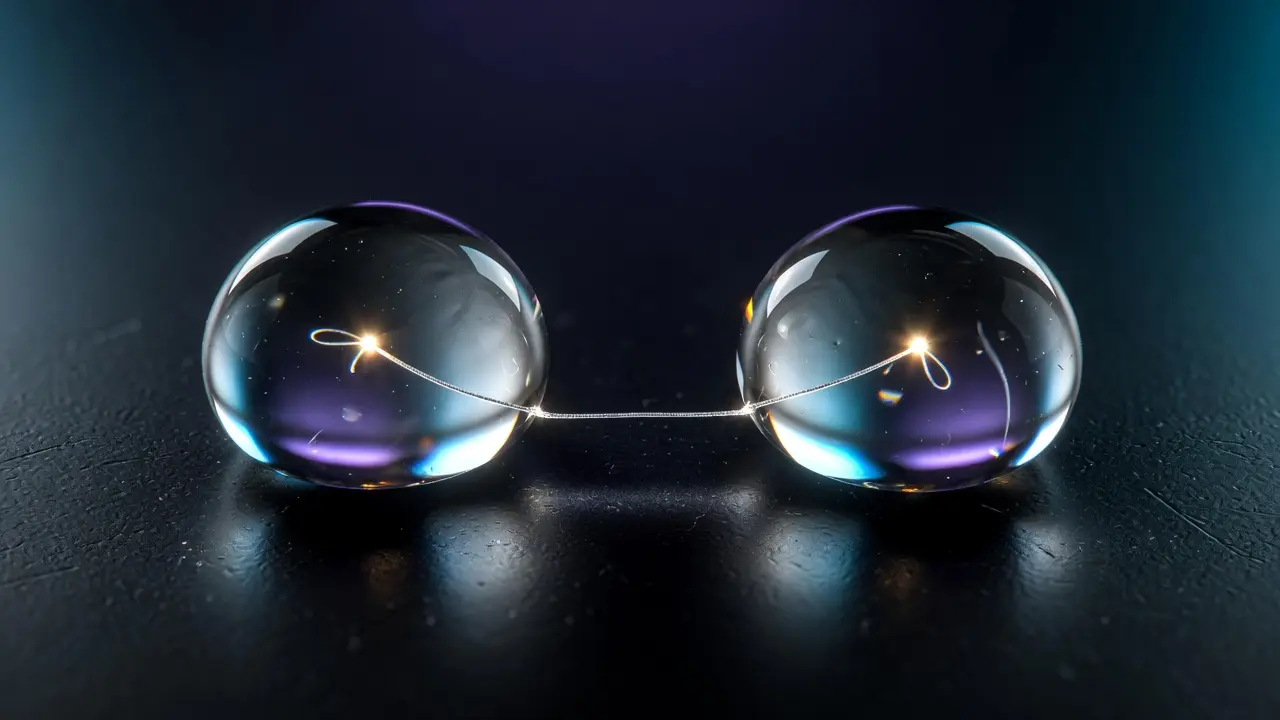
Hyunho Cha of NextQuantum and Seoul National University, along with colleagues, has demonstrated a quantum data re-uploading architecture that approximates any bounded continuous function using a surprisingly minimal hardware requirement: just one ancilla qubit and single-qubit measurements. This work extends the technique of data re-uploading to quantum inputs, overcoming the challenge of accessing information within a quantum state in classical form.
The circuit functions by a qubit interacting sequentially with copies of an input state, creating a “discrete cascade” reminiscent of collision models in open quantum system dynamics. This offers a hardware-efficient blueprint for building quantum machine learning systems capable of analyzing quantum data.
Quantum Data Re-uploading Extends Function Approximation
The architecture achieves this by repeatedly interacting a qubit with fresh copies of an input quantum state, a process that creates what researchers describe as a cascade. This cascade bears a striking resemblance to collision models used in the study of open quantum system dynamics, establishing a novel connection between quantum computation and the behavior of open quantum systems.
This work overcomes that challenge by enabling quantum circuits to learn any function from quantum inputs, allowing for new ways to analyze complex quantum data. The circuit’s functionality relies on sequentially interacting a qubit with multiple, identical copies of an arbitrary input state, effectively building a layered representation of the data.
The researchers demonstrated that the circuit’s ability to approximate functions is not limited by the complexity of the input data, but rather by the number of input state copies and layers available. By alternating entangling unitaries with mid-circuit resets of the input register, the architecture realizes a discrete cascade of completely positive and trace-preserving maps, analogous to collision models in open quantum system dynamics. This provides a space-efficient and expressive approach to designing quantum machine learning models that operate directly on quantum data.
Single-Qubit Measurements Enable Circuit Universality
The ability to approximate any bounded continuous function with minimal quantum resources hinges on a surprisingly simple architecture; the framework requires only one ancilla qubit alongside single-qubit measurements. This efficiency stems from a novel approach to quantum data re-uploading, extending the technique beyond classical inputs to directly process quantum information. “We prove that re-uploading quantum data allows quantum circuits to learn any function,” said Hyunho Cha, affirming the universality of the approach. The researchers emphasize that this universality is achieved without sacrificing hardware efficiency, making it a promising blueprint for future quantum systems.
Architecture Mimics Open Quantum System Dynamics
This design choice is not merely a computational trick. It directly mirrors how open quantum systems evolve through interactions with their environment. By alternating entangling unitaries with mid-circuit resets of the input register, the architecture realizes a discrete cascade of completely positive and trace-preserving maps, analogous to collision models in open quantum system dynamics.
Space-Efficient Design for Quantum Machine Learning Models
This mirroring of natural quantum processes isn’t merely an aesthetic similarity; it provides a framework for understanding the circuit’s behavior and potential limitations. This efficiency allows for the approximation of any bounded continuous function, a capability previously requiring significantly more complex quantum circuits. The ability to achieve universal function approximation with such limited resources positions this architecture as a promising candidate for near-term quantum machine learning applications. By operating directly on quantum data, the architecture avoids the information loss inherent in converting quantum states to classical representations.

See today’s quantum computing news on Quantum Zeitgeist for the latest breakthroughs in qubits, hardware, algorithms, and industry deals.