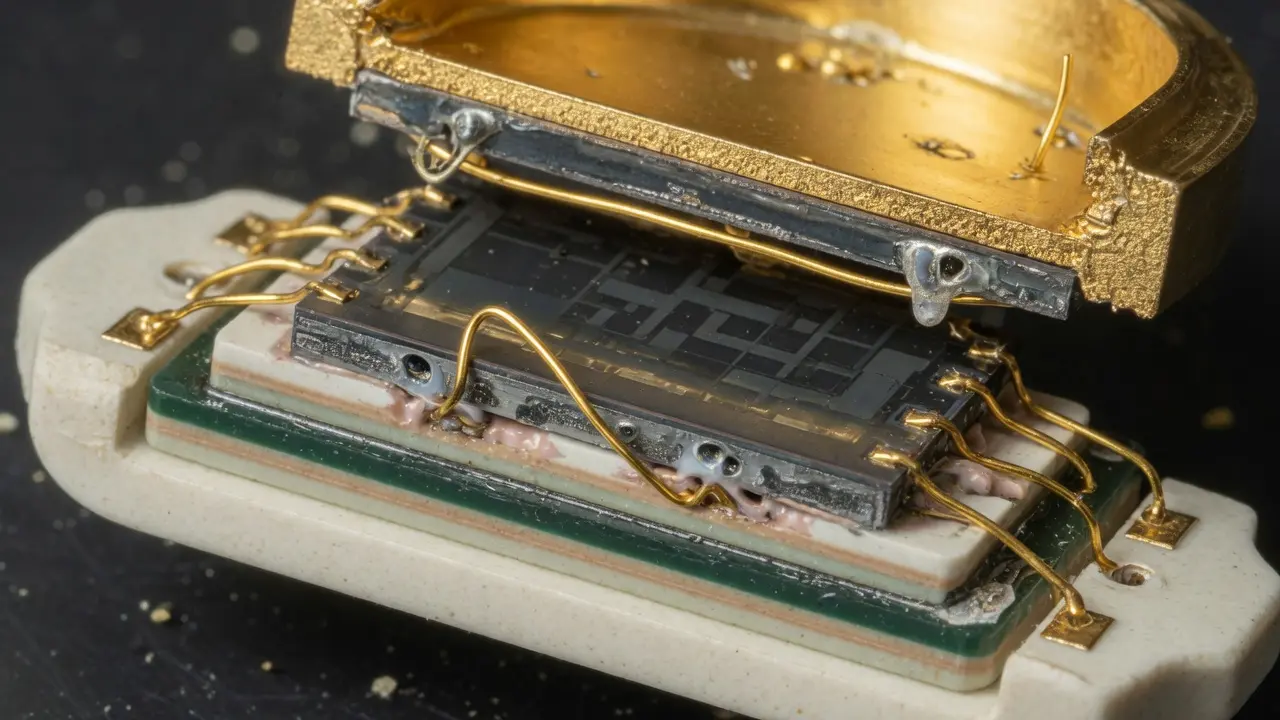
A £39 million investment from UK Research and Innovation will fund an ambitious three-year project led by Professor Cristian Bonato of Heriot-Watt University, aiming to dramatically accelerate quantum sensor experiments. Professor Bonato’s system will actively decide which measurements to take during experiments, learning and adapting in real-time, a departure from traditional, pre-programmed setups.
These quantum sensors use single electrons to detect extremely weak signals, but current experiments are hampered by slow speeds and difficult data interpretation. “Quantum sensors are incredibly powerful tools, but extracting useful information from them can be a slow and demanding process,” says Professor Bonato, hoping the AI will allow researchers to explore currently inaccessible quantum systems.
AI System Optimizes Quantum Measurement Selection for Speed
Professor Cristian Bonato’s project will use artificial intelligence to dynamically prioritize measurements during quantum experiments, a departure from conventional, pre-programmed experimental protocols. The three-year investigation, funded through a Turing AI Pioneer Interdisciplinary Fellowship from UK Research and Innovation, aims to accelerate data acquisition by focusing on the most informative measurements and disregarding those yielding minimal new information. This adaptive approach directly addresses a key limitation of current quantum sensor experiments, which can be slow and challenging to interpret.
The system will not simply analyze data after an experiment concludes, but will instead interact directly with the quantum sensor itself, adjusting the experimental parameters as new data becomes available. This real-time adaptation is intended to allow researchers to explore more complex quantum systems that are currently inaccessible due to time constraints and data processing demands.
Bonato explains, “We want to develop an AI system that can make decisions as an experiment unfolds. It will learn from each measurement, work out what information is still missing and decide what to investigate next.” The project, formally titled Developing A Real-time AI-Enhanced Experimenter For Quantum Sensing is aligned with major UK quantum research programs focused on integrated quantum networks and biomedical applications. A core element of the AI’s functionality will be its ability to disambiguate multiple potential scientific explanations for the same experimental result.
When faced with ambiguity, the system will proactively select alternative measurements designed to pinpoint the correct interpretation, providing researchers with a more definitive understanding of the quantum phenomena under investigation. This capability is particularly valuable when working with single electrons, the fundamental particles used by these quantum sensors to detect extremely weak signals.
The ability to precisely control these particles is also a key objective. The potential impact of this research extends beyond fundamental physics, with promising applications in healthcare and secure communications. “The potential applications of this work are particularly exciting,” Bonato stated.
“In healthcare, improved quantum sensors could help us investigate biological processes at a scale that is currently difficult to access. There are also major opportunities in quantum communications, where being able to identify and precisely control individual particles could help us build more reliable quantum memories.” The team hopes to establish a new experimental paradigm where AI actively assists researchers in accelerating discovery. Heriot-Watt University, a partner in four of the UK’s five national quantum hubs, provides a strong foundation for this ambitious project.
Vice-Principal and Provost Professor Steve McLaughlin emphasized the university’s commitment to quantum innovation, stating, “Professor Bonato’s work brings AI into the experiment itself, which has the potential to accelerate how quickly quantum technologies move into real-world use.” The university’s strengths in quantum networking, sensing, and materials science are expected to complement Bonato’s expertise in artificial intelligence. This research is one of 17 Turing AI Pioneer Interdisciplinary Fellowships awarded by the Engineering and Physical Sciences Research Council (EPSRC), reflecting a broader national effort to strengthen AI research capabilities.
Professor Charlotte Deane, Executive Chair of EPSRC, highlighted the transformative potential of AI across various disciplines. “AI has enormous potential to transform the way we understand and tackle some of the biggest challenges facing society,” she said. “These fellowships will give outstanding researchers the freedom and support to push the boundaries of AI itself, while also applying it in new ways across a wide range of disciplines.” The project aims to not only improve the speed and precision of quantum sensors but also to establish a new, more efficient methodology for scientific experimentation.
Quantum sensors are incredibly powerful tools, but extracting useful information from them can be a slow and demanding process.
Physical Sciences
Source: https://www.hw.ac.uk/news/2026/new-ai-research-aims-to-make-quantum-sensors-faster-and-more-precise



See today’s quantum computing news on Quantum Zeitgeist for the latest breakthroughs in qubits, hardware, algorithms, and industry deals.