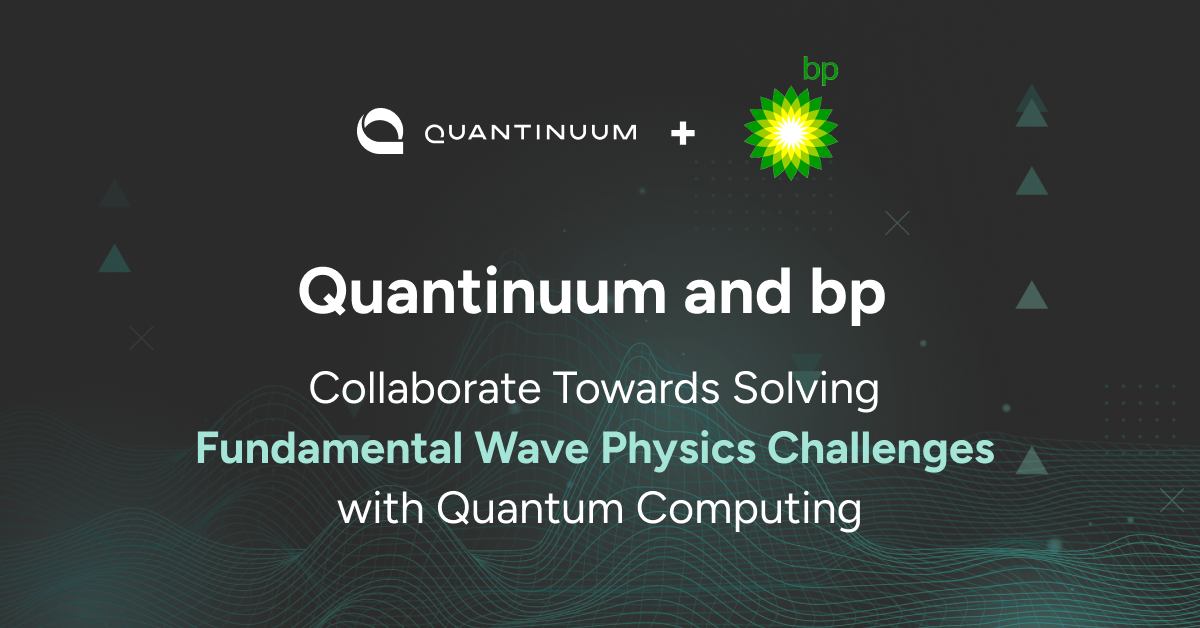
Quantinuum and bp are collaborating on a project that could modernize subsurface mapping for oil and gas exploration, potentially achieving higher resolution seismic images with less computational power. Doubling the resolution of a seismic image currently demands a doubling of resources on classical computers, but Quantinuum believes a single additional qubit on a quantum computer could theoretically achieve the same gains. This scaling project builds upon a successful pilot program and explores hybrid quantum-classical approaches, where quantum processors handle complex calculations and classical systems maintain real-world grounding. “This has the potential to be a very important industrial use case for quantum computing,” said Dr. Rajeeb Hazra, President and CEO of Quantinuum, adding that the technology could provide a more efficient path for energy exploration.
QCCD Architecture Delivers High-Accuracy Quantum Systems
Quantinuum’s approach to quantum computing centers on the well-established QCCD architecture, achieving industry-leading accuracy levels based on average two-qubit gate fidelity. Few tasks in the energy sector demand as much computational power as seismic imaging, and Quantinuum is scaling a pilot program to simulate increasingly complex geological properties. This efficiency stems from how quantum computers handle dimensionality, as explained in “Quantum Computation and Quantum Information” by Isaac L. Chuang and Michael A. Nielsen, where adding one qubit doubles the quantum state space. The company is not pursuing a purely quantum solution, but rather a hybrid approach that leverages the strengths of both quantum and classical systems.
This hybrid model assigns the most computationally intensive calculations to quantum processors, while classical systems retain control of data logic, ensuring results remain grounded in real-world physics. Quantinuum’s workforce of approximately 700 employees, over 70% of whom hold advanced degrees, are actively engaged with market leaders across multiple sectors, including pharmaceuticals, material science, and financial services, suggesting a broad applicability for the QCCD architecture beyond energy. If successful, this project could demonstrate that quantum computing can help solve real-world bottlenecks in global infrastructure and resource management, offering a pathway to more efficient and sustainable resource exploration.
Hybrid Quantum-Classical Approaches for Seismic Imaging
Following a successful pilot program, bp and Quantinuum are expanding their collaboration to apply quantum computing to seismic imaging, a computationally intensive task crucial for locating subsurface oil and gas resources. This project aims to modernize energy sector mapping techniques and address practical bottlenecks in resource management. Classical seismic imaging faces a significant hurdle: doubling the resolution of an image can necessitate a doubling of computational resources, creating a steep scaling challenge for increasingly detailed surveys. Quantinuum proposes a different approach, leveraging the properties of quantum computers to potentially circumvent these limitations. In theory, achieving the same resolution gains could be accomplished with the addition of a single qubit, a dramatic reduction in required hardware. Chuang and Michael A. Nielsen detail this concept in “Quantum Computation and Quantum Information.” This hybrid approach is designed to maintain a connection to real-world physics, ensuring the results are reliable and interpretable.
Quantinuum’s platform, built on QCCD architecture, currently boasts industry-leading accuracy levels based on average two-qubit gate fidelity. The collaboration highlights a pragmatic strategy, focusing on solving immediate industrial challenges with emerging quantum capabilities, rather than pursuing purely theoretical advancements.
This has the potential to be a very important industrial use case for quantum computing.
Dr. Rajeeb Hazra, President and CEO of Quantinuum



See today’s quantum computing news on Quantum Zeitgeist for the latest breakthroughs in qubits, hardware, algorithms, and industry deals.