Rice University has secured two Phase I awards from the U.S. Department of Energy’s Genesis Mission, focusing investment on artificial intelligence and scientific discovery. The projects, led by Anastasios Kyrillidis and Caroline Ajo-Franklin, will apply AI to address critical bottlenecks in both quantum computing and sustainable bioproduction. Kyrillidis’ team aims to improve the performance of variational quantum algorithms, currently hampered by classical optimization methods that require significant computational resources. Amy Dittmar, the Howard R. Hughes Provost and executive vice president for academic affairs at Rice, stated that these awards reflect Rice’s ability to bring together expertise in artificial intelligence, quantum science, synthetic biology and advanced experimentation to address challenges of national importance. Ajo-Franklin’s project will leverage AI to accelerate the microbial production of valuable compounds currently derived from petroleum.
AI-Driven Optimization for Variational Quantum Algorithms
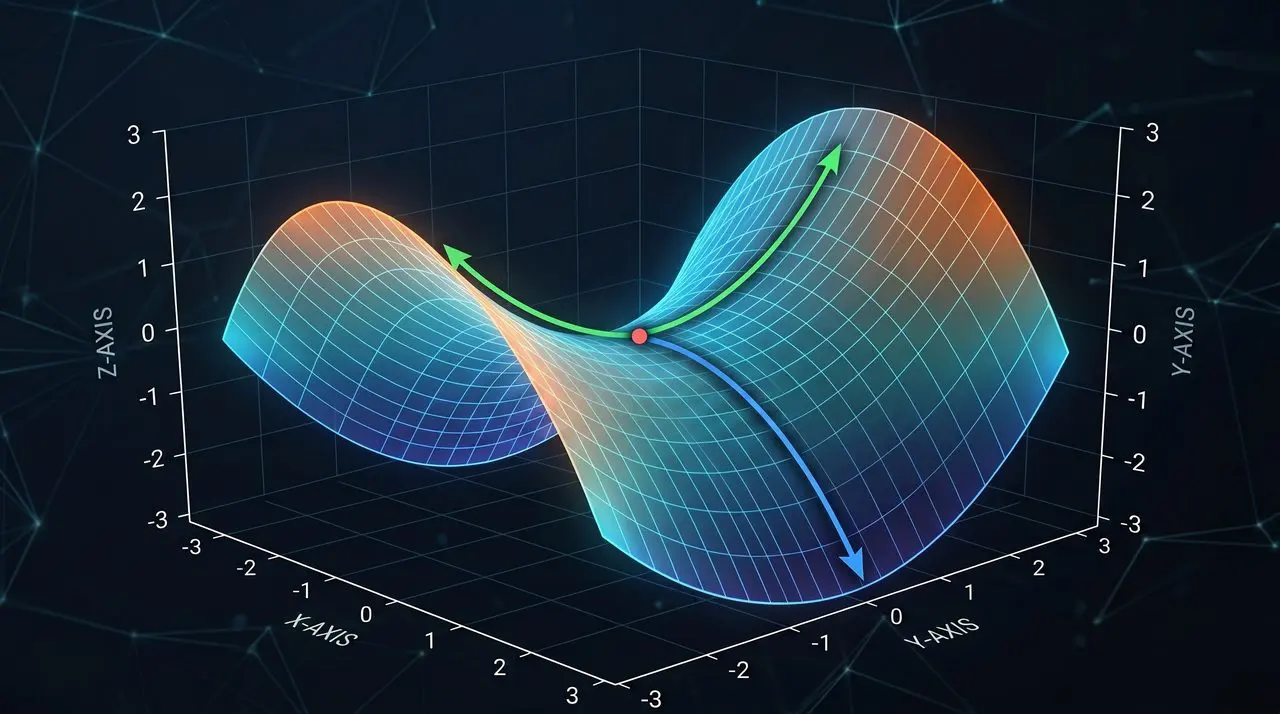
Variational quantum algorithms (VQAs) hold considerable promise for simulating complex chemical systems and discovering novel materials, but their practical application is currently limited by inefficiencies in classical optimization routines. These algorithms require classical computers to refine quantum calculations, a process often hampered by extensive manual tuning and difficulty scaling with circuit complexity. Anastasios Kyrillidis of Rice University is leading a project to address this bottleneck by developing artificial intelligence tools designed to automate and improve the optimization of VQAs. Kyrillidis’ team intends to create reinforcement-learning agents capable of constructing quantum circuits, alongside neural-network models that predict measurement outcomes and reduce the need for extensive hardware evaluations. “Our goal is to replace fragile, hand-tuned optimization methods with intelligent systems that can learn from quantum computations while still operating within frameworks that provide strong mathematical guarantees,” Kyrillidis said, outlining the project’s core ambition.
The researchers will rigorously test these AI-driven methods on both trapped-ion and superconducting quantum processors, comparing their performance against established classical approaches. A key component of the project is the creation of open-source software and publicly available datasets to facilitate broader evaluation and adoption within the quantum computing research community. Rice co-investigators from physics and astronomy, civil and environmental engineering, and other departments will contribute expertise to the effort. This interdisciplinary approach reflects a broader institutional strategy; Amy Dittmar noted that the project exemplifies Rice’s strength in bringing together expertise in artificial intelligence, quantum science, synthetic biology and advanced experimentation.
Our goal is to replace fragile, hand-tuned optimization methods with intelligent systems that can learn from quantum computations while still operating within frameworks that provide strong mathematical guarantees.
Anastasios Kyrillidis, the Noah Harding Associate Professor of Computer Science
AI Platform Accelerates Microbial Isoprenoid Production
Researchers are increasingly focused on harnessing microbial systems for sustainable production of valuable chemicals, yet progress is often limited by bottlenecks in measuring and improving biological pathways. Isoprenoids encompass a wide range of natural substances, including solvents, fuels, and materials like polyisoprene rubber, offering a pathway toward domestic production of these critical resources. The Rice-led team intends to integrate synthetic biology, protein engineering, artificial intelligence, and automated experimentation to overcome limitations in current high-throughput measurement tools. Researchers will engineer biological sensors paired with terpene-producing enzymes, generating extensive datasets linking protein sequence changes to key properties such as ligand binding and protein stability.
These datasets will then be used to refine AI models capable of predicting how mutations impact interactions between proteins, DNA, and isoprenoid molecules. “This project creates a continuous feedback loop in which AI guides experiments and each experiment generates more detailed data to better hone the AI model,” Ajo-Franklin said. Experimental validation will occur through high-throughput biological assays, X-ray crystallography at Argonne National Laboratory, and metabolomics-based enzyme testing at Lawrence Berkeley National Laboratory. This iterative process aims to establish a robust predictive capability, allowing for rapid optimization of microbial isoprenoid production. Ross Thyer, Cameron Glasscock, and Linna An are among the Rice co-investigators contributing expertise in synthetic biology, deep learning, and machine learning for protein structure prediction, demonstrating the university’s growing strength in these interdisciplinary fields. Ajo-Franklin added that the work also demonstrates the university’s recruitment of talent in protein engineering and synthetic biology.
These awards reflect Rice’s ability to bring together deep expertise in artificial intelligence, quantum science, synthetic biology and advanced experimentation to address challenges of national importance.
Amy Dittmar, the Howard R. Hughes Provost and executive vice president for academic affairs at Rice
Amy Dittmar highlighted the Department of Energy’s Genesis Mission, a program focused on accelerating scientific discovery through AI and high-performance computing. Kyrillidis, the Noah Harding Associate Professor of Computer Science, will focus on improving variational quantum algorithms (VQAs), a promising but currently limited method for utilizing quantum computers in chemistry and materials science. Current classical optimization methods used in VQAs require significant manual adjustment and struggle with complex quantum circuits. His team intends to develop AI tools to automate and refine this optimization process, creating reinforcement-learning agents and neural-network models to predict outcomes and reduce hardware demands. The project will leverage multiple quantum hardware platforms and produce open-source software for wider community access. Meanwhile, Ajo-Franklin, the Ralph and Dorothy Looney Professor of BioSciences, will spearhead an AI-driven platform to enhance the microbial production of isoprenoids, compounds with potential as sustainable alternatives to petroleum-based products.
it demonstrates the extraordinary star power Rice has recruited in protein engineering and synthetic biology.


See today’s quantum computing news on Quantum Zeitgeist for the latest breakthroughs in qubits, hardware, algorithms, and industry deals.