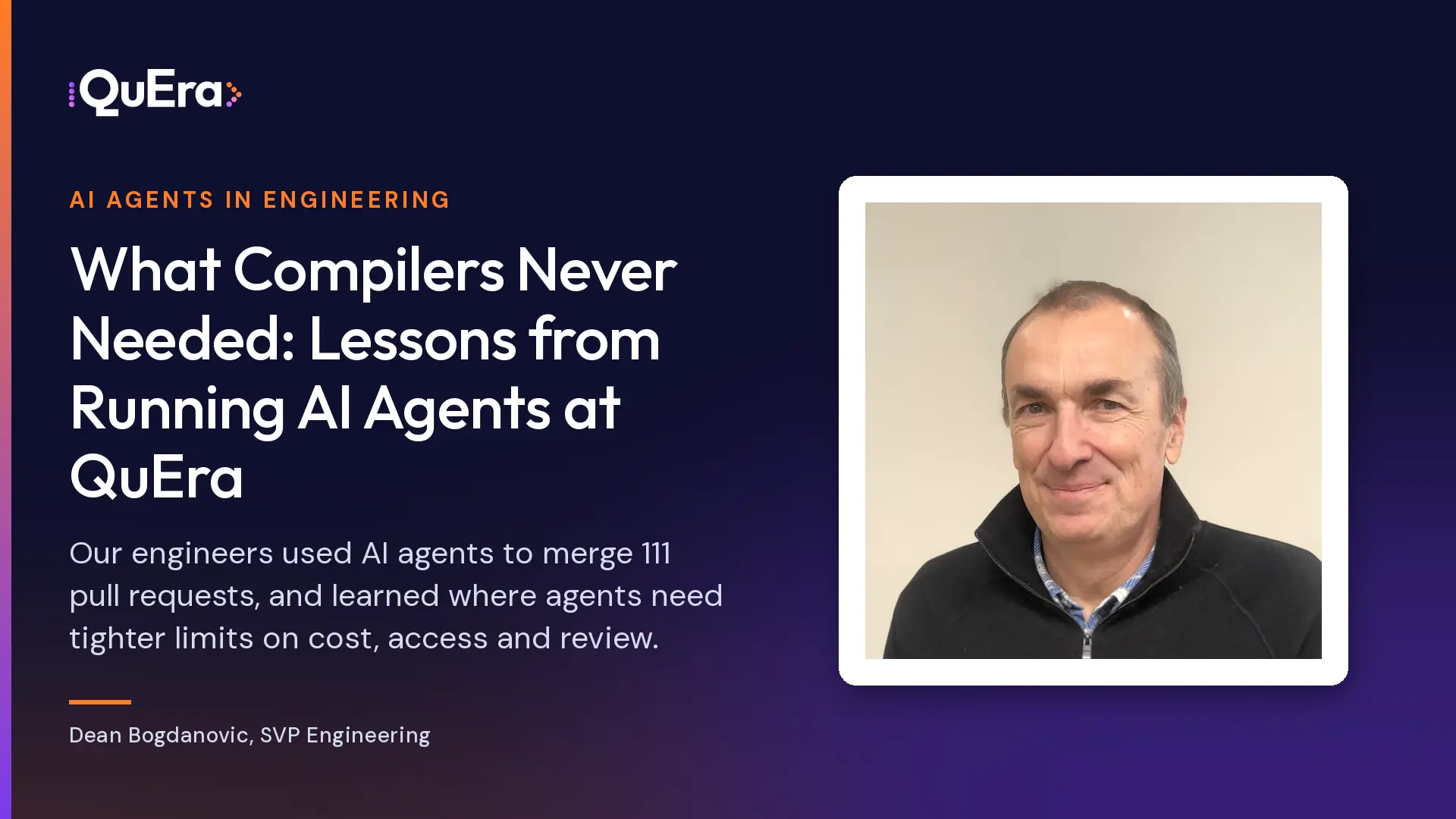
Freeing up engineers to focus on higher-level problem solving is now possible, with AI agents responsible for a significant portion of software development tasks. That gives engineers more time to decide what a system should do and solve its design and functional problems. “Domain expertise helps engineers recognize constraints an agent might miss,” explains QuEra, as the company emphasizes a shift in required skills toward precise writing for requirements and interface contracts. QuEra Engineering built Quantopus to coordinate these AI agents, initially deploying them on the Admin Usage Recorder project.
Quantopus Coordinates Agents for Software Delivery at QuEra
Precise writing is now paramount for engineers, as clearly defined requirements, interface contracts, and acceptance criteria are essential for effectively directing AI agents within their workflow. The company’s internal tool, Quantopus, coordinates these agents, initially deployed on the Admin Usage Recorder project which tracks quantum computer usage for billing and accounting purposes. This project saw worker agents implement tasks and simultaneously generate tests, a process that changes how engineers allocate their time and expertise.
An engineer completed the project, merging 111 pull requests, 54 of which also underwent peer review. Task profiles went from an empty repository to a merged service in six days and was running on testbed and a real quantum processing unit in seven days.
The initial program review reported 35 passing tests, including critical database and API integration checks, while user groups took 88 days to reach all four clusters, even with the engineer concurrently working on other projects. The company acknowledges that they know how long this delivery took, but they do not have a comparable project to definitively measure the resulting speedup, QuEra says.
The company is not aiming to replace software engineers, but rather to shift their focus towards higher-level problem solving, supported by AI assistance with detailed implementation tasks, and plans to continue this work with clear requirements and independent checks.
AI Agents Accelerate Quantum Code Development to Testbed
Cloud resources facilitated this rapid expansion of agent capacity, although the company quickly recognized the need for limitations on spending, runtime and repeated failures to maintain efficiency. Determining the total cost, including both agent time and engineer time spent specifying, reviewing, and correcting the generated code, was important in assessing the overall value of the approach.
Controlled Agent Access Safeguards QuEra’s Engineering Knowledge
QuEra is establishing granular controls over the information accessible to its AI agents, recognizing that a compiler’s rigid adherence to language rules differs sharply from an agent’s interpretation of potentially ambiguous requirements. These agents, designed to accelerate software development, can inspect code, propose solutions and even respond to feedback, but their effectiveness hinges on access to a curated knowledge base, according to QuEra. The company discovered that simply granting access to all internal documentation wasn’t sufficient. Robust permissioning and content governance were essential to prevent misinterpretations and maintain security.
This approach, however, demanded more than just a search platform. The company needed to define clear content ownership, approved data sources and exclusion rules to ensure restricted information remained protected. Connecting the RAG platform to an identity provider only established who was accessing data, not whether that access aligned with established security protocols.
Initial deployments are focused on small, well-defined tasks across QPU access management and other repositories, with each area requiring its own unique validation procedures. The company intends to measure the impact of these agents not solely on implementation speed, but also on the amount of subsequent review and rework required, acknowledging that automated assistance must not introduce new errors or complexities.
Source: https://www.quera.com/blog-posts/what-compilers-never-needed-lessons-from-running-ai-agents-at-quera




See today’s quantum computing news on Quantum Zeitgeist for the latest breakthroughs in qubits, hardware, algorithms, and industry deals.