Germany’s Federal Ministry of Research, Technology and Space (BMFTR) is funding QUDORA’s new project, QUANDA, which will integrate the company’s trapped-ion quantum computers with high-performance computing infrastructure at GWDG, the joint IT center of the Max Planck Society. The three-year research effort will build an automated pipeline to test quantum machine learning on real-world anomaly detection tasks within the energy sector.
“Unlocking the full potential of future quantum applications requires bringing together the strengths of high-performance computing and quantum computing,” says Dr. Daniel Borcherding, Head of Quantum Software at QUDORA, as the project aims to standardize access to trapped-ion quantum computing.
QUANDA Project Integrates Trapped Ion Quantum Computers with HPC
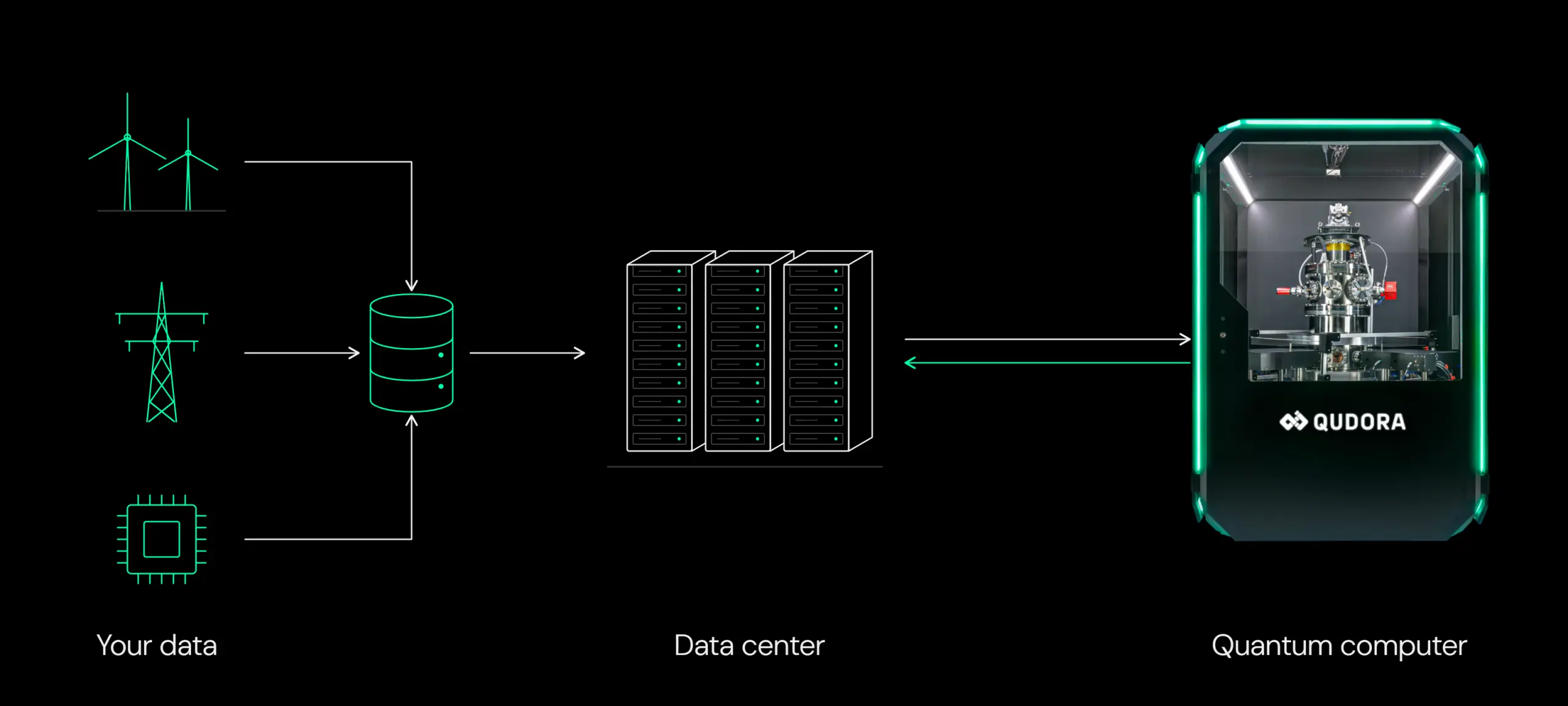
The automated pipeline will manage the complex workflow required for hybrid quantum-classical computations, encompassing job submission, transpilation, compilation and execution on QUDORA’s quantum hardware. Many quantum algorithms rely on repeated data exchange between classical and quantum processors; classical computers handle input preparation and result processing, while quantum processors execute specific computational steps. Reducing the manual effort needed to coordinate these systems will allow researchers to investigate how quantum routines can enhance broader computations and accelerate experimentation.
“Through the QUANDA project, we are working to develop and optimize hybrid computing workflows that combine these complementary technologies,” said a representative, and this work aims to advance quantum machine learning and its practical applications. Anomaly detection, a key focus of the project, aims to identify deviations from expected behavior in energy systems.
These anomalies could range from unusual electricity consumption patterns to changes in equipment sensor readings, potentially indicating developing faults or operational changes requiring immediate attention. The QUANDA consortium will test quantum-based anomaly detection methods using three distinct energy-sector use cases, ensuring the pipeline is evaluated against practical, real-world problems. The project’s collaborative structure brings together expertise from multiple institutions, including Deggendorf Institute of Technology, Hannover’s Institute of Information Processing and Institute for Theoretical Physics, UBT Future Energy Lab Wunsiedel GmbH and ZukunftsEnergie Nordostbayern GmbH (ZENOB).
This diverse consortium will contribute to the development and validation of the hybrid computing pipeline, using each partner’s unique strengths. Founded in 2021, QUDORA designs full-stack trapped-ion quantum computers and standalone quantum processors, with a focus on compatibility with standard semiconductor manufacturing processes. The company’s NFQC technology aims to combine precise quantum operations with scalable architecture.
Beyond on-premises installations, QUDORA is also working to expand access to its technology through cloud platforms and partnerships, including a growing commercial presence in the Asia-Pacific region via QUDORA Japan K.K. The QUANDA project represents a step towards realizing the potential of hybrid quantum-classical computing for practical applications in a critical infrastructure sector.



See today’s quantum computing news on Quantum Zeitgeist for the latest breakthroughs in qubits, hardware, algorithms, and industry deals.