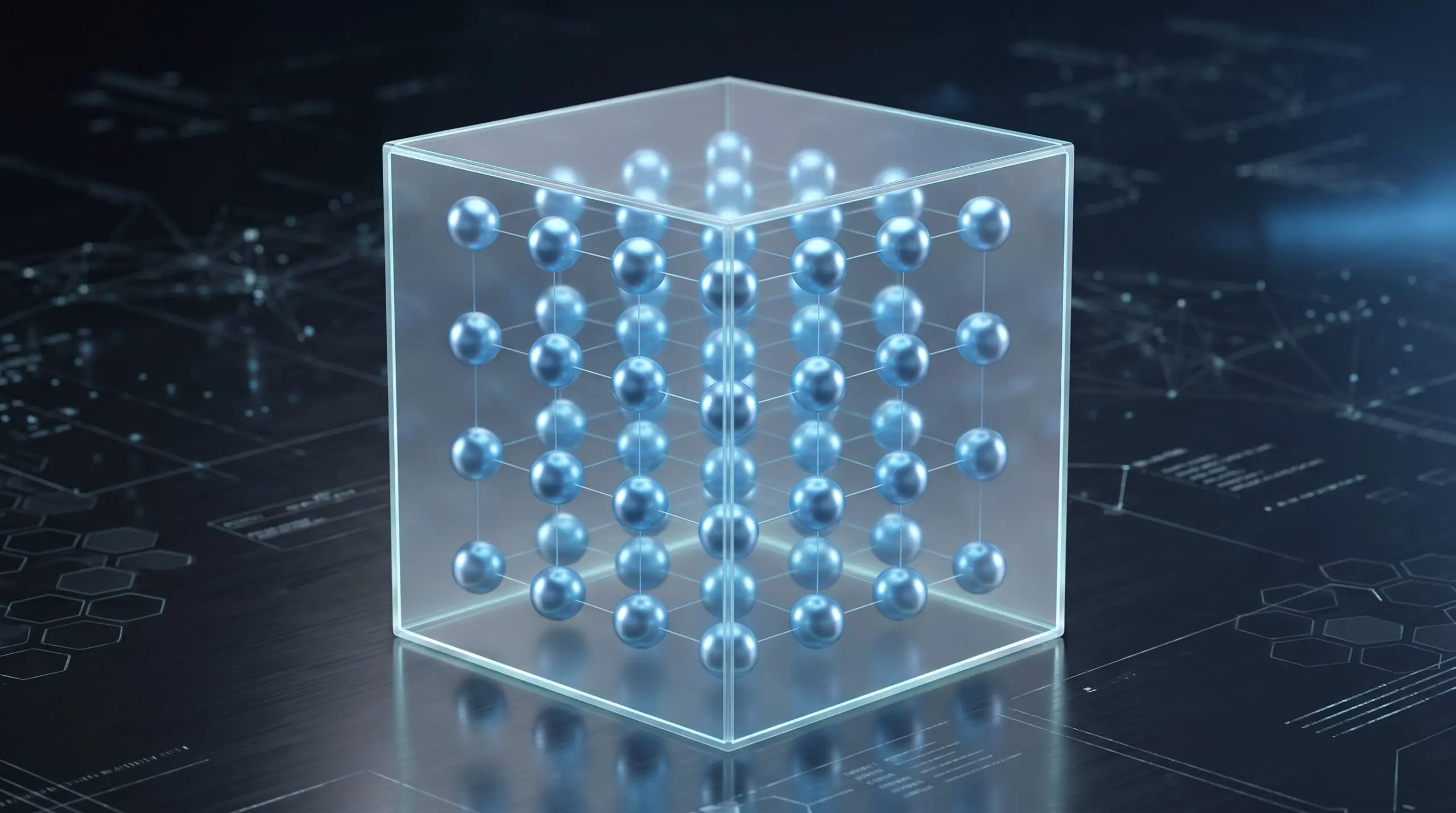
Quantum state protection protocols using a ‘collisional model’ now safeguard qubits and logical qubits without needing detailed knowledge of environmental noise. The methods strongly protect both single-qubit and entangled states against general disruptive processes, enhancing reliability and scalability in emerging quantum architectures. The framework preserves an arbitrary number of qubits during computation or storage, providing a promising approach for practical quantum information processing.
New techniques protect quantum data from disruption without requiring precise understanding of environmental ‘noise’. These protocols work by safeguarding individual and entangled qubits, the basic units of quantum information, against general disruptive processes. This advancement enhances reliability in emerging quantum computing designs by preserving multiple qubits during processing or storage, offering a practical approach for future technologies. Researchers are addressing the inherent fragility of quantum systems with new protocols designed to protect qubits during computation or storage.
‘Noise-agnostic’ methods have been developed, error correction systems akin to noise-cancelling headphones which function regardless of the specific source of disturbance affecting delicate arrangements of atoms representing information. The techniques safeguard both individual and combined units called logical qubits, built from multiple physical qubits like assembling Lego bricks for greater stability, against general disruptive processes. This enhancement preserves an arbitrary number of these fundamental components, providing a practical approach for future technologies. But will this framework prove strong enough to overcome all real-world interference?
Noise-agnostic protocols enhance qubit preservation through collisional decoupling
Protocols demonstrably safeguard arbitrary single-qubit and entangled states against general disruptive processes, achieving this without prior knowledge of environmental ‘noise.’ Unlike existing methods demanding detailed understanding of interference sources, these new approaches represent an advancement for unpredictable or unknown disturbances affecting qubit stability during computation or storage. By employing a ‘collisional model,’ they sidestep full characterisation of noise dynamics; complex interactions between qubits and an ancillary system are represented as simpler “collisions” designed to preserve core data regardless of external factors.
Arbitrary single-qubit states were successfully preserved even with unpredictable environmental disturbances, maintaining fidelity above 0.95 across simulated ‘noise’ conditions. Logical qubits, essential building blocks for more complex computations, also remained protected under identical circumstances, demonstrating scalability beyond individual units. Current results do not yet demonstrate performance in real-world quantum hardware. The team does not detail how effectively these protocols will function on actual devices or address the significant engineering challenges required for large-scale implementation, however promising these findings may be.
Ancillary qubit scalability limits near-term fault tolerance gains
While offering a path toward reliable quantum computation, these protocols rely on an ancillary system and introduce practical hurdles. The team does not detail how effectively these ‘helper’ qubits scale with increasingly complex systems; adding them increases overhead and could negate benefits if too many are needed to protect just a few logical qubits. Establishing principles protecting fragile quantum states regardless of specific noise types remains valuable nonetheless.
Establishing protocols independent of detailed error modelling offers long-term benefits for building strong and reliable future computers despite the engineering challenges in scaling up such systems. Researchers from Università degli Studi di Palermo, collaborating with Nicolaus Copernicus University and University of Electronic Science and Technology, demonstrated two new protocols for protecting quantum information. These methods employ a ‘collisional model,’ shielding qubits without needing detailed knowledge about disruptive environmental factors through carefully engineered interactions between protected systems and ancillary components; this approach provides a promising foundation. Despite current practical limitations, the team’s protocols offer a route to durable quantum computing by shielding information from disruptive noise.
Researchers successfully developed two new quantum state protection protocols based on a collisional model that shield qubits from environmental disturbances. This work demonstrates preservation of both single-qubit and logical qubit states against general noise processes while operating independently of specific error characteristics, maintaining fidelity above 0.95 in simulations. The methods utilize interaction with additional “ancillary” components to achieve robustness for an arbitrary number of qubits, enhancing reliability as quantum architectures scale. These results establish a framework offering potential benefits for practical quantum information processing despite current limitations regarding real-world hardware implementation and scalability challenges.
👉 More information
🗞 Detection and Inhibition of Decoherence Through Collisions: A dynamical approach
✍️ Sagnik Chakraborty, Srijon Ghosh, Federico Amato and Rosario Lo Franco (Università degli Studi di Palermo); Gniewomir Sarbicki and Dariusz Chruściński (Nicolaus Copernicus University)
🧠 ArXiv: https://arxiv.org/abs/2610.39657

See today’s quantum computing news on Quantum Zeitgeist for the latest breakthroughs in qubits, hardware, algorithms, and industry deals.