
Google Quantum AI reported a 3.20 x 10^-8 logical error rate achieved on a 105-qubit processor. This result is part of a week focused on error mitigation. IBM researchers verified a distance-24 quantum error-correcting code using the QEClean framework, and Q-CTRL demonstrated 0.99 fidelity with magic states. These advances require sustaining those corrections, a challenge Google’s “walking stability circuit” addresses by combating errors over time. Bluefors and Rigetti Computing are collaborating to design cryogenic platforms supporting systems scaling to 10,000 qubits, prioritizing reliable, high-uptime operation.
Reducing error isn’t solely about better hardware. Google DeepMind uses AI agents to shrink the computational cost of quantum algorithms for fusion and drug design, optimizing existing algorithms to demand less of imperfect qubits. This agent-driven approach is formally verified with the open-source Lean library, prioritizing mathematical correctness alongside computational power. Microsoft’s new Israeli team maps quantum encryption risks, showing the urgency of preparing for a post-error world.
The coming months will reveal whether these parallel efforts, building more hardware, refining existing algorithms, and preparing for a quantum-resistant future, can combine into a scalable and secure quantum computing ecosystem.
1. Google Quantum AI Achieves 3e-8 Logical Error Rate on 105-Qubit Processor

Google Quantum AI researchers demonstrated a logical error probability of 3.20 x 10^-8 across 60 cycles using a 105-qubit processor. This result was achieved through a “walking stability circuit” that combats errors persisting over time, a challenge beyond traditional quantum memory experiments. The team identified data-qubit heating to a higher energy state as a key error source and reduced spacetime logical error by 38% with adaptive syndrome extraction. Scaling experiments to 7×7 qubit patches showed sustained temporal error suppression, establishing a new benchmark for evaluating quantum processors and showing the need for hardware mitigation of external radiation.
2. Google DeepMind Agents Reduce Quantum Circuit Size for Fusion and Drug Design
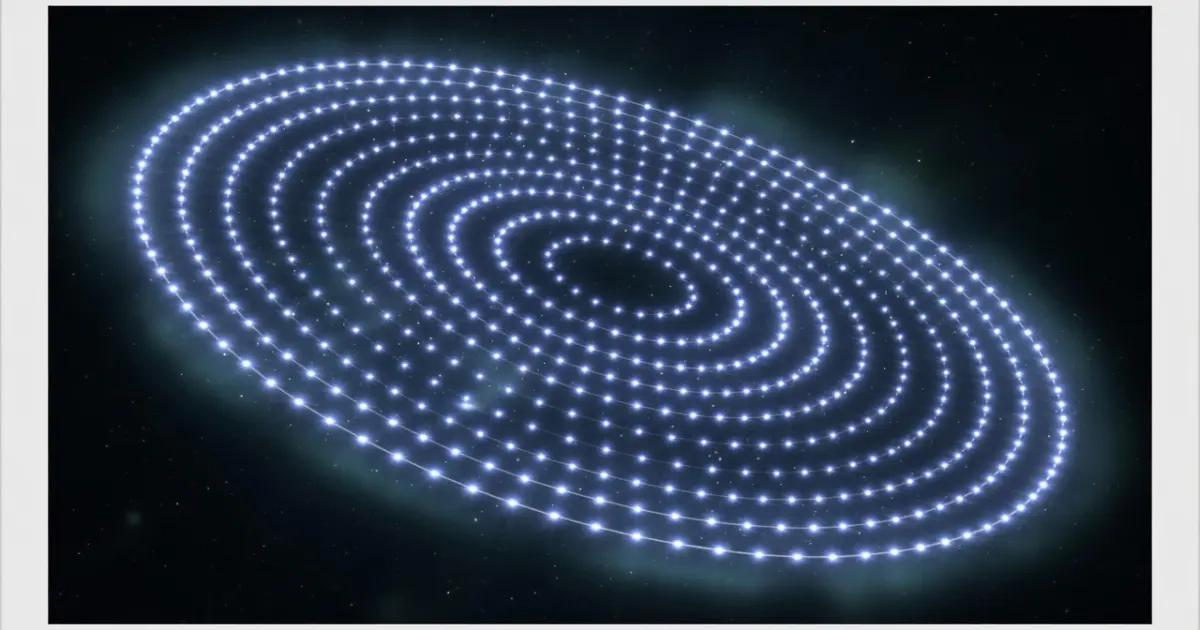
Google DeepMind researchers are using AI agents to actively improve quantum algorithms, rather than simply running them. These Gemini 4 agent teams collaborated to reduce the computational cost of a fusion energy calculation by 11.8 times, lowering the qubit requirement from 5,650 to 4,338. The team also achieved a 2.5 times speedup in drug design simulations, reducing qubit needs from 481 to 333, and a 2.57 times improvement to Grover’s algorithm. By formally verifying improvements with the Lean library, now open-sourced on GitHub, the researchers demonstrated a new approach to quantum computing research, focusing on agent-driven development guided by mathematical correctness.
3. Google Quantum AI Designs Chip with Constant Control Lines
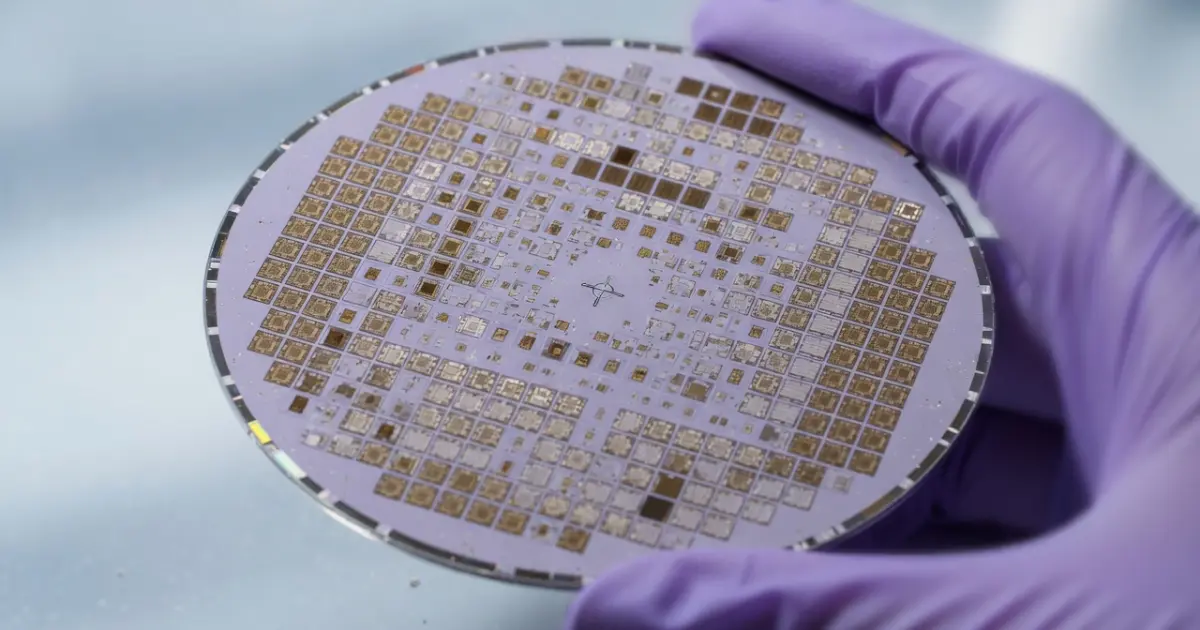
Researchers from Google Quantum AI, with collaborators at Stanford University, UC Berkeley, and Caltech, have detailed a new quantum processor architecture. The design aims to control qubits using a constant, limited number of external wires, estimated at 30 or fewer, regardless of the chip’s size or computational complexity. This is achieved by mirroring classical processor design, using a fixed circuit and geometrically local gates to move data through a planar array, reducing the need for individual qubit control. By minimizing external wiring, a major source of error, this architecture could enable more scalable and reliable quantum computing. Further work is needed to demonstrate its performance in practice.
4. Quantum Machines and IBM Develop Cross-Platform Compiler for 53-Qubit Systems
Quantum Machines and IBM collaborated to create a compiler translating between their quantum programming languages. Released in the second quarter of 2020, this tool addresses interoperability issues by bridging differing programming approaches. The partnership also delivered a quantum algorithms library, simplifying development for users of both platforms. Access to IBM’s Quantum Computation Center, including its 53-qubit system, enabled this swift development cycle. This compiler allows users to optimize algorithm execution across various quantum processors, from current applications to future error-correction challenges.
5. Bluefors and Rigetti Computing Scale Quantum Systems for Data Centers
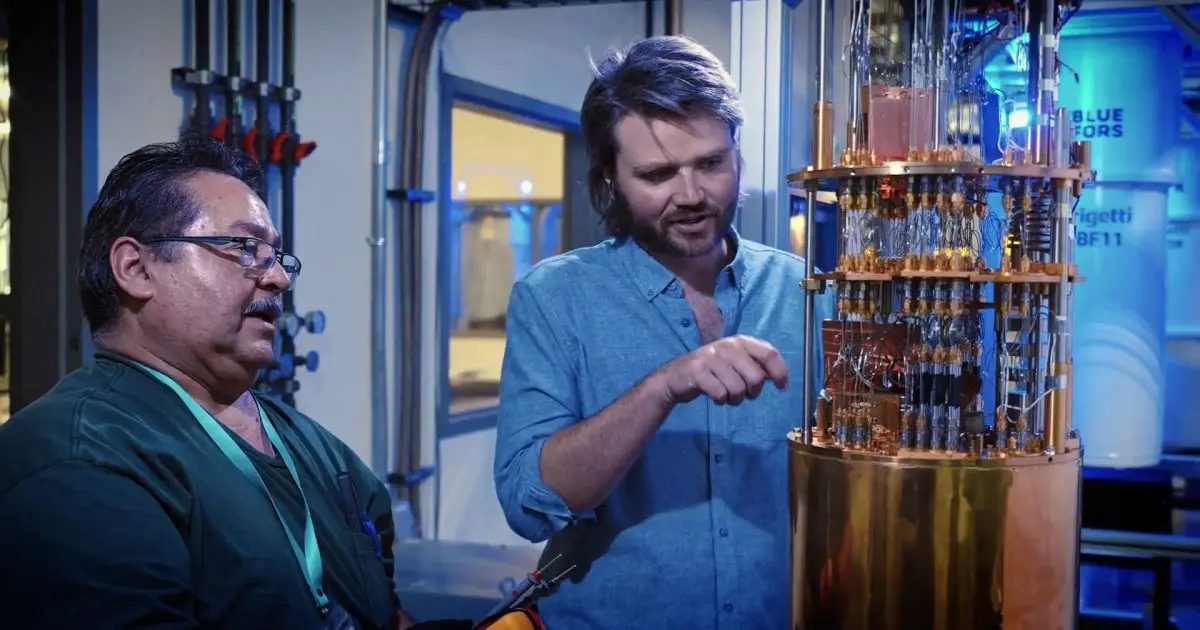
Bluefors and Rigetti Computing are collaborating to integrate quantum processors with existing high-performance computing infrastructure. Rigetti is developing modular quantum processing units (QPUs) built from repeatable chiplet manufacturing, aiming to scale qubit counts beyond the limitations of monolithic designs. Bluefors supports this effort with a cryogenic platform designed to accommodate systems ranging from 1,000 to 10,000 qubits, prioritizing efficient installation and expansion within data centers. This coordinated approach focuses on building reliable, high-uptime quantum computers and simplifies integration for customers deploying on-premises quantum computing systems.
6. Pasqal, ParityQC, and Thales Win Funding for Fault-Tolerant Quantum Computing

Pasqal coordinated the three-year CoPaNA research project, funded by the European Defence Fund, uniting them with ParityQC and Thales Nederland to develop a blueprint for scalable, fault-tolerant quantum computing. Using Pasqal’s neutral-atom technology and ParityQC’s error-correcting codes, Thales Nederland assessed the computational demands of running defense simulations for real-time security applications. This collaboration showed the need for a holistic architectural approach to building reliable quantum computers, contributing to a stronger European quantum ecosystem and aligning with the 2025 EU Quantum Strategy. The project’s dual-use nature extends applications beyond defense, and its work contributes to the European Defence Technological and Industrial Base.
7. IBM’s QECLean Verifies Distance-24 Quantum Error Correction Code
IBM researchers Stavan Jain, Nithin Raveendran, and Aws Albarghouthi have formally verified a quantum error-correcting code with a distance of 24. They accomplished this using QEClean, a new framework built on the Lean proof assistant that uses machine-checked proofs to confirm code reliability. QEClean employs “code combinators” to analytically prove the distance of large codes, like the surface code, exceeding the limits of standard algorithmic methods. This verification provides a foundation for quantum error correction, enabling reasoning about hardware implementations and the construction of verified compilers. The framework is now available for use by other researchers and developers.
8. Q-CTRL Achieves 0.99 Fidelity with Magic States
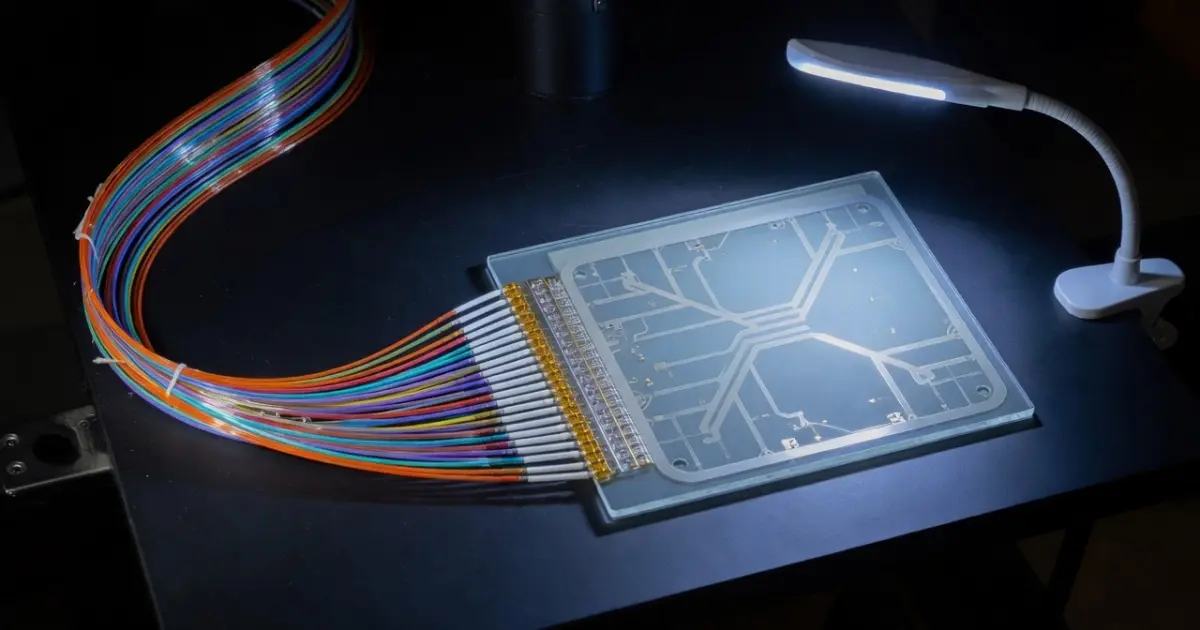
Q-CTRL achieved three new records for magic state cultivation and transfer using IBM Quantum’s Nighthawk processor. Their software and protocols reduced state error by a factor of ten, and demonstrated a surface-code fidelity exceeding 0.99 immediately following lattice surgery, a technique that teleports a quantum state directly into a standard error-correcting code. This work, building on a concept proposed in 2025, achieved a memory fidelity of 0.991 after ten rounds of error correction with a logical error rate of just 0.14 percent per round, surpassing previous benchmarks set on Google’s Willow processor. By combining magic state cultivation with lattice surgery, Q-CTRL’s approach lowers the resources needed for fault-tolerant quantum computing and offers a pathway to more efficient, scalable quantum computation.
9. IBM Research Boosts Quantum Error Correction Throughput to 1 Million Rounds Per Second
IBM Research, with contributions from David Awschalom, John Martinis, Quantum AI, and Abhinav Kempichhi, systematically categorized quantum error correction techniques. The team classified decoder designs by whether they build in layers after code creation or embed error mitigation directly into the code itself. This analysis revealed a sustained decoding throughput increase from approximately 10^3 to over 10^6 syndrome rounds per second using field-programmable gate arrays and application-specific integrated circuits. The research clarifies current approaches and pinpoints areas for future development in practical error correction, and identifies trade-offs between simplifying calculations and needing more powerful hardware. The work identifies areas for future development, but scaling performance across larger systems and diverse qubit modalities remains unproven.
10. Microsoft Establishes Israeli Team for Quantum Encryption Risk Mapping
Microsoft has created a new development group within its Israeli R&D center to proactively address quantum-era encryption vulnerabilities. Led by Inbar Badian, the team will use AI-powered tools and autonomous agents to map an organization’s existing encryption, identifying and prioritizing risks. This initiative responds to the threat of attackers storing encrypted data now to decrypt with future quantum computers. Microsoft aims to complete its transition to quantum-resistant cryptography by 2029, and this team will accelerate that process by providing the visibility needed to address current weaknesses and prepare for the algorithmic shift. The Israeli R&D center’s existing expertise in AI and cybersecurity makes it central to these preparations.



See today’s quantum computing news on Quantum Zeitgeist for the latest breakthroughs in qubits, hardware, algorithms, and industry deals.