

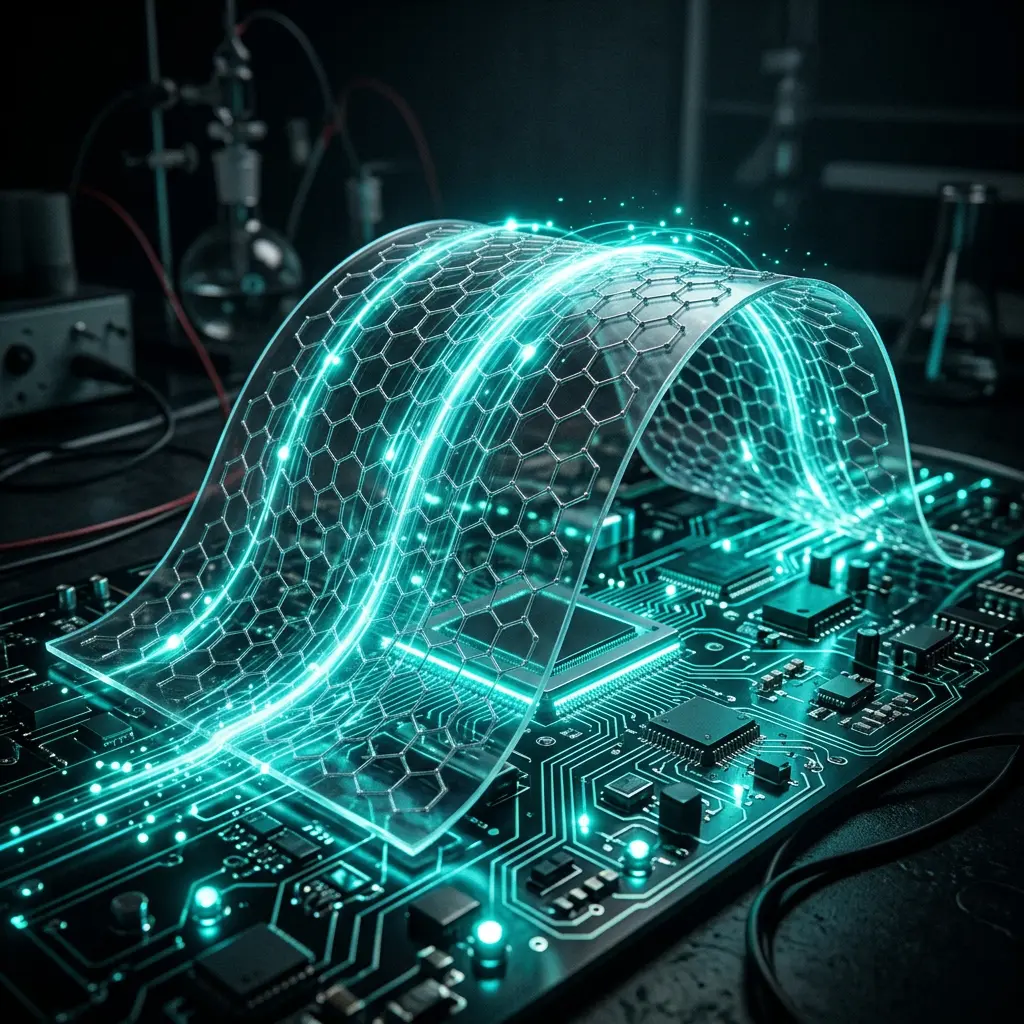
Researchers have developed a quantitative framework for determining when two-dimensional materials can achieve structural superlubricity, offering new insight into how friction can be minimized at the nanoscale. In a new study, Li Wang of the Nanjing University and Yunjie Ye of the Sichuan ZeroNestor Microelectronics Technology Co., introduce a thermodynamic pinning criterion that distinguishes between fully sliding and pinned phases, providing a measurable way to predict whether layered materials will move without resistance.
Structural superlubricity is often associated with incommensurate atomic lattices, where mismatched crystal structures greatly reduce friction. However, the researchers show that incommensurability and elastic reconstruction alone are not sufficient to guarantee frictionless sliding. Instead, the transition between sliding and pinned behavior is governed by thermodynamic limits defined through the maximum and minimum depinning torques, establishing a more rigorous criterion for identifying superlubric states.
To evaluate the behavior of reconstructed interfaces, the researchers examined the reconstruction susceptibility measure, Λ. Using a 15-harmonic Leven potential, they increased the largest tested value of Λ from 0.142 to 0.212, extending the range over which structural reconstruction could be analyzed. They emphasize that a value of Λ equal to 1 represents a reconstruction scale rather than a universal threshold for a static phase transition, clarifying the interpretation of this widely discussed parameter.
The study also challenges conventional views of friction in moiré materials. Simulations performed using a diffusion quantum Monte Carlo potential showed that even a clean, smooth, infinite moiré continuum can undergo elastic structural reconstruction without developing equilibrium or metastable energy barriers that would prevent sliding. This finding indicates that structural reconstruction does not necessarily lead to pinning, reinforcing the distinction between reconstruction and frictional behavior.
Across the zero-temperature in-plane models examined, the researchers consistently identified an elastically relaxed sliding regime, demonstrating that fully reconstructed interfaces can remain superlubric under appropriate thermodynamic conditions. Rather than relying solely on geometric alignment or lattice mismatch, the proposed framework provides a quantitative method for predicting when two-dimensional materials will remain free to slide.
By establishing a thermodynamic criterion for structural superlubricity, this work offers a practical foundation for engineering ultralow-friction materials. The results could guide the design of next-generation nanoscale mechanical systems, layered electronic devices, and other technologies where reducing friction and wear is essential.
👉 More information
🗞 A Thermodynamic Pinning Criterion for Two-Dimensional Structural Superlubricity
✍️ Li Wang and Yunjie Ye
🧠 ArXiv: https://arxiv.org/abs/2607.19732



See today’s quantum computing news on Quantum Zeitgeist for the latest breakthroughs in qubits, hardware, algorithms, and industry deals.



