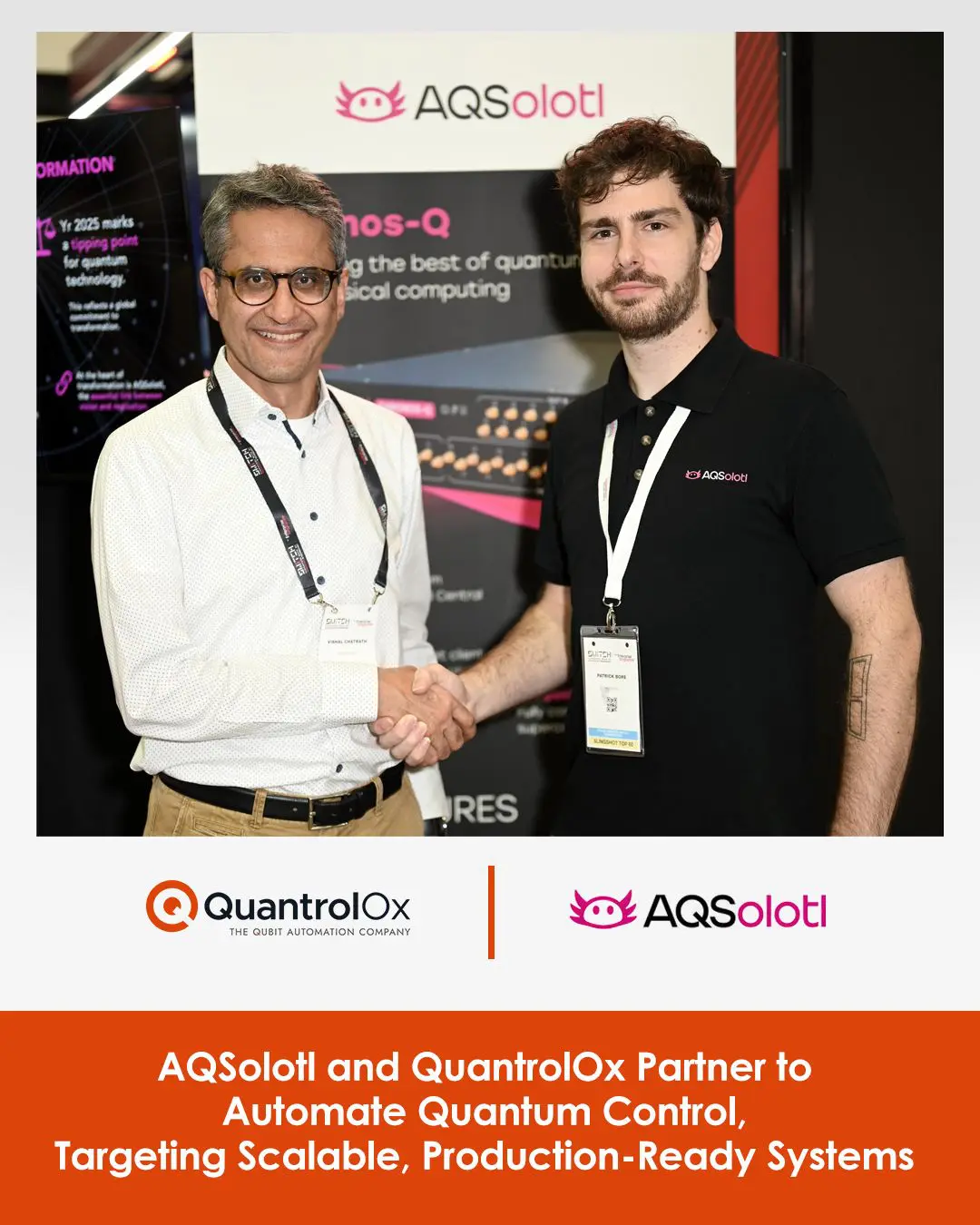
QuantrolOx is partnering with AQSolotl to integrate AQSolotl’s Chronos-Q quantum control system with QuantrolOx’s #QuantumEDGE, indicating a shift from controlling quantum processors to automating the challenging calibration process. The collaboration aims to create a unified hardware-software stack, addressing a critical need as quantum processors increase in complexity; automation is becoming essential to reduce manual tuning and improve system stability. QuantrolOx states that this partnership brings machine learning-driven workflows closer to the control hardware layer, supporting more repeatable performance for researchers and quantum engineers. QuantrolOx currently has 5,139 followers on LinkedIn, which provides a baseline for measuring the reach of this effort to build scalable, production-ready quantum systems.
QuantrolOx and AQSolotl Integrate Chronos-Q for Quantum Control
Patrick BORE of AQSolotl is involved in the integration, alongside Vishal Chatrath and Jelena Trbovic of QuantrolOx, demonstrating a focused effort on practical implementation. The companies anticipate that this unified approach will accelerate the development of production-ready quantum systems, a key goal for the field. The combined system is designed to reduce the extensive manual adjustments currently required to maintain optimal performance in quantum hardware, a process that becomes increasingly challenging with larger and more intricate processors. By automating calibration, the team hopes to unlock greater consistency and reliability, enabling more powerful and dependable quantum computations.
Automated Calibration Reduces Manual Tuning of Quantum Systems
The increasing complexity of quantum processors is driving demand for automated calibration techniques, moving beyond manual adjustments that currently limit scalability and consistency. QuantrolOx is collaborating with AQSolotl to integrate the Chronos-Q control system with its #QuantumEDGE platform, aiming to establish a unified hardware-software stack focused on automation. This integration signifies a shift from simply controlling quantum processors to actively automating the notoriously difficult calibration process, a critical step toward stable, production-ready systems. By embedding artificial intelligence directly into the quantum control process, the team hopes to address the challenges of maintaining performance as systems grow in size and intricacy, ultimately accelerating development timelines and improving overall system reliability.
Together, the aim is to create a more unified hardware-software stack for quantum control and automated calibration – helping quantum teams reduce manual tuning, improve system stability, and move faster toward scalable, production-ready quantum systems.


See today’s quantum computing news on Quantum Zeitgeist for the latest breakthroughs in qubits, hardware, algorithms, and industry deals.