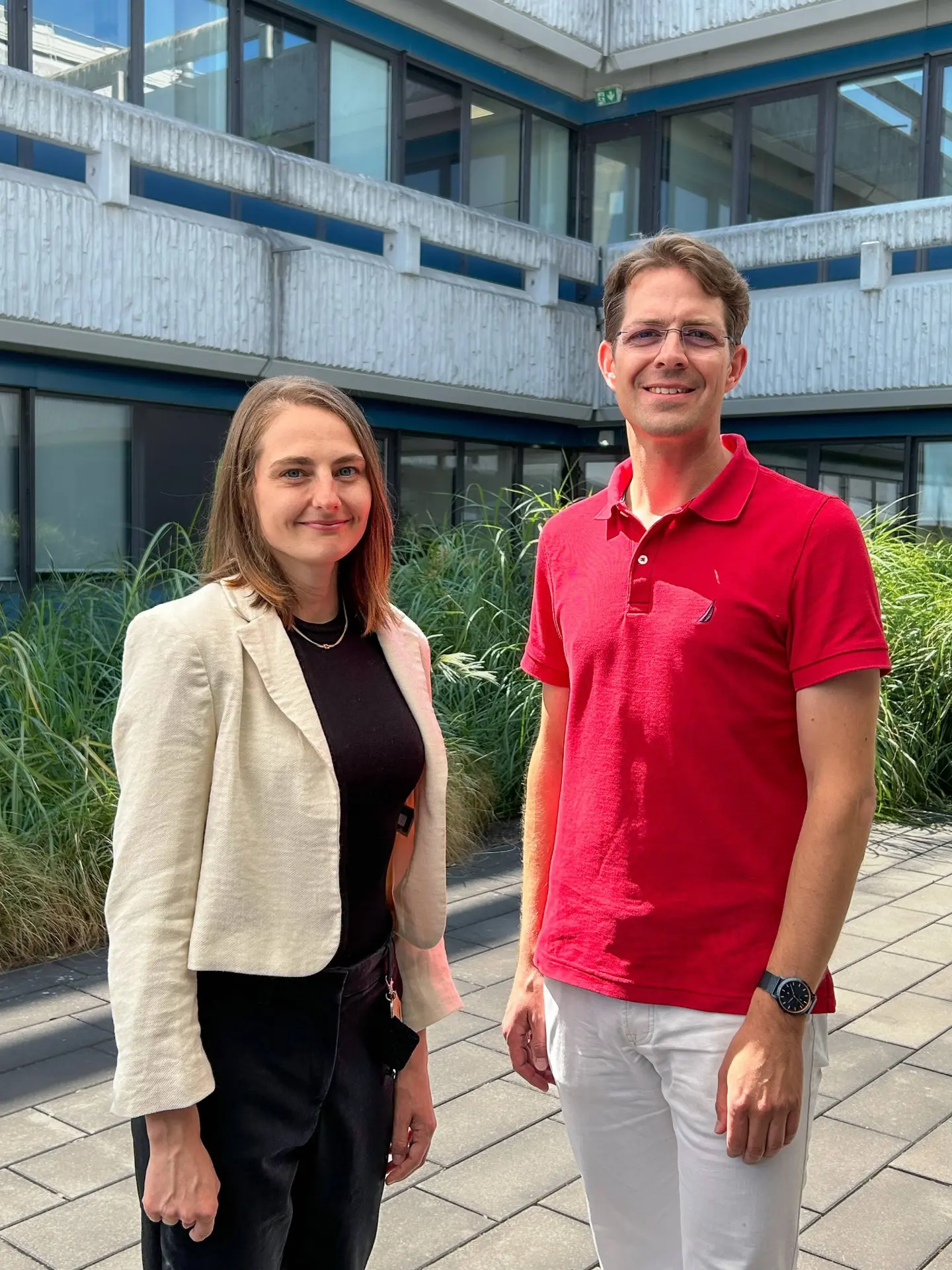
The Fraunhofer Institute for Applied Solid State Physics IAF has published two papers challenging how quantum advantage is measured, suggesting current methods lack sufficient rigor. Researchers are pushing for more realistic benchmarks in quantum chemistry by questioning the common practice of modeling molecules as perfectly isolated systems.
These idealized approaches, they argue, don’t reflect natural conditions where molecules constantly interact with their environment; a shift is needed to account for “open dynamics that are ubiquitous in nature.” “The exciting question is not just whether quantum computers can outperform classical computers, but when, why, and under what conditions,” says Dr. Florentin Reiter, head of the Quantum Systems business unit at Fraunhofer IAF.
Open System Dynamics for Robust Quantum Chemistry
This work challenges the prevailing practice of modeling molecules as closed systems perfectly isolated from their environment, asserting that real-world interactions are critical to accurately assessing potential quantum advantages. The review, “Beyond Unitary Quantum Simulation: Open-System Approaches for Quantum Chemistry Toward Quantum Advantage,” proposes a shift toward incorporating these interactions into quantum simulations, acknowledging the constant energy release and relaxation inherent in natural processes. This focus on open dynamics stems from the understanding that dissipative processes aren’t simply disturbances, but potentially valuable resources for quantum algorithms.
Researchers suggest controlled dissipation can aid in preparing, stabilizing, and sampling quantum states relevant to chemistry, solid-state physics, and materials science. This contrasts with traditional approaches that primarily focus on Hamiltonian dynamics of closed systems, a simplification that may not translate to practical applications.
A second publication examines the Quantum Approximate Optimization Algorithm (QAOA) and its ability to maintain efficiency as problem sizes increase, a critical factor in demonstrating genuine quantum advantage. Vanessa Dehn, a specialist in quantum hardware simulation, emphasizes that small-scale demonstrations alone are not enough. Her study, “Extrapolation method to optimize linear-ramp quantum approximate optimization algorithm parameters: Evaluation of runtime scaling,” utilizes an extrapolation methodology to transfer algorithm parameters from smaller to larger problems, a step toward practical applicability.
Dehn adds, “The crucial question is what happens as a problem grows larger. That is exactly where it becomes clear whether an approach can become relevant in the long term.” These combined efforts aim to move quantum advantage from a theoretical promise to a measurable reality, demanding more rigorous benchmarks and a move away from overly simplified models.
The exciting question is not just whether quantum computers can outperform classical computers, but when, why, and under what conditions.
Dr. Florentin Reiter, head of the Quantum Systems business unit at Fraunhofer IAF
Fraunhofer IAF Review Advocates Realistic Advantage Benchmarks
Current methods, the institute suggests, lack the rigor needed to confidently assert a quantum computer’s superiority over classical approaches. This push for more robust benchmarks stems from a recognition that many existing quantum simulations rely on oversimplified models of the physical world, potentially leading to misleading results. Researchers argue that ignoring these interactions creates an unrealistic scenario, particularly for applications in chemistry, solid-state physics, and materials science where they are fundamental.
Instead of viewing dissipation as a hindrance, the review proposes harnessing it as a resource for preparing and stabilizing quantum states, potentially enhancing algorithmic performance. Dr. Dehn states, “Small-scale demonstrations alone are not enough.” These combined efforts aim to move the field beyond theoretical promises and toward verifiable application advantages.
Small-scale demonstrations alone are not enough.
Vanessa Dehn, author and specialist in quantum hardware simulation
Source: https://www.iaf.fraunhofer.de/en/media-library/press-releases/quantum-advantage-reassessed.html




See today’s quantum computing news on Quantum Zeitgeist for the latest breakthroughs in qubits, hardware, algorithms, and industry deals.