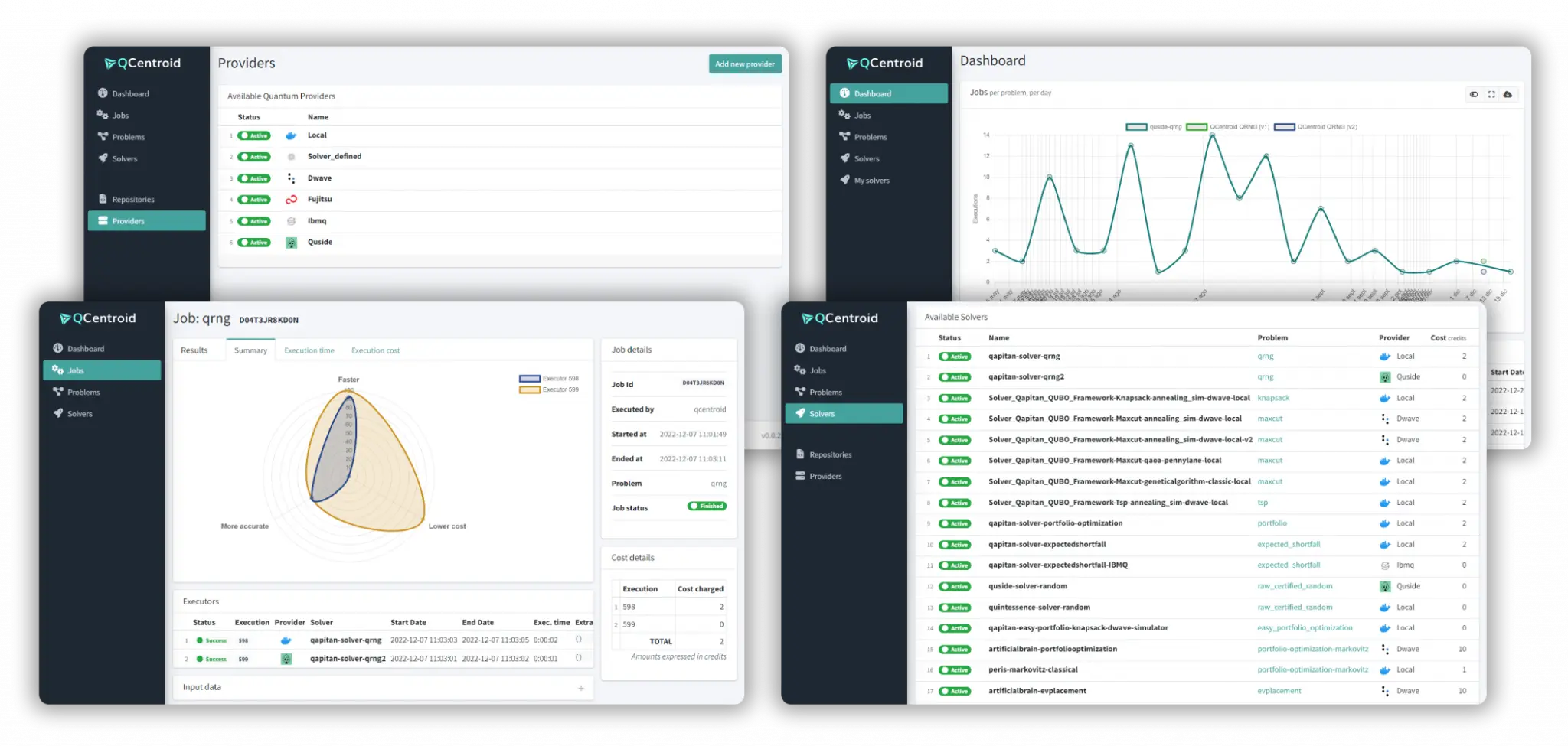
QCentroid is demonstrating QCentroid Missions this week at NVIDIA GTC Berlin, a new capability designed to objectively evaluate computational solutions for enterprise teams, the company says. Rather than prioritizing quantum approaches, the QuantumOps platform uses expert AI agents to benchmark classical, quantum-inspired, GPU-simulated, and QPU-ready methods against an organization’s existing baseline.
“Quantum teams are small, while the number of questions coming from the business continues to grow,” says Carlos Kuchkovsky, CEO and co-founder of QCentroid; with Missions, teams define their goals and the agents determine the optimal path, which may even be to retain the current classical solution.
QuantumOps Missions: Goal-Driven Solver Evaluation Across Approaches
This system moves beyond simply testing quantum algorithms in isolation, instead focusing on whether a quantum solution demonstrably improves upon existing methods for specific business goals. The platform’s core function is to provide validated evidence, allowing teams to make informed decisions about computational investments rather than assuming the benefits of quantum computing. The QuantumOps platform establishes a common benchmarking contract, beginning with an organization’s current solver as the baseline for comparison.
A Mission, as QCentroid terms these evaluations, is defined by a measurable goal, such as reduced execution time or improved solution quality, along with clearly defined computational and operational limits, according to the company. These limits encompass compute budget, GPU hours and permitted execution backends, ensuring a fair and constrained evaluation. Validation layers are integrated into the workflow; if an initial result appears unexpectedly strong, the system independently recomputes it to ensure accuracy before reporting.
This approach represents a departure from traditional quantum computing development, where the focus often lies on proving the potential of quantum algorithms. Instead, QCentroid Missions aims to determine which computational approach best meets a business goal under agreed-upon constraints. Consider collateral allocation as an example; a Mission could compare an exact optimization approach, quantum-inspired annealing and a QAOA-based solver using the same evaluation framework. As problem size increases, a time-limited exact solver may struggle, while alternative approaches may still produce feasible allocations of comparable quality, and the system objectively assesses these trade-offs.
“With Missions, teams no longer have to manually drive every stage of an experiment. They define what they want to improve, how far the system is allowed to go and what counts as proof. The agents run the cycle, and the team keeps the decision,” Kuchkovsky explained. This stance, for a company developing quantum solutions, highlights a commitment to delivering tangible value, even if that means recommending against a quantum implementation. Circuit simulation within QCentroid Missions defaults to NVIDIA accelerated computing through integration with NVIDIA CUDA-Q.
Sam Stanwyck, director of quantum product at NVIDIA, stated, “Useful workloads in future quantum supercomputers will draw on CPUs, GPUs and QPUs.” This integration emphasises a vision of hybrid computing, where quantum processing units work alongside classical CPUs and GPUs, rather than replacing them entirely. The platform uses a unified experiment lifecycle across all solver types, with QPU execution remaining an option only when justified by the evidence.
Human oversight remains central to the process. People are responsible for defining the objectives of a Mission, setting resource limits and establishing the level of evidence required for a decision. The system automates discovery, feasibility analysis, solver design, implementation, benchmarking, debugging, and iteration, but the final judgment rests with the team, the company says.
This balance between automation and human expertise is intended to accelerate the adoption of effective computational solutions, regardless of the underlying technology. QCentroid Missions is scheduled to roll out to QCentroid Platform customers starting in the fourth quarter of 2026, offering a new approach to evaluating and deploying computational resources for enterprise applications.
Quantum teams are small, while the number of questions coming from the business continues to grow.
Carlos Kuchkovsky, CEO and co-founder of QCentroid
Source: https://qcentroid.xyz/




See today’s quantum computing news on Quantum Zeitgeist for the latest breakthroughs in qubits, hardware, algorithms, and industry deals.