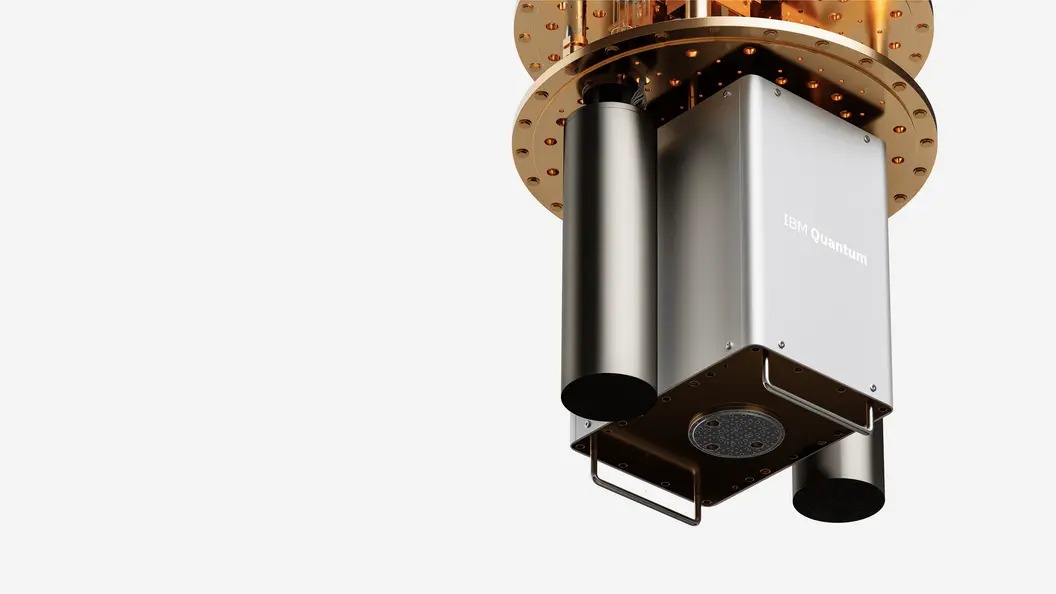
IBM Quantum Network reports demonstrating quantum advantage by the end of 2026, running computations beyond purely classical methods with rigorously verifiable results. This achievement, announced at IBM Quantum Developer Conference 2026, marks a milestone in the pursuit of useful quantum applications. The company is now tracking progress across four pathways: frontier circuits, IBM Quantum Starling, integrations and practical applications, to move beyond benchmark results. “But advantage is a milestone, not a destination,” IBM Quantum Network states, emphasizing the ongoing effort to solve real-world problems in fields like energy and drug discovery.
IBM Nighthawk r2 Achieves 7,500+ Operation Quantum Circuits
IBM Quantum Nighthawk r2, the company’s most advanced processor, is now capable of executing quantum circuits exceeding 7,500 operations, a feat enabled by its square-lattice connectivity across 120 programmable qubits and 458 physical qubits. This architecture allows the processor to handle circuits that present significant challenges for classical simulation methods, marking a substantial leap in computational complexity.
The increased throughput of Nighthawk r2, reaching up to 100,000 samples per second, represents a 25-fold improvement over the IBM Quantum Heron processor, accelerating the pace of quantum experimentation. Clients and partners have already used Nighthawk r2, running over 34 billion circuits and reporting performance gains of up to 19x compared to previous IBM Quantum processors, demonstrating the practical impact of the new hardware.
Algorithmiq, for example, extended an experiment using the processor’s connectivity, creating circuits that demand significantly more memory from classical tensor-network methods, an estimated 240x increase, while simultaneously running eight times faster on the quantum hardware. This combination of accelerated quantum workloads and increased challenges for classical computation highlights the potential of Nighthawk r2 to push the boundaries of what’s computationally feasible.
The team achieved this performance through probabilistic error amplification, reliably executing circuits with over 7,500 quantum operations. The speed of Nighthawk r2 is not merely a technical specification. It is a capability that makes complex, or “frontier,” circuits cost-efficient and is a testing ground for future error correction techniques.
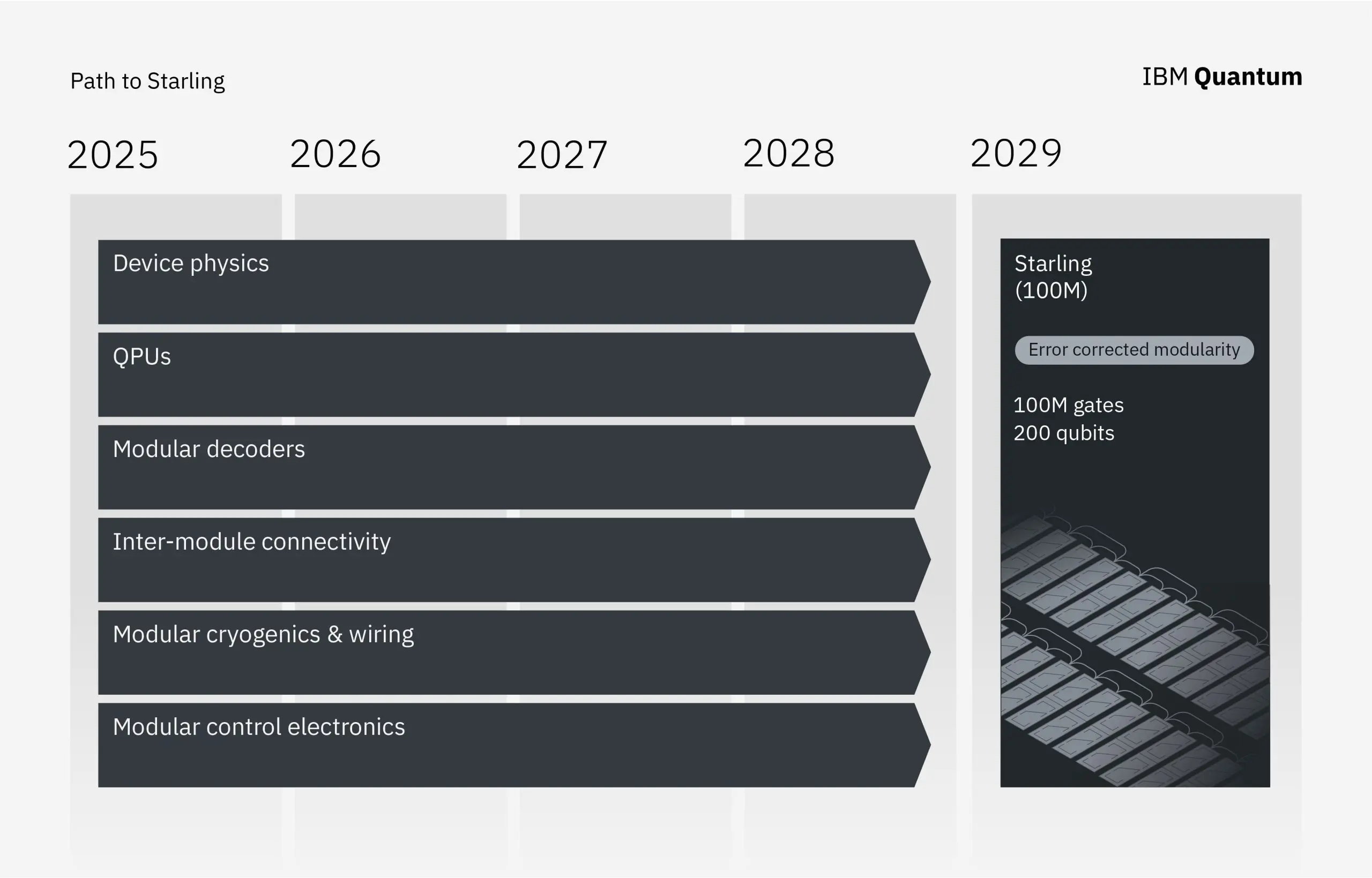
IBM Quantum Network has begun replicating advantage demonstrations using Nighthawk r2, and is providing hands-on tutorials, including a 64-qubit ergodicity experiment and a 96-qubit classical shadows analysis, to allow users to explore the processor’s capabilities. “The path to Starling,” a fault-tolerant quantum computer targeted for 2029, is being paved by these advancements, as the processor’s increased throughput brought IBM Quantum Network to a 100 kHz reset rate.
Beyond simply achieving more operations, IBM Quantum Network is focusing on scaling advantage to practical applications, recognizing that single circuits are insufficient for many real-world workloads. Demonstrations like operator Loschmidt echo estimation on Nighthawk r2 highlight the need for hundreds of millions, or even billions, of samples distributed across both quantum and classical resources.
To address this, the company is implementing a directed execution model, a core component of its which provides researchers with greater control and transparency over the entire computation without sacrificing performance. This model uses a smooth, composable set of open-source Qiskit tools, allowing for more efficient and flexible workload management.
Nighthawk r2 Demonstrates Up To 19x Performance Gains
IBM Quantum Network’s IBM Quantum Loon processor, demonstrated at the 2025 Quantum Developer Conference, integrates the components of an error-correcting qLDPC processor onto a single chip, achieving performance comparable to Nighthawk r2 and laying the groundwork for future scalability. IBM Quantum Network has met its stated goals for the year, marking milestones across all development pathways, and is now extending its roadmap to further accelerate progress. The company’s success in achieving quantum advantage with Nighthawk r2 demonstrates a commitment to translating theoretical advancements into tangible capabilities.

Quantum Error Correction Co-Design with AMD & ORNL
Recent improvements to IBM Quantum Network’s devices, driven by artificial intelligence, have boosted the performance of high-error two-qubit gates by up to sevenfold, extending the capabilities demonstrated on the Nighthawk r2 processor. This advancement positions Nighthawk as a valuable platform for testing quantum error correction techniques, pairing pulse-level control, including mid-circuit measurement and fast classical feedback, with its speed and square-lattice connectivity at a scale demanded by real-world codes.
Early demonstrations now run multiple rounds of syndrome measurement end-to-end using Qiskit’s loop functionality via the IBM Quantum Platform, allowing researchers to explore error correction capabilities in greater depth. The company has established a new co-design platform for quantum error correction through collaboration with AMD and the U.S. Department of Energy’s Quantum Science Center at Oak Ridge National Laboratory, a partnership detailed in a recent IBM Quantum blog post.
This collaborative effort moves beyond isolated development of quantum and classical resources, enabling researchers to co-design algorithms across both systems and work toward capabilities essential for applications in chemistry and materials science. The work directly supports the broader goals of the U.S. Department of Energy’s Genesis Mission, which aims to achieve 100 logical qubits running 100,000 hard operations by late 2028, a target that requires both hardware and software innovation.
Decoders designed to catch and correct errors in real time now meet the performance requirements of the forthcoming IBM Quantum Starling processor, and IBM Quantum Network is developing a dedicated decoder chip to further enhance these capabilities. Complementing this progress, the latest cryogenic control ASICs from IBM Quantum Network now match the gate performance of room-temperature electronics, creating a cohesive system.
Underpinning these advancements is a new modular cryogenic design that maintains the necessary operating temperature and will be the foundation for future systems. This co-design approach is important for realizing the potential of fault-tolerant quantum computing, which is necessary to run valuable circuits in minutes rather than months. The anticipated IBM Quantum Starling processor, targeted for release in 2029, will require this level of fault tolerance to achieve its performance goals.
The development of modular cryogenics is also central to this effort, providing the necessary cooling infrastructure for both current and future quantum systems. The company’s commitment to advancing error correction is evident in its multi-faceted approach, encompassing hardware improvements, software development and collaborative partnerships.
This integrated strategy aims to translate quantum advantage, demonstrated through complex computations, into practical applications that can address real-world challenges in fields like materials science and drug discovery. One simulation experiment studying real magnetic materials run earlier this year delivered a 12x speedup, producing outputs consistent with neutron scattering experiments. This collaborative spirit, combined with technological advancements, positions IBM Quantum Network to deliver on its vision of a future powered by quantum computing.
Frontier Circuits Enable Cost-Efficient Quantum Advantage
This advancement isn’t merely about faster calculations. It directly addresses the cost-efficiency of running demanding “frontier circuits”, those pushing the boundaries of what quantum computers can achieve. By accelerating the rate at which data can be processed, Nighthawk r2 allows for more extensive simulations and experiments within a given timeframe, reducing the overall computational expense.
Nighthawk r2’s architecture, featuring 120 programmable qubits built from 458 physical qubits and a square-lattice connectivity, presents a unique challenge to classical simulation methods, requiring significantly more resources to replicate its capabilities. Algorithmiq’s experiments with Nighthawk r2 revealed that classical tensor-network methods would need an estimated 240 times more memory to achieve the same accuracy as the quantum computation, while the quantum process itself ran eight times faster.
This disparity highlights a core principle: gains in processor throughput and connectivity not only accelerate quantum workloads but also extend their reach into areas where classical computation struggles. The company’s strategy focuses on building a platform where speed and accuracy converge, enabling the development and testing of algorithms designed to mitigate the inherent instability of quantum systems.
This approach is not simply about achieving quantum advantage, demonstrating a calculation a quantum computer can perform that a classical computer cannot, but about making that advantage cost-effective and sustainable. Looking ahead to 2027, IBM Quantum Network plans to link two Nighthawk r3 processors, each designed to run 10,000 quantum operations on 520 programmable qubits, into a single 1,040-qubit system.
This integration strategy is driven by the realization that scaling quantum advantage to practical applications requires moving beyond isolated circuits. The goal is to create an integration layer capable of processing billions of samples at speed, while simultaneously expanding the tools needed to verify the accuracy and reliability of quantum computations.
IBM Quantum Network has focused on accelerating frontier circuits, advancing components toward a fault-tolerant Starling, building an integration layer and expanding tools to carry verifiability from advantage into practical applications. This complex approach aims to translate demonstrated quantum advantage into tangible benefits across a range of industries and research fields.
IBM Quantum Starling Targets 100 Million Operation Scale
This multi-pronged approach reflects a shift in focus from simply achieving computational milestones to building a quantum computing platform responsive to real-world workflows. Progress across these pathways is not isolated; each component informs the design of the others, a strategy important for a system as complex as the targeted IBM Quantum Starling processor. Reaching the scale of 100 million operations, a prerequisite for valuable circuit execution in minutes rather than months, demands a fault-tolerant quantum computer.
The first iteration of this, IBM Quantum Starling, is currently targeted for completion in 2029. This timeline is supported by recent advancements in modular cryogenic architecture, demonstrated by the successful connection of two cryogenic modules into a single system operating below 15 millikelvin in under five days. This achievement highlights the importance of infrastructure development alongside qubit performance improvements. The impact of increased speed and efficiency is already visible in industry experiments.
E.ON, for example, reported a 15x speedup on the Nighthawk r2 processor over the previous Heron processor while applying quantum machine learning to energy grid optimization. Further illustrating the demand for increased throughput, a collaboration between E.ON and Qoro distributed a 1,710-variable optimization problem across multiple quantum processors, consuming approximately 20 million samples. These large-scale experiments highlight the growing need for cost-effective sampling and efficient workflow orchestration. IBM Quantum Network is also encouraging community-driven benchmarking to validate results and expand the scope of quantum applications.
New working groups focused on Hamiltonian simulation, quantum machine learning, and partial differential equations are actively contributing to this effort. “To turn targets into results,” the company states, “IBM Quantum Network is expanding IBM Quantum Network’s application tooling.” This expansion includes the Qiskit optimization mapper, currently used by Allstate and a suite of new functions available in the IBM Quantum Functions Catalog, encompassing optimization functions, quantum feature vector generation and Fermi-Hubbard dynamics simulation.
These tools are designed to transform verified results into scalable applications, mirroring the transition from speed as a primary metric to usability and reliability. Indicating a sustained commitment to iterative development and a clear vision for the future of quantum computing, the company’s approach prioritizes building a reusable resource, enabling teams to deploy and scale solutions repeatedly without constant rebuilding, and encouraging a more collaborative workflow experience over time.



See today’s quantum computing news on Quantum Zeitgeist for the latest breakthroughs in qubits, hardware, algorithms, and industry deals.