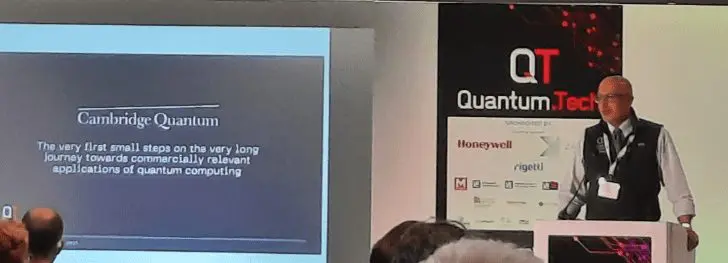
Illyas Khan became a billionaire after Quantinuum’s Nasdaq debut last week, a listing that valued the U.S.-U.K. based quantum computing company at over 15.6 billion. The initial public offering saw Quantinuum raise 1.68 billion after selling 28 million shares on June 3, with shares later opening at 58 on June 9. This listing is the largest to date for a quantum startup and follows a 300 million investment from Honeywell as part of a 2021 merger with Khan’s Cambridge Quantum Computing. In May, Quantinuum was also named as one of nine companies scheduled to receive a combined 2 billion in grants and equity stakes from the Trump administration, indicating significant government backing for the developing quantum sector.
Quantinuum’s 1.68 Billion IPO and Illyas Khan’s Billionaire Status
Valued at over 15 billion, Quantinuum’s recent initial public offering immediately made its founder, Illyas Khan, a billionaire, with a stake now worth 2.2 billion following the listing on Nasdaq. The U.S.-U.K.-based firm successfully raised 1.68 billion in its IPO. This listing is significant as the largest to date in the quantum computing sector, suggesting increased investor confidence in the new technology despite the risks involved. Honeywell provided substantial early support, investing 300 million as part of the 2021 merger that created Quantinuum by combining its hardware division with Khan’s Cambridge Quantum Computing. Quantinuum’s approach to quantum computing is unique; rather than relying on traditional silicon chips, the company utilizes ions trapped and manipulated by lasers to perform calculations. This technological distinction attracted significant pre-IPO investment and continues to drive the company’s research and development efforts.
Beyond private funding, Quantinuum is expected to receive further support from the U.S. The company outlined its ambitions for translating research into practical applications. Despite the promising outlook, Quantinuum currently operates at a loss, reporting a 192 million deficit on revenues of 30.9 million in the previous year, with the majority of earnings originating from Japan’s Riken research institute and the U.S. government. Khan’s background differs from the typical deeptech founder profile, having previously worked in finance at Schroders and Nomura before establishing the startup accelerator Tech Pacific, which went public on the Hong Kong Stock Exchange in 2000; he credits a meeting with Stephen Hawking as inspiration for his venture into quantum computing.
Honeywell-Cambridge Quantum Merger Forms Basis for Quantinuum’s Technology
The current quantum computing sector is experiencing a surge in both private investment and public market activity, with several startups now trading on major exchanges. However, Quantinuum distinguishes itself through the origins of its technology and the substantial backing it received prior to its recent initial public offering. The company’s foundation lies in the 2021 merger between Honeywell’s quantum hardware division, located in Broomfield, Colorado, and Cambridge Quantum Computing, founded by Illyas Khan. This combination was not simply a financial transaction; Honeywell committed a significant 300 million investment as part of the deal, recognizing the potential of uniting advanced hardware development with sophisticated quantum software capabilities. This early support proved crucial in establishing Quantinuum as a leading player, allowing it to rapidly advance its technology and ultimately pursue a public listing.
Quantinuum’s hardware approach differs from more common silicon-based quantum computers, instead utilizing trapped ions manipulated by lasers to perform calculations. This innovative design, developed by Honeywell’s team, provided a strong foundation for Cambridge Quantum Computing’s software expertise. Following the merger, Khan assumed the roles of chief product officer and vice chairman, steering the combined entity toward commercialization. Quantinuum is also scheduled to benefit from a 2 billion investment package from the Trump administration, alongside eight other quantum-focused startups. This government support, encompassing both grants and equity stakes, signals a strategic commitment to fostering domestic quantum computing capabilities, with the aim of driving scientific breakthroughs and potentially overcoming current encryption standards, as highlighted by Google’s warnings regarding the vulnerability of existing systems to future quantum computers.
Disclaimer. This article is for informational purposes only and does not constitute investment, financial or professional advice. The quantum technology industry evolves rapidly and information may become outdated. Always conduct your own research and consult qualified advisers before making investment decisions. Investing in quantum computing companies involves significant risk, including the potential loss of your entire investment, and past performance is not indicative of future results.




See today’s quantum computing news on Quantum Zeitgeist for the latest breakthroughs in qubits, hardware, algorithms, and industry deals.