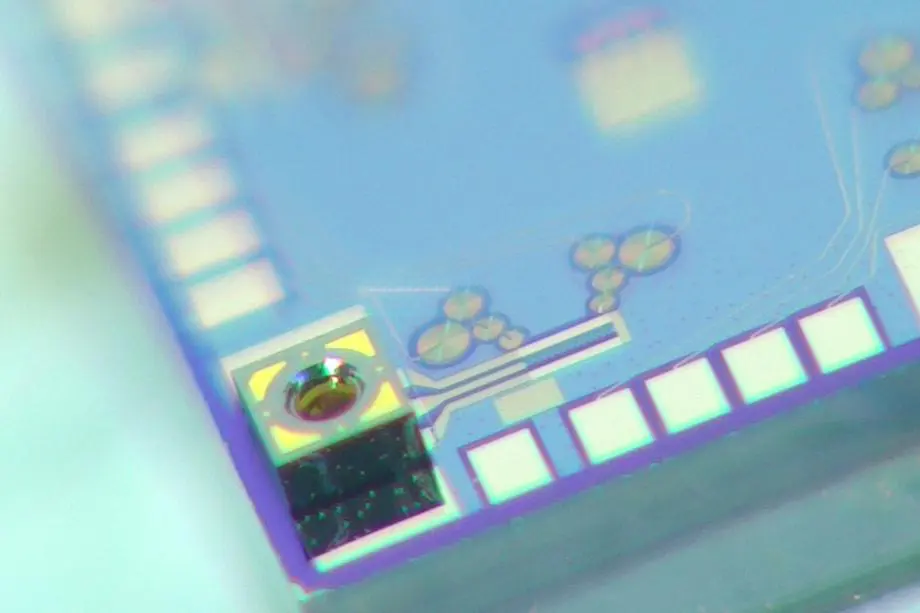
Researchers in Finland are addressing a fundamental barrier to practical quantum computing: energy consumption. The QScale project, a joint effort coordinated by VTT with Tampere and Aalto Universities, has received funding from Business Finland’s Rise to Challenge Programme to develop new signal technology aimed at scaling quantum applications. Current quantum computer technology becomes difficult to scale beyond 1,000 qubits, and achieving the one million qubits needed to fulfill the field’s potential would, using present methods, demand energy comparable to the output of an entire nuclear reactor.
The project will combine optical control with precise signal technology, aiming to commercialize the technology in the 2030s and potentially transform electronics, similar to the impact atomic clocks once had on precise timekeeping. The QScale project, a collaborative effort between VTT, Tampere and Aalto Universities, is actively addressing a critical hurdle in quantum computing: scalability beyond the limitations of current superconducting technology. Funded by Business Finland’s Rise to Challenge Programme with a total budget of approximately EUR 6.9 million, of which Business Finland contributes EUR 5.5 million, the initiative focuses on a novel approach combining optical control with ultra-precise signal technology. Researchers aim to overcome the energy demands that currently plague large-scale quantum computers; with existing designs, a one million qubit machine would consume energy equivalent to a nuclear reactor’s total output. This ambitious project centers on integrating ultra-fast optical telecommunications technology with superconducting circuits, generating noise-free electrical signals crucial for sensitive quantum operations. This combination is not merely about improving existing methods, but creating a new pathway to scaling quantum computers and other quantum technologies; the core method was invented in Finland.
Beyond quantum computing itself, the technology is designed to seamlessly connect quantum and supercomputing capabilities, potentially enhancing the efficiency of artificial intelligence applications. The three-year project, beginning September 1, intends to transition this research into commercial applications by the 2030s, initially for controlling superconducting quantum computers and subsequently for a wider range of uses. Researchers are focusing on optical control and ultra-precise signal technology, leveraging quantum phenomena to overcome limitations inherent in current designs. A particularly daunting obstacle is the sheer energy demand of a million-qubit quantum computer; with existing technology, its power consumption would equal that of an entire nuclear reactor, rendering practical implementation untenable. Business Finland’s share of the funding amounts to EUR 5.5 million, underscoring the national significance of this undertaking.
Yet that is the scale needed to fulfil the promises made for quantum computing.
Finland’s Rise to Challenge Program Advances Quantum Computing
With a total of EUR 9 million in funding, including EUR 5.5 million from Business Finland, QScale aims to dramatically improve the energy efficiency of quantum computers through a novel combination of optical control and ultra-precise signal technology. Researchers are not simply seeking incremental improvements; the project directly addresses the limitations of current superconducting quantum computers, which become exceedingly difficult to scale beyond 1,000 qubits. The ambitious target of one million qubits represents the threshold needed to realize the full potential of quantum computation across fields like chemistry, bioscience, and artificial intelligence, but achieving this scale presents a monumental engineering challenge. QScale’s approach leverages ultra-fast optical telecommunications technology alongside superconducting circuits to generate noise-free electrical signals, offering a potential pathway to drastically reduce power consumption.
See today’s quantum computing news on Quantum Zeitgeist for the latest breakthroughs in qubits, hardware, algorithms, and industry deals.