Qiskit Paulice, a new add-on, improves the reliability of quantum circuits by detecting and filtering out errors. This method allows for the detection of errors during a circuit’s execution, a significant step beyond simply identifying errors after computation is complete; the checks are placed across qubits and at specific moments in time to pinpoint when errors occur. Achieving useful quantum computing will require progress in two areas: developing new algorithms to enable more resource-efficient quantum computations and extending the reach of quantum hardware through methods for handling errors. “Our goal is to deliver new capabilities as they become available, equipping you with the tools to improve the reliability of computations at every stage of the journey to fault tolerance,” the team reports. Qiskit Paulice provides a practical path forward.
Qiskit Paulice: Postselected Quantum Error Correction Implementation
The pursuit of reliable quantum computation took a step forward with the release of Qiskit Paulice, a new add-on for the open-source Qiskit quantum computing framework that embeds error detection directly into circuit execution. Unlike traditional error correction methods that demand substantial qubit overhead, Qiskit Paulice utilizes spacetime Pauli checks to identify errors during a computation, offering a practical approach for near-term quantum hardware. This innovation addresses a critical bottleneck in scaling quantum computers; the computational cost of error handling often offsets gains made in qubit count and coherence. Qiskit Paulice distinguishes itself through its implementation of spacetime Pauli checks, which place error verification points not only across qubits but also at specific moments in time within a circuit’s execution.
This temporal dimension is key, allowing the system to pinpoint when errors occur, rather than simply registering their presence. The development team explains that “Error detection is a foundational component of error correction that verifies whether a run of a quantum circuit was affected by errors.” Traditional Pauli checks entangle ancilla qubits with data qubits, measuring a syndrome, a bit string indicating error detection, but these can introduce significant circuit depth, potentially exacerbating the problem. Spacetime Pauli checks circumvent this by strategically embedding checks as a way to detect errors across extended computational regions with minimal overhead. The efficiency stems from focusing checks where they are most effective, leveraging the device’s connectivity and a noise model to automatically identify valid, low-weight checks. This automated process is crucial, as a successful implementation must balance error detection with minimizing additional noise.
The qiskit-paulice package handles this optimization, inserting these checks into quantum circuits to maximize detection while reducing qubit and circuit costs. Once detected, errors allow for postselection, where only circuit runs without errors are retained, effectively filtering out corrupted results. This progress in error handling is occurring alongside advancements in quantum algorithms. Researchers are simultaneously developing new methods for resource-efficient quantum computations applicable to areas like large-scale molecular simulations, multi-objective optimization, and stochastic differential equations. This dual-track approach, improving both software and hardware, is considered essential for achieving practical quantum computing. The team asserts that “Achieving useful quantum computing will require progress across two dimensions.”
A “good” set of checks detects more error than it creates, balancing detection ability with minimal overhead.
Spacetime Pauli Checks for Efficient Error Detection
The pursuit of reliable quantum computation increasingly focuses on mitigating the inherent fragility of qubits, with developers exploring a spectrum of techniques ranging from error suppression to full-fledged error correction. While fault-tolerant architectures promise ultimate resilience, current near-term quantum devices necessitate pragmatic approaches to error handling that balance computational cost with demonstrable improvements in fidelity. Recent advances demonstrate a shift toward actively detecting errors during circuit execution, rather than solely post-processing results, and Qiskit Paulice, a new Qiskit add-on, embodies this strategy through the implementation of spacetime Pauli checks. Traditional error detection relies on ancilla qubits, auxiliary qubits used to check the state of data qubits, but adding these ancilla can significantly increase circuit complexity and introduce additional errors. This temporal dimension is key to the system’s efficiency.
The system doesn’t simply identify that an error occurred, but aims to pinpoint when it occurred, allowing for more targeted filtering of erroneous results. The developers state that “Spacetime Pauli checks are more efficient because they implement these constraints as a spacetime code,” emphasizing the innovation’s ability to detect errors across extended regions of computation. Unlike some mitigation techniques, it doesn’t require exponentially more samples as circuit size grows, a critical advantage for scaling. The automated process of identifying and inserting these checks is crucial, as a successful implementation must balance error detection with minimizing additional noise. Once executed, the resulting “syndromes,” outputs indicating the presence or absence of errors, can be used for post-selection, discarding erroneous runs and improving the fidelity of the remaining results, or integrated with other error mitigation or correction workflows.
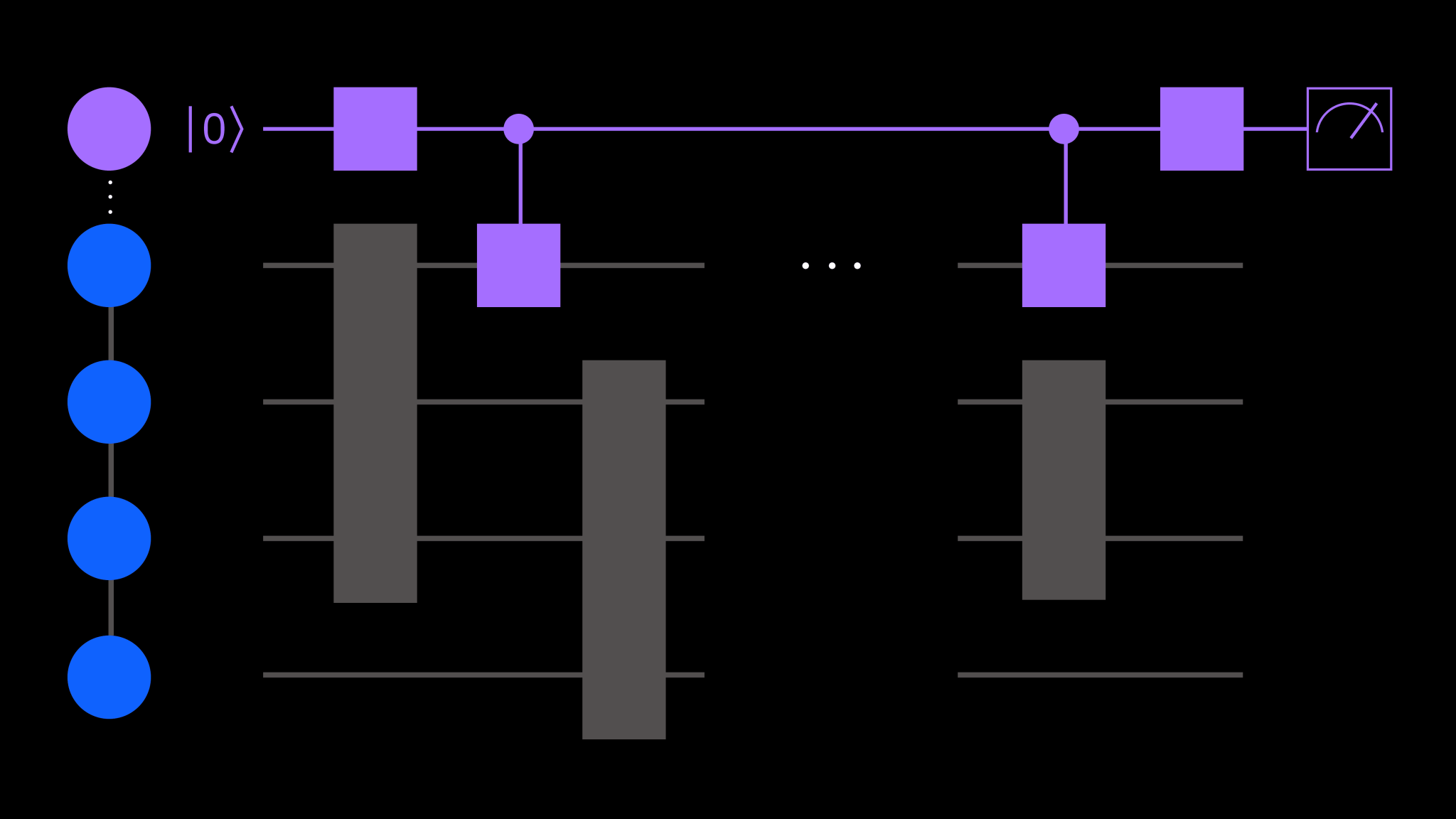
Typically, error detection involves designating qubits in a system as either data qubits or ancilla qubits . Data qubits perform the computations, and they are connected to ancilla qubits that catch errors in the data qubits.
Error Handling Categories: Suppression, Mitigation, Correction
Researchers are actively refining strategies for handling errors in near-term quantum computers, with a new focus on integrating error detection directly into circuit execution. This approach is embodied in Qiskit Paulice, a recently released add-on for the open-source Qiskit framework, designed to improve computational reliability by identifying and filtering erroneous results. Quantum error handling broadly falls into three categories: suppression, mitigation, and correction. Error suppression focuses on proactively preventing errors at the hardware level, while error mitigation attempts to estimate error-free results from noisy outputs, often requiring substantial computational resources. The innovation lies in the implementation of spacetime Pauli checks, which are embedded directly into quantum circuits to detect errors during computation, rather than solely after execution. These spacetime Pauli checks are designed to be practical by strategically placing checks across qubits and at specific points in time within the circuit’s execution.
Spacetime Pauli checks circumvent this issue by implementing constraints as a way to allow for error detection across extended regions of the computation. This approach avoids the need for high-weight operators, which can be particularly problematic on devices with limited qubit connectivity.
Each Pauli check corresponds to a constraint that should hold throughout the circuit’s execution. If an error disrupts that constraint, it is flagged by the measured syndrome.
Bridging Overhead: Paulice and Resource-Efficient Quantum Computing
A new approach, embodied in the Qiskit Paulice add-on, embeds directly into quantum circuits, offering a pathway to detect errors as they occur with minimal resource demands. This development arrives alongside continued progress in quantum algorithms designed for complex problems, signaling a dual-track strategy to unlock the potential of quantum computers. Qiskit Paulice addresses a fundamental challenge: the computational cost of error handling. Traditional methods often present a tradeoff between qubit count and the number of computational steps. While powerful fault-tolerant architectures promise efficient computation, they require substantial qubit resources and complex hardware. This automated process is crucial, as a successful implementation must balance error detection with minimizing additional noise.
See today’s quantum computing news on Quantum Zeitgeist for the latest breakthroughs in qubits, hardware, algorithms, and industry deals.