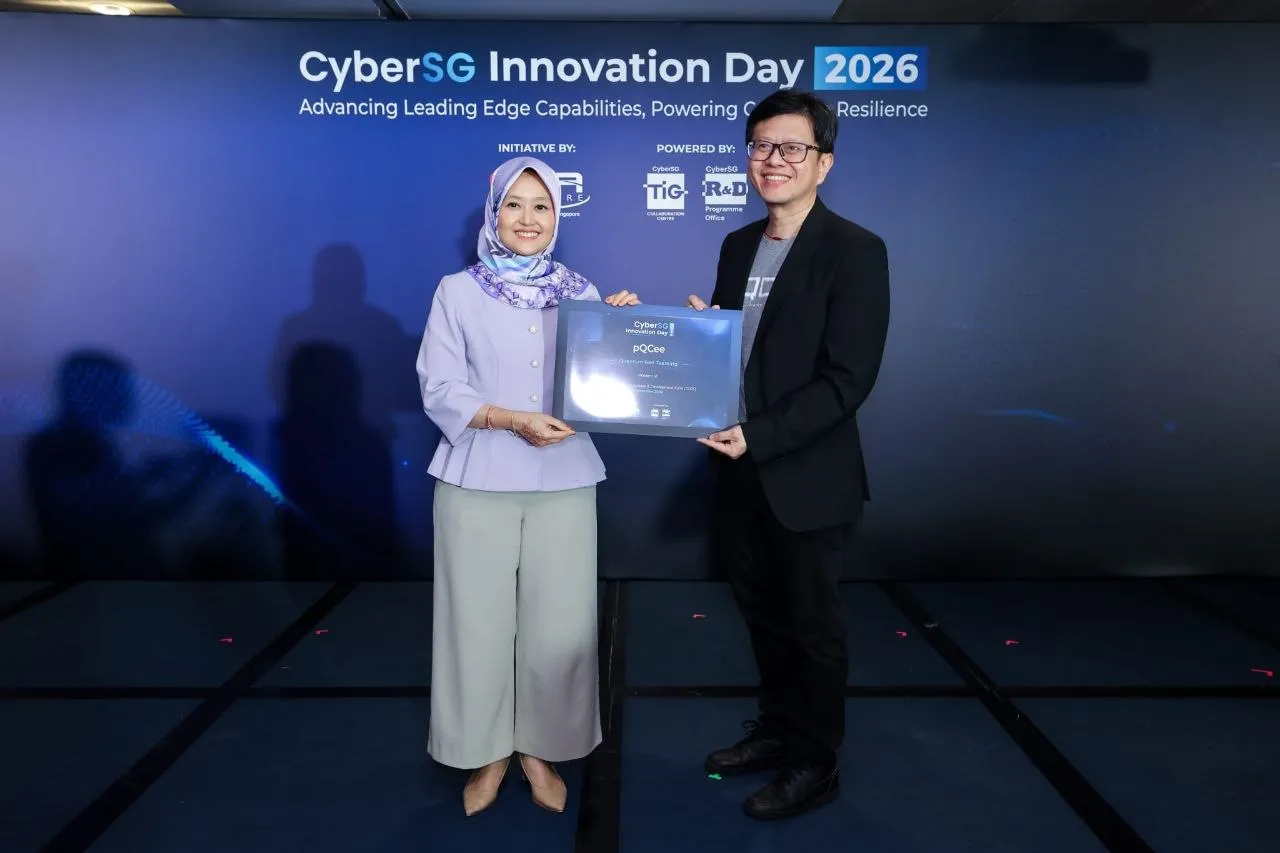
Singapore-based quantum cybersecurity company pQCee received a second CyberCall award from the Cyber Security Agency of Singapore to further develop its Quantum Red Teaming Platform. The platform tests current encryption methods against potential attacks from quantum computers, addressing a critical gap in real-world risk validation for organizations. “Being selected for CyberCall for the second time is a strong endorsement of our work,” said Dr. Tan Teik Guan, Co-founder and CEO of pQCee, adding that the quantum threat is significant.
pQCee Secures Second CyberCall Award for Quantum Attack Exposure Testing
The platform simulates attacks on existing encryption methods, moving beyond theoretical risk assessments to practical exposure testing for critical infrastructure operators. This latest funding builds on a 2023 CyberCall award focused on quantum-safe Public Key Infrastructure, shifting the focus from building quantum-resistant systems to identifying current weaknesses. The agency’s support provides pQCee access to Singapore as a testbed for its technology, allowing for development and demonstration before broader market deployment, the company says.
This is especially important for sectors like finance, government and healthcare, which hold long-lived sensitive data and are prime targets for adversaries with quantum capabilities. The platform aims to provide evidence-based risk assessments, enabling organizations to prioritize systems for quantum-safe migration rather than relying on assumptions. “It is widely accepted that a cryptographically relevant quantum computer could break RSA and elliptic-curve cryptography,” the company notes, highlighting the urgency of proactive testing.
The need for practical exposure testing stems from a gap between academic explorations of quantum attacks and their application to real-world systems. Organizations currently lack the means to validate their risk models against actual quantum-enabled attacks, leaving them unprepared for potential breaches, according to pQCee. pQCee’s platform directly addresses this by simulating adversarial quantum attacks on classical cryptography, providing quantifiable data on an organization’s quantum risk.
This data then informs decisions on where to invest resources for the most effective quantum-safe upgrades. Dr. Tan emphasized that a comprehensive solution requires collaboration across technologies, industries and governments, and that pQCee is dedicated to overcoming the technical hurdles to widespread quantum-safe adoption. The CyberCall award will facilitate the development of the Quantum Red Team Platform into a complete cryptanalytic toolchain. pQCee intends to collaborate with operators of Critical Information Infrastructure and their suppliers to implement the platform and refine its capabilities.
This collaborative approach aims to move organizations beyond theoretical preparedness to data-driven decisions regarding quantum security investments. The company describes itself as a leader in post-quantum cryptography solutions, focused on developing advanced security tools to protect against future cyber threats. pQCee’s team of researchers and engineers are building scalable, quantum-resistant encryption solutions designed to safeguard critical data and communications.
The company’s work is supported by the CyberSG Talent, Innovation and Growth Collaboration Centre, reflecting a broader commitment to encouraging cybersecurity innovation within Singapore, the company says. The ultimate goal is to build a more secure digital future, mitigating the risks posed by increasingly powerful quantum computers and ensuring the long-term integrity of sensitive information.
Being selected for CyberCall for the second time is a strong endorsement of our work.
Dr. Tan Teik Guan, Co-founder and CEO of pQCee




See today’s quantum computing news on Quantum Zeitgeist for the latest breakthroughs in qubits, hardware, algorithms, and industry deals.