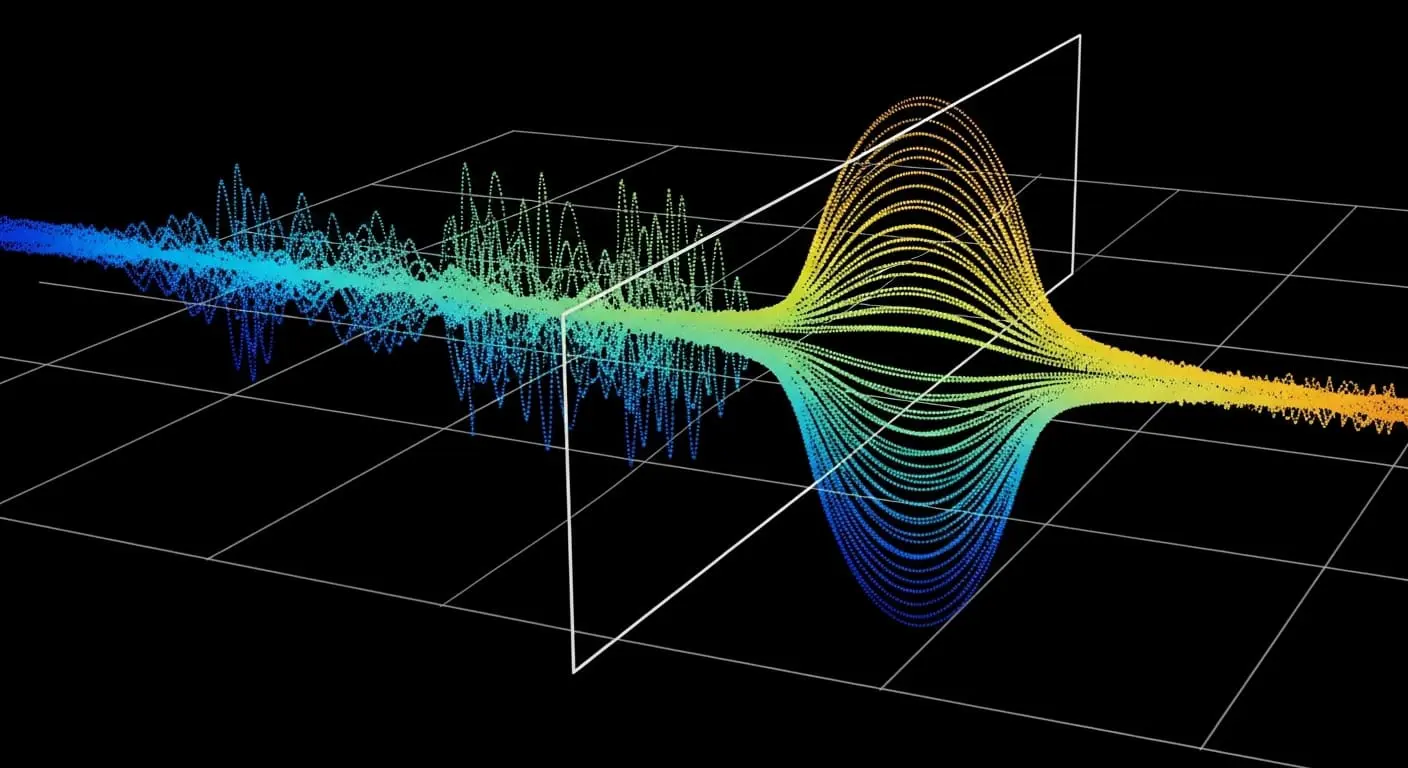
Quantum steering certification now extends to complex networks without requiring trust in all devices. Shao-Hua Hu of National Tsing Hua University, and colleagues from University of Bristol, National Taiwan Normal University and Austrian Academy of Science, have shown that quantum steering certification can always be extended to a measurement-device-independent regime in multipartite networks. This allows certification of quantum steering, a type of correlation between quantum particles, to complex networks where most of the devices involved are untrusted.
The advancement enables verification of steering in systems using continuous variables, unlike previous methods limited to discrete systems, as continuous variables are key for many quantum technologies. The work provides a foundation for applications such as generating truly random numbers, reducing the need for fully secure and often impractical hardware components within the network. This represents a breakthrough in certifying quantum steering within complex networks, bringing practical quantum technologies closer to realisation.
Quantum steering describes a subtle form of correlation between quantum particles, akin to a secret handshake that proves they share a connection, allowing one party to influence the state of another without fully sharing information. Shao-Hua Hu and colleagues demonstrated that verifying this steering is possible even when most devices in a network are untrusted, a step beyond previous limitations. This advancement extends to systems using continuous variables, key for many applications, and relies on a set of carefully prepared input signals, analogous to a standard calibration weight used to check the accuracy of a scale, to test the system.
Untrusted nodes no longer prevent certification of network quantum steering
Measurement-device-independent quantum steering certification now extends to network scenarios, a feat previously limited to discrete-variable systems. Steering, a subtle form of quantum correlation, can now be reliably detected even when all but one device in a network are untrusted, unlike prior methods which demanded full trust in all components or faced substantial experimental challenges. The approach utilises fiduciary quantum states, analogous to calibration weights, allowing one party to treat all other devices as ‘black boxes’ and assess correlations solely on received signals. Traditionally, establishing quantum steering required stringent assumptions about the internal workings of each device involved in the communication process, demanding complete trust in their calibration and operation. This posed a significant obstacle to scaling quantum networks, as ensuring the security and reliability of every component becomes increasingly difficult and expensive. The new protocol circumvents this limitation by allowing one party to remain ‘trusted’, not in the sense of complete device independence, but rather in the preparation and verification of a specific set of input states known as fiduciary states. These states serve as a benchmark against which the outputs of the untrusted devices can be compared, enabling the certification of steering without needing to know the details of their internal operation.
This breakthrough opens avenues for applications such as secure randomness generation and more scalable quantum networks, and has been characterised for both finite-dimensional and continuous-variable systems, in particular providing a complete analysis for two-party continuous-variable scenarios. Gaussian operations underpin network steering protocols, offering a practical advantage given the limitations of fully device-independent protocols. The use of Gaussian operations, a specific type of quantum operation that preserves the Gaussian shape of quantum states, is particularly significant. While fully device-independent protocols offer the highest level of security, they are often experimentally challenging to implement. Gaussian operations, being relatively easier to generate and measure, present a viable path toward practical quantum communication.
The research demonstrated that quantum steering certification is possible even when all but one communicating party utilises untrusted devices. This means secure communication protocols can be established with minimal trust in the network’s components, relying on a single trusted party to verify a set of fiduciary quantum states. By utilising these states as a benchmark, researchers showed that steering can be confirmed without detailed knowledge of the internal workings of the untrusted devices. The authors characterised this approach for both finite-dimensional and continuous-variable systems, and developed protocols based on Gaussian operations, offering a feasible alternative to fully device-independent methods.
👉 More information
🗞 Quantum steering in networks: Measurement-device-independent detection, continuous variables, and practical Gaussian schemes
✍️ Shao-Hua Hu, Chung-Yun Hsieh, Huan-Yu Ku, Ray-Kuang Lee and Paolo Abiuso
🧠 ArXiv: https://arxiv.org/abs/2606.25690


See today’s quantum computing news on Quantum Zeitgeist for the latest breakthroughs in qubits, hardware, algorithms, and industry deals.