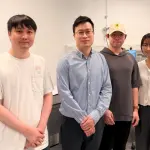
Cyberattacks currently cost the Australian economy an estimated $33 billion annually, but a new $4.9 million Australian Research Council Hub aims to mitigate those losses by proactively addressing the emerging threat of quantum computing. Monash University joins the University of Queensland and UNSW in the ARC Research Hub for Quantum Safety Testing, building on two decades of work by Monash’s Post-Quantum Cryptography team that has already informed international standards.
Dr. Muhammed Esgin of Monash University will spearhead the research, focusing on organizational preparedness; he said strong security isn’t just about creating new technologies, it’s also about being able to verify that they work as intended.
ARC Hub for Quantum Safety Testing Secures $4.9 Million
This initiative directly addresses a critical gap in current cybersecurity practices, where verification of security measures often lags behind technological advancements. The Hub’s focus extends beyond simply developing new technologies, prioritizing methods to rigorously test and validate their effectiveness in real-world applications. This pre-existing expertise provides a strong foundation for the Hub’s objectives, allowing it to move beyond theoretical research to practical implementation and assessment.
Dr. Esgin said the research would focus on helping organizations understand their preparedness for future cyber threats. This partnership approach recognizes that addressing quantum-era cyber threats requires a unified effort across academia, government and the private sector.
Professor Ryan Ko, Director of the UQ Cyber Research Centre, emphasized the need for practical tools to prepare for these emerging threats. He explained that many organizations know they will need to strengthen their cyber security for a quantum future, and the Hub aims to give them the tools and organizational migration processes to understand where vulnerabilities exist and how to address them in a structured, reliable, and verifiable way.
The Hub’s ambition extends beyond national security, with a goal to establish Australia as a leader in quantum safety testing and certification. Associate Professor Sushmita Ruj highlighted the broad impact of this transition, noting that quantum-safe technologies will be essential across multiple sectors, including finance, telecommunications and critical infrastructure.
She said this Hub will help build the knowledge, tools, and expertise needed to support organizations as they navigate that transition. Monash’s Post-Quantum Cryptography team is concurrently offering a short course designed to empower organizations to independently assess their vulnerabilities and plan for the shift to quantum-safe systems.
This proactive approach complements the Hub’s research, providing immediate resources for organizations seeking to bolster their cyber resilience. By developing robust testing and certification methods, the Hub intends to give organizations greater confidence in the security of the systems they rely on daily.
Quantum computing has enormous potential, but it also presents significant challenges for the security systems that underpin modern society.
Professor Ryan Ko, Director of the UQ Cyber Research Centre




See today’s quantum computing news on Quantum Zeitgeist for the latest breakthroughs in qubits, hardware, algorithms, and industry deals.