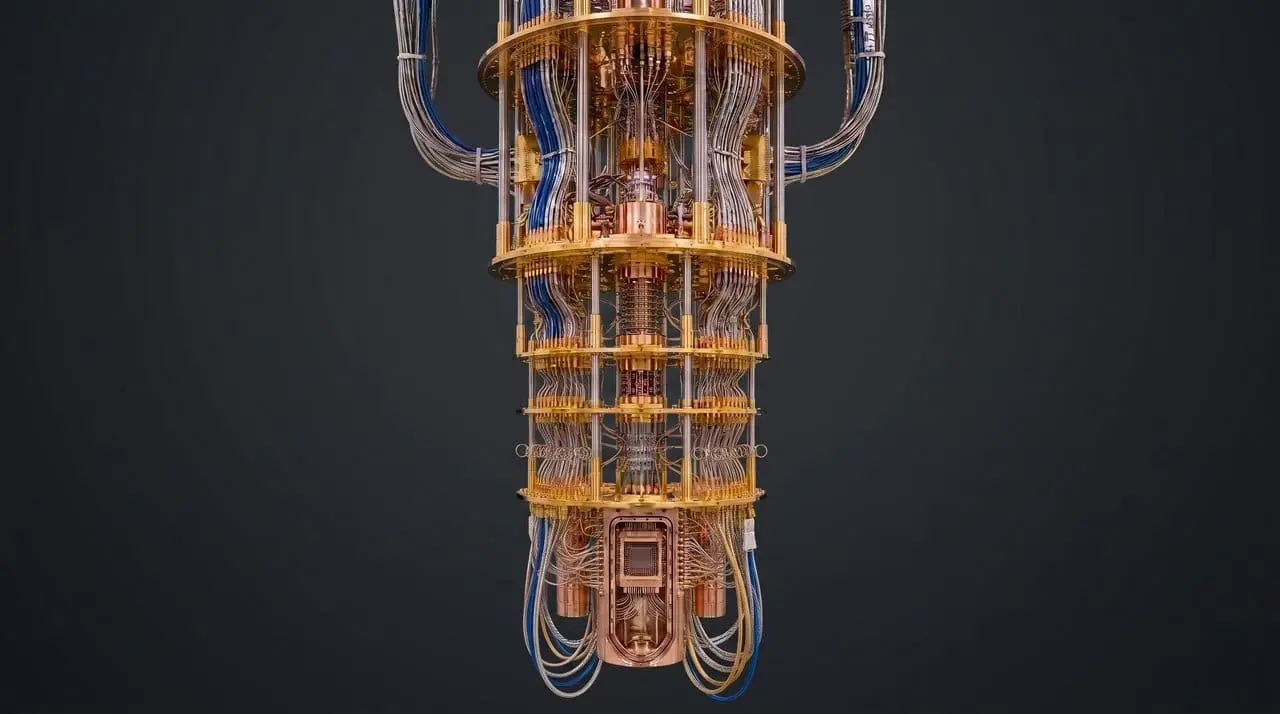
Researchers at the Istituto di Fotonica e Nanotecnologie del CNR in Rome have successfully characterized a superconducting qubit on July 15, 2026, at the COLD laboratory of the Frascati National Laboratories (INFN). Fabricated using the NanoMicroFab infrastructure, the 3D transmon qubit maintains quantum coherence for approximately 0.25 microseconds when in a superposition state. This achievement represents a significant advancement for Italian quantum technology research, occurring over 25 years after Yasunobu Nakamura created the first superconducting qubit in 1999. The team will now use this technology to develop quantum simulators and sensors.
Italian-Made Superconducting Qubit Characterized at Frascati Laboratory
A superconducting qubit fabricated in Italy maintained quantum coherence for 0.25 microseconds, a measurable duration indicating functionality and progress in quantum computing development. The 3D transmon qubit resides within a superconducting cavity manufactured at the INFN’s Legnaro National Laboratories, requiring cooling to fractions of a degree above absolute zero to observe characteristic quantum oscillations. This achievement is the result of extensive development, involving multiple fabrication and experimental characterization cycles, and a collaborative effort spanning several Italian universities including the University of Milan-Bicocca, the University of Milan, and the University of Florence.
The project benefited from funding through QubIT, Quartet, ICSC, NQSTI, and ERC Synergy GravNet, enabling the team to refine a reliable procedure for observing coherent oscillations in quantum systems. The researchers report that “Preparato in uno stato di sovrapposizione quantistica, il qubit è in grado di preservarne la coerenza per circa un quarto di microsecondo,” highlighting the qubit’s ability to sustain a quantum superposition state.
The research team intends to utilize this technology to construct quantum simulators and sensors, with applications focused on investigating fundamental laws of nature; Fabio Chiarello can be contacted at fabio.chiarello@cnr.it for further information. This milestone positions Italian researchers to contribute to advancements in quantum technology and its potential applications.


See today’s quantum computing news on Quantum Zeitgeist for the latest breakthroughs in qubits, hardware, algorithms, and industry deals.