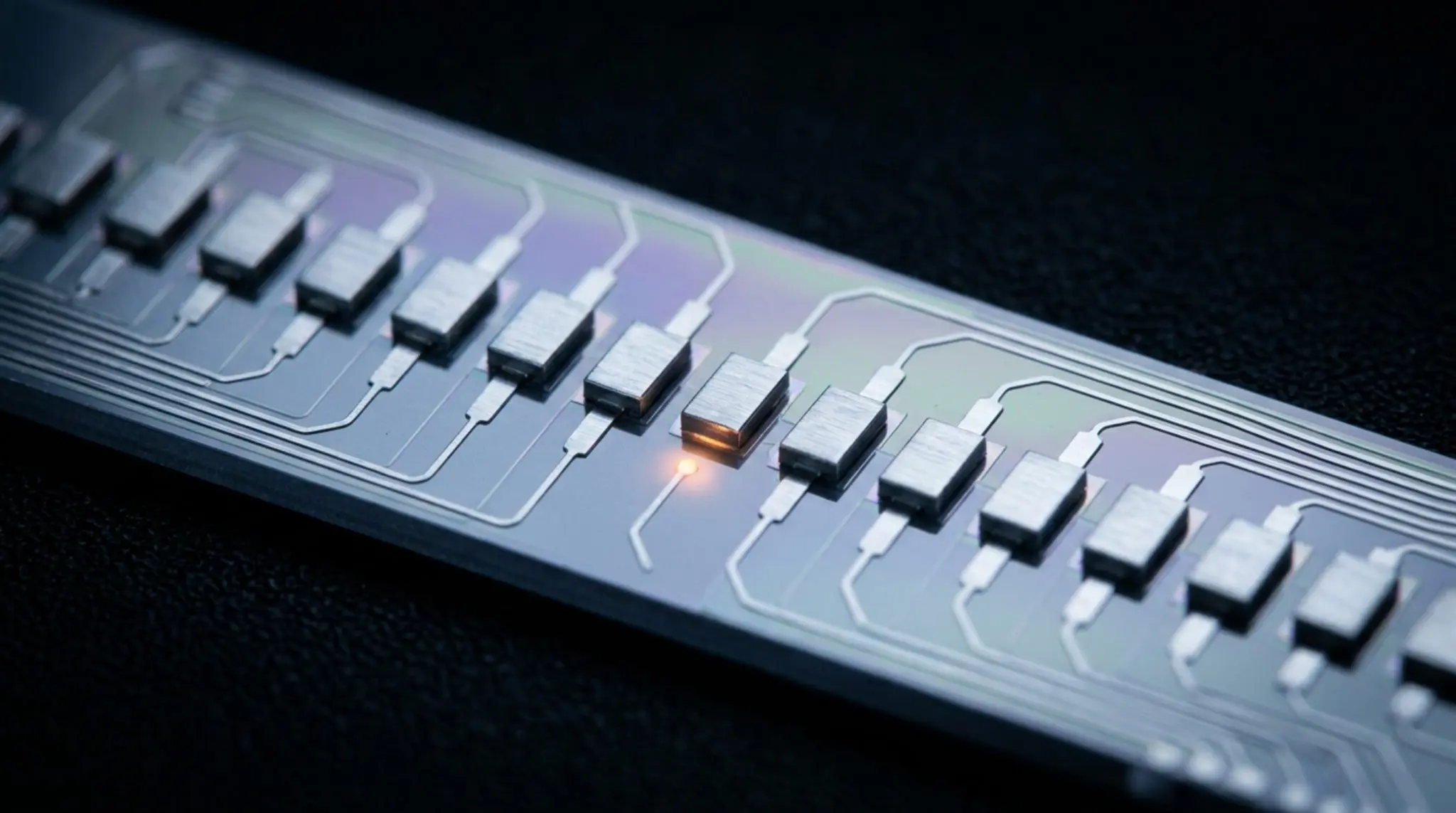
Eliza Cornell, a recent Ph. D. graduate from the Lončar lab and now at Boston University, led experiments demonstrating a new method for extending the life of quantum information using mechanical vibrations. Researchers at the Harvard John A. Paulson School of Engineering and Applied Sciences harnessed phonons, particles of sound, to protect the spin of an electron associated with an impurity in diamond, a promising quantum memory.
Phonon wavelengths are significantly shorter than those of light, enabling smaller devices and tighter integration for future quantum networks. “We want the spin to have strong interaction with phonons, and we want the spin to have a long coherence time,” Cornell said.
“Dressed” Qubit States Extend Silicon-Vacancy Coherence Times
A threefold extension of silicon-vacancy spin coherence time demonstrates a new path toward stable quantum information storage, according to a team at the Harvard John A. This approach bypasses limitations of traditional microwave pulse methods when working with qubits housed within phononic cavities. The team’s innovation centers on utilizing phonons, particles of sound, not only as carriers of quantum information between qubit nodes but also as a means of protecting that information.
This is crucial as the demand for miniaturization in quantum computing continues to grow, and existing methods struggle to maintain coherence in increasingly compact designs. The researchers designed the system to leverage this dual functionality of phonons, streamlining the architecture of potential quantum networks. Rather than decoupling memories from the environment, the Harvard team demonstrated continuous driving of the silicon-vacancy spin with a mechanical field, which shifts the qubit into a “dressed” state, effectively shielding it from low-frequency noise that typically degrades quantum memory.
Because this mechanical field is compatible with phononic cavities, the approach is designed to integrate seamlessly with structures intended for connecting stationary nodes in a future quantum network. The researchers found that their paper demonstrates a method of extending the coherence time that is compatible with the silicon-vacancy center being in a cavity. This extended coherence time is a key step toward building practical quantum computers and networks.
The research, published in Nature Physics, involved collaboration with Zhaoyou Wang, Hana K. Warner, Eliana Mann, Michael Haas, Smarak Maity, Graham Joe, Liang Jiang, Peter Rabl, and Benjamin Pingault. This work received financial support from the National Science Foundation, the Air Force Office of Scientific Research, and Q-NEXT, a U.S. Department of Energy Office of Science National Quantum Information Science Research Center.
Harvard’s Office of Technology Development is actively seeking patent protection and commercialization opportunities for this technology, recognizing its potential to advance the field of quantum information science. The team’s success in extending coherence time by roughly a factor of three establishes the viability of continuous-wave, mechanical noise suppression as a practical method for lengthening quantum memory duration in real-world devices.
All-mechanical coherence protection and fast control of a spin qubit ” was co-authored by Zhaoyou Wang, Hana K. Warner, Eliana Mann, Michael Haas, Smarak Maity, Graham Joe, Liang Jiang, Peter Rabl, and Benjamin Pingault.




See today’s quantum computing news on Quantum Zeitgeist for the latest breakthroughs in qubits, hardware, algorithms, and industry deals.