Professor Alyssa Ney of LMU is tackling a century-old question in quantum physics: what does the theory actually say about reality? Even after 100 years since the founding of quantum physics, no consensus exists on its implications, a fact that fuels Ney’s new ERC project, “MetaQ – The Nature of Quantum Reality.” The project, one of three ERC Advanced Grants awarded to LMU researchers, will combine insights from physics and philosophy, focusing on how the role of the observer impacts our understanding of the quantum world; quantum phenomena such as entanglement, she notes, call our conception of reality into question. Matthias Tschöp, President of LMU, celebrates the achievement, stating, “Today we really have reason to celebrate: Our university has secured three new ERC Advanced Grants at once!” The funding, up to €2.5 million per researcher, supports projects pushing beyond the current state of research.
MetaQ: Exploring Quantum Reality and the Observer’s Role
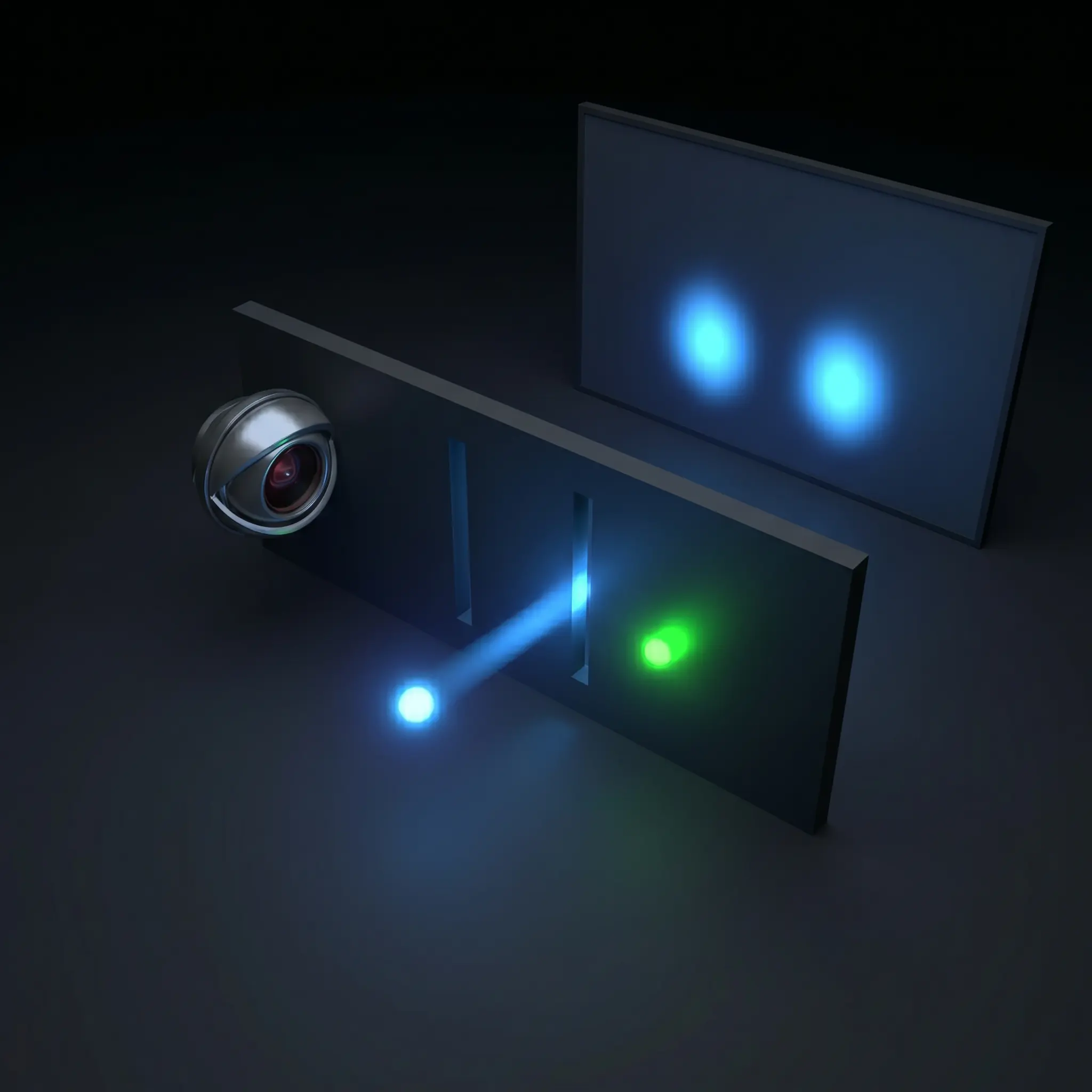
The implications of quantum mechanics extend far beyond technological applications, and a fundamental question regarding the nature of reality itself remains unresolved a century after the theory’s inception. The project is supported by funding of up to €2.5 million from the European Research Council, reflecting the scale of ambition and the importance placed on addressing this enduring puzzle. Central to Ney’s investigation is the role of the observer in quantum systems, a concept that has historically divided physicists and philosophers. While a prominent tradition going back to Albert Einstein holds that observers have no place in a fundamental physical theory, many contemporary physicists believe understanding quantum reality requires acknowledging a special role for them.
This disagreement has hindered consensus on the broader implications of quantum mechanics, prompting Ney to meticulously articulate prevailing conceptions of quantum reality that emphasize the observer’s influence. “Building on this, we want to develop an interpretation of quantum reality that can be used in metaphysics to advance work on several fundamental philosophical questions,” says Ney, outlining the project’s scope. These questions encompass the very nature of physical reality, its connection to human consciousness, and the extent of our free will. By synthesizing insights from both physics and philosophy, Ney hopes to move beyond existing interpretations and establish a more coherent framework for understanding the quantum world and our place within it, ultimately addressing questions about the fundamental nature of existence itself.
Building on this, we want to develop an interpretation of quantum reality that can be used in metaphysics to advance work on several fundamental philosophical questions.
TACO: Single-Cell Analysis of Myeloid Cells in Multiple Sclerosis
Professor Martin Kerschensteiner of the Institute of Clinical Neuroimmunology at LMU is spearheading a project focused on refining our understanding of multiple sclerosis (MS) through detailed analysis of myeloid cells, immune cells central to the disease’s progression. Currently, treatment strategies for MS often rely on broad immunosuppression, a tactic that, while managing symptoms, doesn’t address the nuanced cellular mechanisms driving the autoimmune attack on the brain and spinal cord. Kerschensteiner’s project, titled TACO (Targeting myeloid cell states, actions and interactions in neuroinflammation), seeks to move beyond these generalized approaches by leveraging the power of single-cell technologies to dissect the specific roles of myeloid cells, macrophages, monocytes, and microglia, in the complex pathology of MS. Traditional analysis methods assess tissue, providing a picture of cellular activity; however, TACO aims to examine the genetic makeup and functional behavior of individual cells in detail.
This precision is crucial, as myeloid cells aren’t a monolithic group; different subpopulations exhibit varying behaviors and contribute differently to disease progression. “I believe that if we want to unlock the true potential of the single-cell revolution for patients, we need to find new ways to interrogate cellular states, actions, and interactions at scale and in vivo,” emphasizes Kerschensteiner, highlighting the ambition of the project. He and his team have already acquired high-resolution datasets capturing signals received by myeloid cells throughout the course of MS, forming the foundation for identifying key therapeutic targets. The core of TACO involves developing novel in vivo CRISPR screening methods to systematically uncover the essential control mechanisms of these myeloid cells within MS models. This will be coupled with single-cell analysis, multi-photon microscopy, and spatial transcriptomics to map how these signals define cell states, functions, and interactions within the inflamed central nervous system. Ultimately, the goal is to pinpoint signaling pathways that can be effectively targeted for therapeutic intervention, tailoring treatments to specific disease stages, lesion sites, and cellular states.
Today we really have reason to celebrate: Our university has secured three new ERC Advanced Grants at once! This is fantastic news and a great recognition of the outstanding research that is conducted here every day.
RFrag: Investigating Functions of Non-Canonical RNA Fragments
Professor Thomas Carell of LMU’s Institute of Chemical Epigenetics is leading an investigation into a newly discovered class of RNA molecules, focusing on their potential functions within cellular processes and the immune system. His project, RFrag, Synthesis and Function of Non-Canonical RNA Fragments, stems from the realization that RNA’s versatility extends far beyond its established role in protein biosynthesis, with approximately 170 non-canonical nucleosides existing alongside the four ‘classic’ bases. These modified RNA structures, particularly within transfer RNAs (tRNAs) are now known to fragment into smaller pieces, termed tsRNAs, by enzymes whose mechanisms remain largely unknown.
Carell’s team intends to synthesize these tsRNAs, utilizing novel chemical building blocks to incorporate the non-canonical nucleosides often missing from current research models. “Much of our knowledge about tsRNAs to date is based on synthetically manufactured RNA molecules that are lacking these unusual building blocks,” explains Carell, highlighting the need for more complete representations to understand their true behavior. The researchers will then characterize the enzymes responsible for processing these RNA fragments and investigate their impact on the immune system, with preliminary data suggesting a potential role in triggering immune responses, even against cancer cells. A key aspect of the research focuses on tsRNAs originating from pathogenic bacteria, which often contain unique non-canonical nucleosides.
Carell’s team hypothesizes that these structures may elicit particularly strong immune responses, offering a potential avenue for novel therapeutic strategies. “Our work will not only furnish new insights into the biology of RNA,” Carell states, “but could also expand our understanding of how foreign-RNA and hence infections and tumors are recognized by the immune system.” He further notes that tumor RNA often exhibits a significantly different composition of modified nucleosides compared to healthy cells, suggesting a potential biomarker for cancer detection or a target for immunotherapy. The project, funded with up to €2.5 million from the European Research Council, aims to unlock the potential of these overlooked RNA fragments and their implications for both fundamental biology and clinical applications.
I believe that if we want to unlock the true potential of the single-cell revolution for patients, we need to find new ways to interrogate cellular states, actions, and interactions at scale and in vivo.
LMU Researchers Secure Three ERC Advanced Grants
The substantial investment, of up to €2.5 million per researcher, underscores the university’s commitment to ambitious, forward-looking research that extends beyond current scientific boundaries. Quantum phenomena such as entanglement call our conception of reality into question. A central premise of the project is that consensus on the broader implications of quantum physics has been thwarted by fundamental disagreements about the role of the observer in physical theories. While a prominent tradition going back to Albert Einstein holds that observers have no place in a fundamental physical theory, many physicists today believe that the reality described by quantum physics cannot be understood without ascribing a special role to observers. These ideas originated with physicist John Wheeler, who proposed that we live in a “participatory universe,” from which the concept of “it-from-bit” later emerged. Multiple sclerosis (MS) is the most common cause of neurological disability in young adults. Instead of analyzing tissue only as a bulk average, scientists can use these tools to examine the genetic makeup and functional behavior of individual cells in detail.
The aim of TACO is to unlock the potential of existing and emerging (multi)omics datasets for the design of therapeutic interventions targeted to disease stages, lesion sites, and cellular states.
See today’s quantum computing news on Quantum Zeitgeist for the latest breakthroughs in qubits, hardware, algorithms, and industry deals.