Aeron Tynes Hammack, Interim Facility Director of the Nanofabrication Facility at the Molecular Foundry, is applying tools developed for quantum computing to a surprising new challenge: combating antibiotic resistance. Hammack is leveraging a high-throughput screening process, co-founded with Nick Conley at EpiBiome, to accelerate the development of bacteriophage therapies, viruses that target and destroy antibiotic-resistant bacteria. This work has already progressed to clinical trials, with biotech company Locus Biosciences evaluating a phage-based treatment developed using Hammack’s automated system. A recent paper published in Nature Communications describes the automated process that he built at EpiBiome, the biotech company he co-founded with Nick Conley, that was brought to full production scale by researchers at Locus Biosciences. “Phage therapy predates small-molecule antibiotics,” Hammack notes, explaining that modern diagnostics now enable the precision needed to overcome historical limitations of this century-old approach. The automated process also informs materials research at the Molecular Foundry, where Hammack utilizes a quantum information science cluster tool to rapidly test designs for key qubit components.
Bacteriophage Therapy Addresses Narrow-Spectrum Limitations
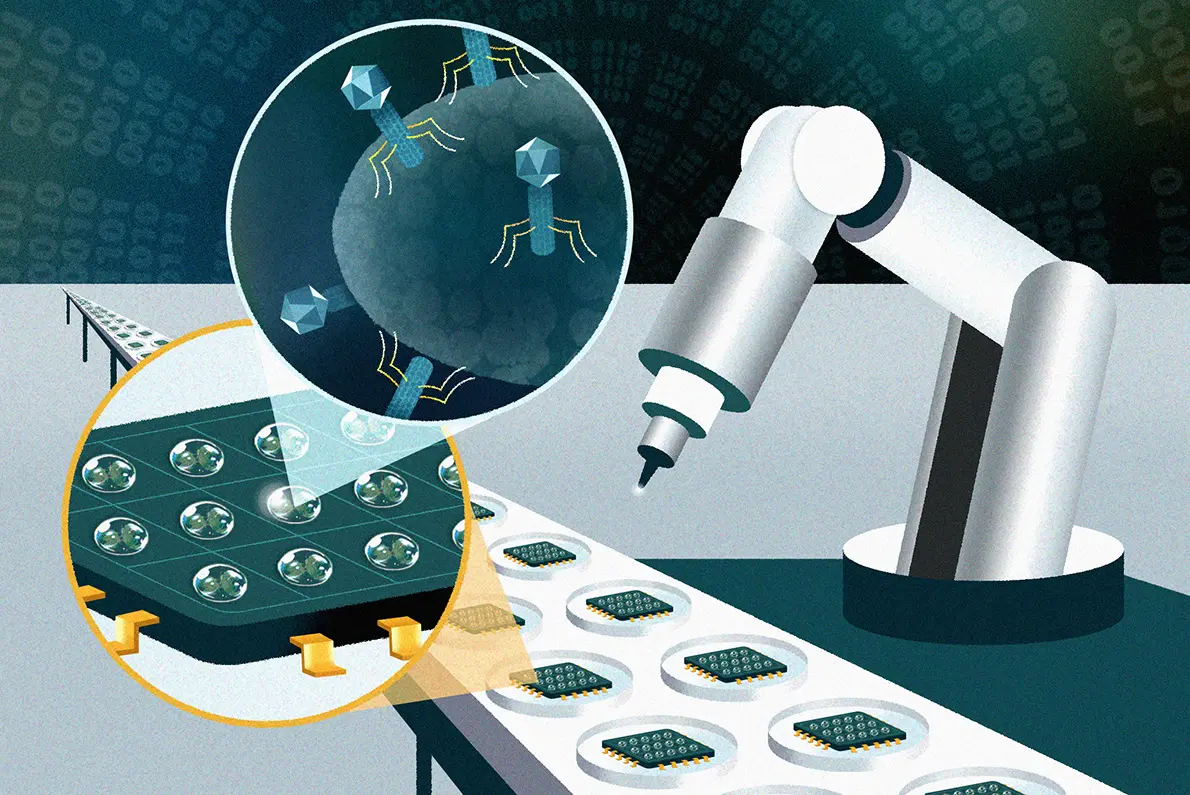
The challenge of narrow host range has long been the primary impediment to widespread bacteriophage therapy, a technique with roots stretching back to the pre-antibiotic era. While phages offer a potential solution to escalating antibiotic resistance, their highly specific nature, attacking only certain strains of bacteria, has historically limited their clinical application. The key to their success lies in automation; the team moved beyond laborious, manual phage identification to a robotic and AI-driven system capable of testing millions of phage-host combinations. Hammack details how their automated machinery “takes samples of microbes and phages and introduces them in a tiny liquid environment, then introduces microscopy for colony counting and optical density assays to determine whether the phage killed the microbes.” This process allows for the rapid identification of phages effective against a diverse panel of bacterial strains, a critical step in creating a therapeutic cocktail with broader coverage.
The company’s initial focus on urinary tract infections (UTIs) reflects a strategic approach to maximizing impact. By targeting a common ailment frequently treated with antibiotics, a successful phage therapy could immediately reduce antibiotic prescriptions and contribute to slowing the rise of resistance. Locus Biosciences meticulously assembled a testing panel of 356 uropathogenic E. coli (UPEC) strains. A recent paper published in Nature Communications describes the automated process that he built at EpiBiome, the biotech company he co-founded with Nick Conley, that was brought to full production scale by researchers at Locus Biosciences. Hammack credits his postdoctoral work at the Molecular Foundry, where he has since returned, for laying the foundation for his foray into medical R&D. Hammack emphasizes the long-term vision: This precision, coupled with the inherent specificity of phages, which avoids disrupting beneficial microbial communities, positions phage therapy as a powerful, targeted weapon in the fight against antibiotic resistance.
High-Throughput Screening Automates Phage-Bacteria Interactions
The resurgence of bacteriophage therapy, a field predating conventional antibiotics, is no longer a historical curiosity but a rapidly advancing area of medical research. While initially explored over a century ago, the inherent challenge of phage specificity, that “one phage will kill not even a whole species of bacteria, it will kill a subset of certain strains of the bacteria”, long hindered its widespread adoption. Traditional antibiotic development prioritized broad-spectrum activity, offering a quicker response to infections before precise diagnostics were available. However, the escalating crisis of antibiotic resistance is driving renewed interest in these highly targeted viral therapies, and a key enabler is the application of high-throughput screening coupled with advanced automation. This technology, now scaled by Locus Biosciences, allows for the rapid assessment of phage efficacy against bacterial strains.
The system’s core function involves robotic handling of microbial and phage samples, introducing them into microfluidic environments, and employing microscopy to quantify phage-induced bacterial lysis. This process moves beyond the laborious, manual methods previously required for such investigations. The automated machinery, Hammack explains, determines whether a phage kills microbes by observing changes in optical density or through colony counting, providing crucial data on phage-host interactions. Crucially, the system also incorporates a computer vision program, an AI-driven component, to accelerate the analysis of results that were historically performed manually. Locus Biosciences is currently leveraging this technology in clinical trials, focusing initially on urinary tract infections (UTIs) due to their prevalence and contribution to antibiotic overuse. The company assembled a comprehensive testing panel of 356 uropathogenic E. coli (UPEC) strains.
Hammack emphasizes the potential for even more personalized treatments, envisioning a future where “you show up at the ER, and the diagnostics are so sensitive and precise that they essentially wave a tricorder at you to tell what pathogens are causing your problems, and then you can be treated with the exact cocktail of phages needed.” This vision, coupled with ongoing cataloging efforts like the Phage Foundry, promises to not only address immediate infections but also to greatly decelerate the pace of antibiotic resistance, a mounting danger to global health.
To use military metaphors, it’s snipers instead of grenades. And so, this is a hundred-year-old technology, why are we bringing it back now?
Molecular Foundry Robotics Accelerates Nanoparticle & Phage R&D
Hammack’s work spans quantum computing and viral therapies, both reliant on automated experimental tools capable of rapidly testing numerous candidates and identifying optimal solutions. He is presently utilizing the quantum information science (QIS) cluster tool at the Molecular Foundry to refine designs for Josephson junctions, a critical component of qubits, accelerating materials research through automated design, manufacture, and testing. This approach significantly reduces the traditionally lengthy trial-and-error process inherent in materials development. Beyond quantum materials, Hammack’s expertise is directly impacting medical advancements. A recent publication in Nature Communications details this automated process, initially developed at EpiBiome and subsequently scaled by researchers at Locus Biosciences.
Hammack attributes the foundation for this medical research to his postdoctoral work at the Molecular Foundry, highlighting the importance of long-term, foundational research. “Industry rarely wants to fund the kind of 10- or 20-year research initiatives you need to understand the basic science principles needed before you can engineer anything,” he explains, emphasizing the crucial role of sustained funding for basic science. The impetus for exploring phage therapy, Hammack notes, stems from its historical precedence. “Phage therapy predates small-molecule antibiotics,” he states, referencing its origins before the advent of penicillin.
Industry rarely wants to fund the kind of 10- or 20-year research initiatives you need to understand the basic science principles needed before you can engineer anything.
Precision Diagnostics Enable Personalized Phage Cocktails
Locus Biosciences meticulously assembled a testing panel of 356 uropathogenic E. coli (UPEC) strains. A recent paper published in Nature Communications describes the automated process that he built at EpiBiome, the biotech company he co-founded with Nick Conley, that was brought to full production scale by researchers at Locus Biosciences. This level of precision is made possible by technologies initially developed for materials science; Hammack was inspired by the combinatorial chemistry systems at the Foundry, pioneering liquid handling robotics for nanoparticle synthesis, to the current phage screening pipeline. E. coli will not induce antimicrobial resistance in Staph aureus, offering a strategic advantage in the fight against widespread resistance.
EpiBiome/Locus Biosciences Pipeline Advances Clinical Trials
The conventional image of medical innovation often centers on complex molecular design or large-scale pharmaceutical production, yet a surprisingly robust approach is gaining traction by revisiting a century-old concept: viruses that kill bacteria. While bacteriophage therapy predates small-molecule antibiotics, its modern resurgence is fueled not by a return to historical methods, but by the application of advanced automation and artificial intelligence to overcome inherent limitations. The automated process Hammack developed, detailed in a recent paper published in Nature Communications, allows for the rapid screening of vast phage libraries against diverse bacterial strains. This wasn’t simply about speed, but about scale. The resulting drug candidate is being evaluated in clinical trials, and this focus on urinary tract infections, Hammack notes, is strategic: “We focused on urinary tract infections because they’re a common indication for antibiotic use, so introducing an alternative treatment is a great way to immediately reduce antibiotic prescriptions and help slow down antibiotic resistance.” Beyond the immediate clinical application, the underlying technology holds the potential to revolutionize infectious disease treatment.



See today’s quantum computing news on Quantum Zeitgeist for the latest breakthroughs in qubits, hardware, algorithms, and industry deals.