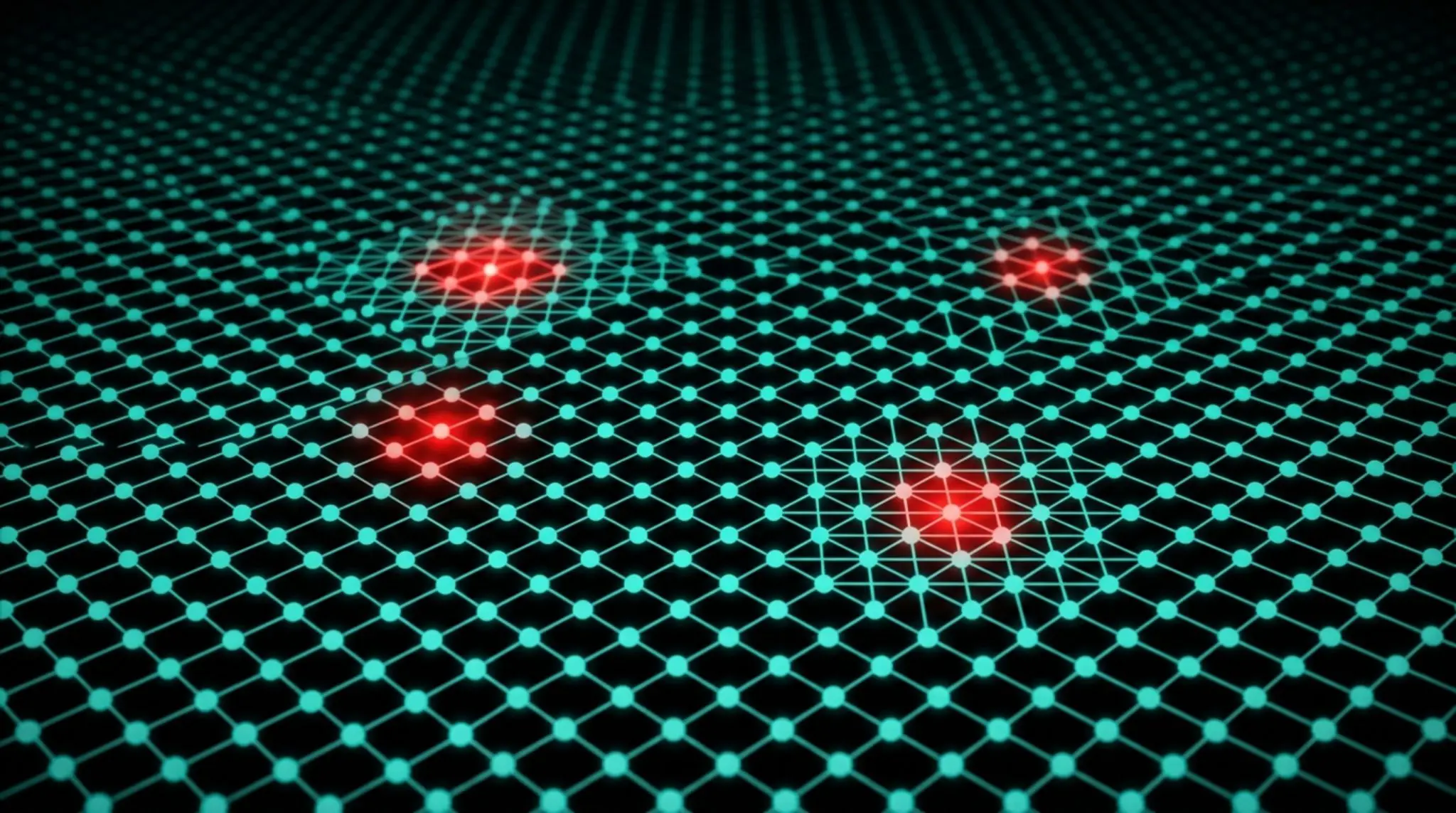
Researchers at RWTH Aachen University and Forschungszentrum Jülich have mapped out the impact of qubit movement on the performance of the surface code, a leading approach to quantum error correction. The team isolated errors introduced by physically moving qubits as a distinct source of noise within a standard circuit-level model, enabling a systematic investigation of their effects.
Simulations using the SpinBus architecture revealed a threshold of several percent for dephasing errors during shuttling, suggesting that practical error correction remains viable even with relatively high error rates. The results demonstrate that spin qubit based quantum processors offer positive prospects as a viable avenue for scalable, fault-tolerant quantum computing.
SpinBus Architecture and Qubit Shuttling Implementation
Simulations revealed a surface code threshold tolerance of up to five percent for shuttling errors stemming from dephasing, a finding particularly relevant to spin qubit systems where this error channel is expected to dominate. The work, motivated by the SpinBus architecture, introduces a hardware abstraction allowing for systematic numerical investigation of the two-dimensional parameter space of these shuttling errors. Researchers devised this extension to the standard noise model by introducing shuttling errors as an additional element within the circuit, enabling a focused analysis of their influence on surface code performance.
The SpinBus architecture served as the foundation for this abstraction, with its conveyor-like system of qubit movement informing the simulation parameters. This approach allowed the team to map out how error rates during qubit shuttling affect both the threshold for error correction and the required number of teraquop qubits.
The simulations specifically examined two scenarios: depolarization and dephasing, providing a comparative analysis of these error types during the shuttling process. The surface code’s performance did not significantly diminish with shuttling error rates up to several percent, suggesting a promising pathway for architectures reliant on qubit movement. This resilience is important for scaling quantum processors, as physically moving qubits is a key feature of the SpinBus design.
The team’s analysis builds on established methods for investigating quantum error correction codes, adapting them to account for the unique challenges posed by qubit shuttling. both its threshold as well as teraquop qubit count, do not deteriorate significantly for shuttling error rates up to a few percent,” the paper reports. The investigation focused on the interplay between qubit shuttling and surface code operations, providing insights into how to mitigate errors introduced by physical qubit movement.
The researchers used the concrete layout proposal of the SpinBus architecture to refine their simulations, ensuring the results are directly applicable to this specific hardware platform. This detailed modeling approach allowed for a precise assessment of the noise profile associated with shuttling and its impact on error suppression.
The results offer realistic prospects for realizing beneficial quantum error correction in architectures that depend on qubit shuttling, suggesting that the SpinBus design is a viable avenue for future quantum processors. The qubit overhead needed to reach a logical error rate of $-12$ increases only moderately for shuttling error rates up to about 1 % per shuttling operation.
Circuit-Level Noise Modeling with Shuttling Errors
By focusing on the specific noise introduced by qubit movement, the work refines existing methods for evaluating the performance of quantum error correction codes in realistic scenarios. To quantify the effect of shuttling, researchers performed large-scale simulations using the Surface code, extracting the error threshold across the two-dimensional parameter space.
For purely dephasing shuttling errors, the simulations revealed a threshold of several percent, contingent on high fidelity across all other quantum operations. The qubit overhead required to reach a logical error rate of 10-12, the “teraquop” regime, increases only moderately for shuttling error rates up to approximately one percent per operation.
Surface Code Thresholds with Depolarization and Dephasing
Simulations reveal a surface code can tolerate shuttling errors manifesting as dephasing up to 5%, a threshold particularly relevant for spin qubit architectures. This finding expands the known operational limits for quantum error correction, suggesting a more forgiving landscape for hardware development than previously understood. The research, focused on the SpinBus architecture, details how the surface code’s performance remains stable even with these error rates, offering a pathway to reduce the substantial overhead typically required for fault-tolerant quantum computation.
The investigation differentiated between two types of errors introduced by physically moving qubits, depolarization and dephasing, to assess their individual impacts on the surface code. This is especially pertinent given expectations that spin qubits will experience shuttling errors primarily as dephasing, potentially simplifying error mitigation strategies. The methodology employed extended standard circuit-level noise modeling to incorporate the specific characteristics of qubit shuttling.
The simulations provide a detailed map of the two-dimensional parameter space of shuttling errors, allowing for a precise extraction of the error correction threshold. This level of detail is critical for guiding the development of hardware and software solutions that can effectively suppress errors and enable scalable quantum computation. The findings suggest that the challenges associated with qubit shuttling may be less daunting than previously thought, opening up new avenues for building robust and reliable quantum computers.
Teraquop Regime and Qubit Overhead Analysis
Researchers focused on two distinct types of shuttling errors: depolarization and dephasing, allowing for a direct comparison of their effects on the surface code’s ability to correct errors. The results indicate that achieving practically useful error correction, with error rates comfortably below the threshold, is possible even with shuttling operations that exhibit relatively high error rates. This finding is particularly encouraging given the ongoing efforts to improve the fidelity of spin qubits and the potential for realizing robust quantum computation in architectures that rely on qubit shuttling.
Prospects for Scalable Error Correction with Spin Qubits
Simulations reveal a surprisingly high tolerance for errors during qubit shuttling, with surface code implementations potentially sustaining dephasing errors of up to five percent before error correction falters. This threshold, detailed in work appearing in Quantum, suggests that spin qubits may be more resilient to the practical challenges of physical movement than previously estimated. Two scenarios were investigated: depolarization and dephasing, enabling a comparative analysis of how each error type affects surface code performance during qubit movement.
The work builds on prior research into surface code performance, including studies published in Communications Physics and Nature, and incorporates insights from work on surface code thresholds and qubit fidelity. The researchers note that realistic efforts in the near term could see shuttling operations fall below the threshold at surprisingly large error rates, offering positive prospects for scalable quantum processors.


See today’s quantum computing news on Quantum Zeitgeist for the latest breakthroughs in qubits, hardware, algorithms, and industry deals.