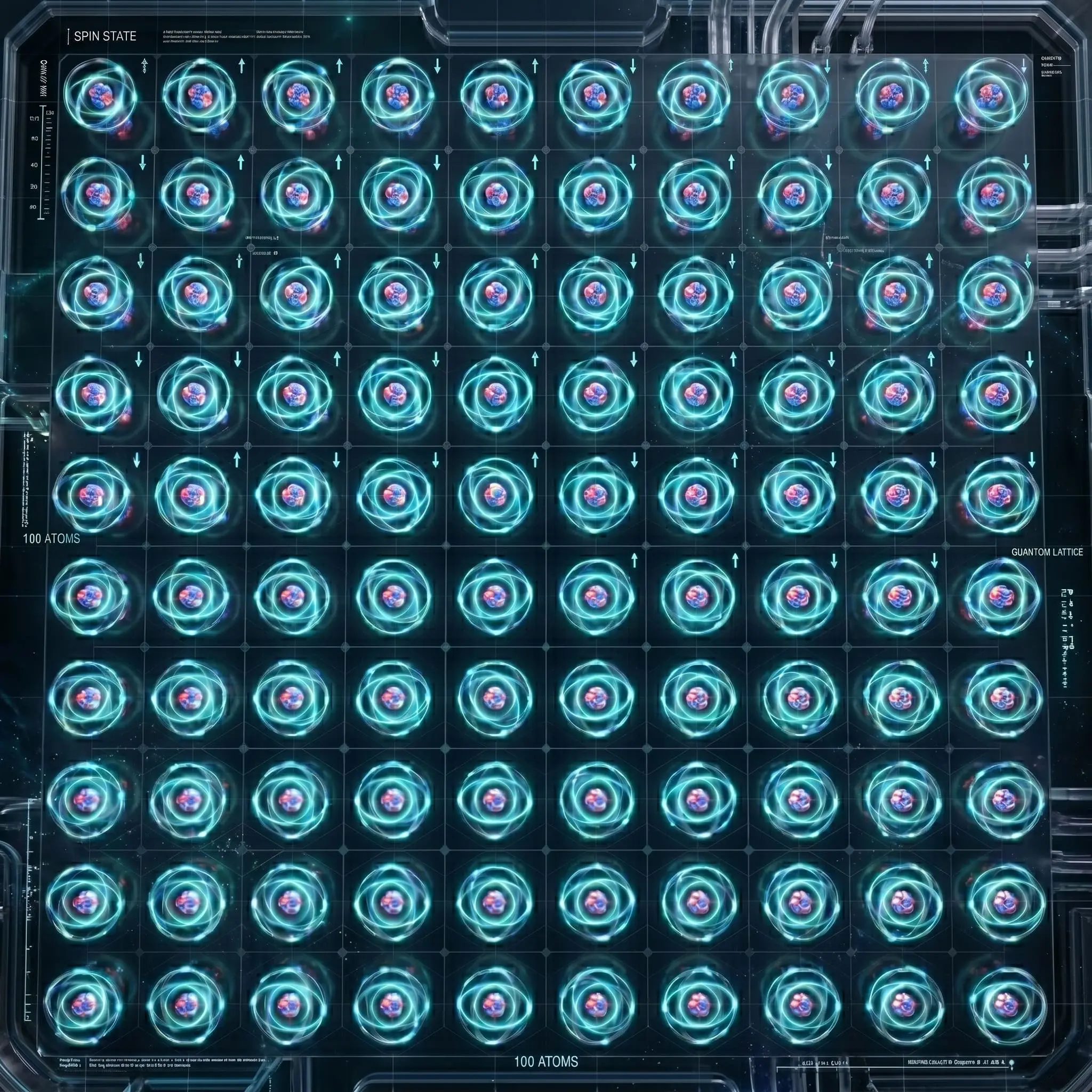
Fixstars Amplify is adding the quantum computing environment of German startup QUDORA Technologies to its optimization cloud service, a partnership that marks the first collaboration between a Japanese company and a German quantum firm. Central to this collaboration is QUDORA’s 50-qubit ion-trap system, which has demonstrated a coherence time exceeding 60 seconds, a long duration expected to improve the accuracy of optimization algorithms like QAOA. The physical hardware is scheduled to be available by 2027, and users can access Qamelion Emulator through Fixstars Amplify in advance. “We are thrilled to partner with QUDORA and integrate their ion-trap quantum computing environment into Amplify,” said Yoshiki Matsuda, President and CEO of Fixstars Amplify Corporation, explaining that QUDORA’s technology “will improve the calculation accuracy of hybrid algorithms such as QAOA.”
QUDORA’s NFQC Technology Enables Advanced Ion-Trap Systems
A coherence time exceeding 60 seconds, an unusually long duration for maintaining quantum information, is central to the advancements QUDORA Technologies GmbH is bringing to ion-trap quantum computing systems. The German startup’s proprietary Near-Field Quantum Control (NFQC) technology is enabling the development of systems with improved fidelity and scalability, and has now been integrated into the Fixstars Amplify optimization cloud service. QUDORA is the first German quantum startup to partner with a Japanese company, Fixstars, to offer its environment on a standard optimization cloud. QUDORA’s approach differs from conventional ion-trap designs by utilizing near-field magnetics to control qubits, rather than relying on complex external laser optics; this simplification is a key enabler for scaling to the thousands of qubits necessary for tackling real-world problems. This design choice allows for compatibility with semiconductor miniaturization technologies, a critical factor for future development.
The 50-qubit system, slated for full operation by 2027, is already showing promise in improving the accuracy of optimization algorithms like the Quantum Approximate Optimization Algorithm (QAOA). To accelerate access to this technology, QUDORA is offering the Qamelion Emulator through Fixstars Amplify, allowing users to experience the computing environment without waiting for physical hardware. Dr. Amado Bautista, CEO & Co-Founder of QUDORA Technologies GmbH, emphasized the collaborative spirit of the partnership, stating that the system is designed to scale to 200 qubits in future designs, solidifying QUDORA’s position in the evolving quantum landscape.
Fixstars Amplify Integrates QUDORA Cloud for Optimization
Fixstars Amplify is expanding its optimization cloud service with the integration of QUDORA Cloud, signaling maturity in accessible quantum computing environments. While several platforms offer quantum access, Fixstars Amplify distinguishes itself by incorporating a European quantum computing environment, a first for a Japanese company, and prioritizing optimization workflows. This partnership allows users to leverage QUDORA’s advanced ion-trap systems without immediate need for physical hardware access, as Qamelion Emulator is available now. Users can access QUDORA’s resources through the Fixstars Amplify SDK and the Amplify Quantum extension, requiring versions 1.6 and 1.1 respectively.
We are thrilled to partner with QUDORA and integrate their exceptional ion-trap quantum computing environment into Amplify.
Yoshiki Matsuda, President and CEO, Fixstars Amplify Corporation
Qamelion Emulator Provides Early Access to Quantum Resources
Fixstars Amplify is expanding access to quantum capabilities through a partnership with German startup QUDORA Technologies. This marks the first collaboration for QUDORA within the Japanese market, offering early access to its technology. This extended coherence is expected to yield more reliable results compared to existing physical hardware. The underlying technology, dubbed NFQC (Near-Field Quantum Control), utilizes near-field magnetics to control qubits, streamlining the system and paving the way for scalability toward the goal of 200 qubits in future designs. To facilitate experimentation, Fixstars Amplify has begun issuing access tokens for Qamelion Emulator, allowing users to leverage the Amplify SDK and Quantum extension.
We are highly honored to partner with Fixstars Amplify and expand access to our quantum computing solutions.
Dr. Amado Bautista, CEO & Co-Founder, QUDORA Technologies GmbH
Long-Life Qubits Enhance QAOA Calculation Accuracy
The pursuit of reliable quantum computation took a step forward with the demonstrated longevity of qubits within QUDORA Technologies’ 50-qubit ion-trap system, promising to refine the accuracy of complex optimization tasks. QUDORA’s approach centers on proprietary and a unique control mechanism called NFQC (Near-Field Quantum Control) technology, which utilizes near-field magnetics instead of complex laser systems, offering a pathway toward scalable quantum processors. Maintaining qubit stability for extended periods is crucial for QAOA, an algorithm designed to tackle combinatorial optimization problems with applications ranging from logistics to materials science. Dr.
By combining the exceptional quality and coherence time of QUDORA’s ion-trap qubits with Fixstars Amplify’s outstanding optimization capabilities and infrastructure, users will be able to develop quantum applications more effectively and transition them into practical operations across all fields, from research to industrial use.
Dr. Amado Bautista, CEO & Co-Founder, QUDORA Technologies GmbH



See today’s quantum computing news on Quantum Zeitgeist for the latest breakthroughs in qubits, hardware, algorithms, and industry deals.