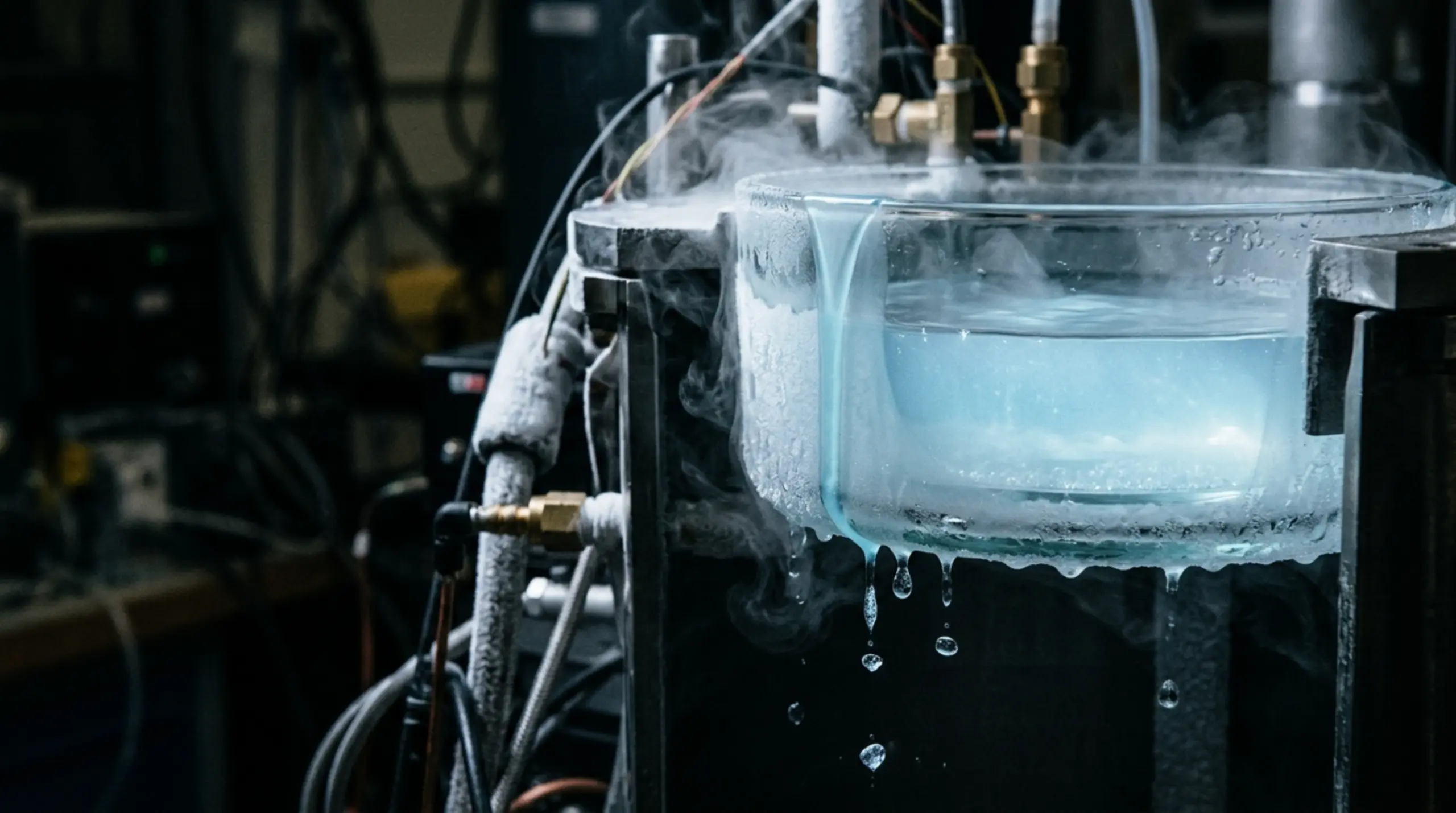
Researchers at ETH Zürich discovered a paradox: in the crossover from 1D to 2D, the resistance reaches a minimum. The team, led by Tilman Esslinger, used a defect-free unitary Fermi gas to isolate how geometry affects superfluid dissipation, discovering that widening a channel actually increases resistance in this dimensional crossover.
This paradox challenges the standard expectation that resistance decreases with increasing cross-section, and the work demonstrates a transition in dissipative mechanisms, simultaneously suppressing phase slips and vortices. The measurements suggest a route to minimizing dissipation in superconducting devices and provide a benchmark for theoretical efforts.
Quantum Resistance Paradox in Low-Dimensional Superfluids
The expectation that electrical resistance decreases with increasing cross-section does not hold in all materials; a study reveals resistance actually increases as a superfluid channel widens during a transition from one-dimensional to two-dimensional behavior. Researchers at ETH Zürich observed this “quantum resistance paradox” in a defect-free unitary Fermi gas, challenging conventional understanding of dissipation in low-dimensional systems. This non-monotonic behavior occurs near a channel width of one micron, where both phase slips and vortex formation, mechanisms responsible for residual resistance in one and two dimensions, respectively, are simultaneously suppressed.
This unexpected result stems from the way resistance manifests in these superfluids, differing from standard conductors. In one-dimensional systems, residual resistance arises from phase slips, while two-dimensional systems exhibit resistance due to vortices. The team’s experiments isolated geometric effects on superfluid dissipation, revealing that the minimal dissipation in the dimensional crossover reflects a transition in the dominant dissipative mechanism.
Analysis of the energy remaining in the system after initial decay further confirmed the paradoxical behavior. The remaining energy varied non-monotonically with channel width, peaking in the crossover region where both phase slips and vortices are minimized.
The researchers note that it is in this crossover where widening the channel paradoxically increases its resistance, highlighting the unusual nature of the finding. The study’s results demonstrate the potential of ultracold atomic superfluids as a platform for simulating quantum transport phenomena, offering a clean system to investigate dissipation without the confounding effects of disorder and impurities common in solid-state materials.
Geometry-Dependent Resistance: 1D to 2D Crossover
Experiments with ultracold Fermi gases revealed a surprising minimum in resistance as the geometry of the superfluid transitioned between one and two dimensions. The research team found that widening a channel beyond a specific point actually increased resistance, a phenomenon not previously observed in this type of system. Narrow channels, exhibiting quasi-one-dimensional behavior, displayed dissipation consistent with the Langer-Ambegaokar-McCumber-Halperin (LAMH) theory of phase slips. Varying the width of these channels yielded exponential scaling of the activation factor over more than ten orders of magnitude, validating the theoretical predictions.
Conversely, wider, quasi-two-dimensional channels showed dissipation aligning with a finite-size vortex model, where the formation of vortex-antivortex pairs dictates resistance. The observed gap between the validity ranges of these two models, phase slips and vortices, highlights the complexity of the dimensional crossover region.
Fitted resistances validated scaling laws, with the phase slip resistance showing exponential suppression with width as predicted by LAMH theory. The saturation of the LAMH-inferred resistance at large widths does not stem from fitting limitations but reflects a shift from strong exponential width dependence to a weaker one, as predicted by the vortex model.
The research team isolated geometric effects on superfluid dissipation by employing optically shaped channels, reproducibly tuned from quasi-1D to quasi-2D configurations. The team prepared a relative atom-pair imbalance between reservoirs, initiating a discharge that was distinctly non-exponential, indicating a nonlinear response and revealing information about the underlying microscopic mechanisms.
Phase Slips Dominate Quasi-1D Channel Dissipation
Experiments using a defect-free unitary Fermi gas revealed a surprising trend in superfluid resistance; as channel width increased, resistance initially decreased, reaching a minimum before rising again. This counterintuitive behavior challenges conventional understanding where resistance typically increases with larger cross-sections, and demonstrates a paradox in low-dimensional superconducting systems. The research team employed a digitally programmable geometry to isolate how channel shape impacts dissipation, allowing precise control over dimensionality.
This precise control and measurement confirm the dominance of phase slips as the primary dissipation mechanism in these constricted geometries. The observed minimal dissipation at the dimensional crossover point indicates a shift in the dominant dissipative process, with both phase slips and vortices simultaneously suppressed. The ability to precisely tune and observe this transition offers a new platform for exploring fundamental physics and optimizing future superconducting technologies.
Langer-Ambegaokar-McCumber-Halperin Theory Validates Phase Slip Scaling
This validation extends beyond simple confirmation. The research demonstrates that increasing channel width, counterintuitively, elevates resistance at the dimensional crossover point, a result previously unobserved in defect-free systems. The team’s digitally programmable geometry allowed for precise isolation of geometric effects on dissipation, revealing this unexpected behavior where wider channels do not necessarily equate to lower resistance. This scaling is explained by the free energy barrier for phase slips, which is proportional to channel width, and manifests as a thermally activated process governed by the equation Γ∝ exp(-Δ F/(k_BT)).
The researchers found that the fitted phase slip resistance, , accurately reflects this exponential suppression as width increases, solidifying the theory’s predictive power in this regime. This precise quantitative agreement provides a benchmark for future theoretical work and experimental verification.
Vortex Dynamics Govern Dissipation in Quasi-2D Channels
This paradoxical behavior arises from a shift in how energy dissipates within the superfluid, moving from phase slips in narrow channels to vortices in wider ones. As channel width increases, the dissipation mechanism shifts, with wider, quasi-two-dimensional channels exhibiting behavior consistent with a finite-size vortex model. This work provides a direct window into the challenging analytical modeling of the transition between one- and two-dimensional transport, offering new insights into fundamental superfluid behavior.
Minimal Dissipation at the Dimensional Transition
Measurements reveal a surprising minimum in energy loss as a superfluid’s channel width shifts between one- and two-dimensional geometries, challenging expectations that resistance increases with decreasing dimensionality. This non-monotonic behavior, termed the quantum resistance paradox by the researchers, indicates a fundamental transition in how dissipation occurs within the superfluid. This transition involves the simultaneous suppression of two distinct dissipation mechanisms.
Conversely, vortex-antivortex pair formation, a key source of resistance in two dimensions, requires sufficiently wide channels to become energetically favorable. The crossover region, where both mechanisms are minimized, represents a unique state of minimal dissipation. These findings have implications for the design of superconducting devices.
Topological Defects and Superfluid Phase Coherence
Fluctuations in low-dimensional superconductors and superfluids generate resistance through topological defects, specifically phase slips in one dimension and vortices in two dimensions. The interplay between these mechanisms as geometry shifts between these regimes has remained an unresolved question, complicated by imperfections in solid-state experiments and theoretical challenges arising from competing dissipation processes. The behavior of these defects is directly linked to energy balance within the superfluid system.
A model incorporating potential energy in reservoirs, kinetic energy and the dissipative processes within the channel reveals that resistance acts as a topological nonlinear resistor. This resistance isn’t simply a function of geometry but also of the current flowing through the superfluid. As bias increases, phase slips that reduce current become more likely, eventually leading to an exponential increase in their probability.
The relationship between current and phase slip probability is not linear. At low current levels, phase slips occur equally in both directions. This dynamic is distinct from two-dimensional systems where dissipation arises from the movement of vortices, point-like singularities in the phase of the superfluid. These vortices function as nonlinear resistors, influencing the overall resistance of the system and demonstrating the complex interplay between geometry, topology and dissipation in these quantum materials.

See today’s quantum computing news on Quantum Zeitgeist for the latest breakthroughs in qubits, hardware, algorithms, and industry deals.