Boeing has demonstrated strong performance in high-fidelity entanglement swapping during ground testing of a compact payload designed for space, establishing the company as a key player in the development of quantum networking. The Q4S mission’s successful tests mark a step toward establishing quantum links beyond simple point-to-point connections, a core component of a future global quantum internet. Boeing’s analysis indicates the payload outperformed comparable experiments detailed in peer-reviewed publications, despite the limitations of power, weight, and the space environment. “Quantum networking has the potential to transform how information is shared, timed and protected across global systems, but only if it can work outside the lab, under real mission constraints,” said Lane Ballard, Boeing chief technology officer. With final spacecraft integration underway, the Q4S mission remains on track for launch and an on-orbit demonstration of this technology.
Q4S Payload Demonstrates Entanglement Swapping in Spaceflight Conditions
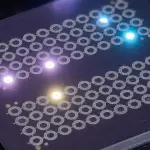
Boeing has demonstrated high-fidelity entanglement swapping on a space-qualified payload, a feat previously confined to laboratory settings and representing a critical advance toward practical quantum networking. Entanglement swapping, a process essential for extending quantum links beyond direct connections, is a core component of future quantum networks capable of linking distant quantum sensors and computers. The successful ground testing involved a compact payload that underwent rigorous environmental qualification, verifying its ability to withstand the stresses of launch and the harsh conditions of space. Boeing anticipates submitting the technical results of the program for peer review, which will further validate the findings and contribute to the broader scientific community. This demonstration is significant because conventional quantum experiments require substantial, delicate equipment and abundant power, resources unavailable in space.
Jay Lowell, chief scientist for Boeing’s Quantum Systems organization, emphasized the challenge, stating, “One of the hardest parts of quantum networking is maintaining strong performance while working within the size, weight and power limits of a spacecraft.” The Q4S mission is planned as a one-year on-orbit demonstration, with collected data intended to assess payload performance and inform the development of future quantum networking architectures, potentially enabling more secure communications, precise timing, and advanced sensing capabilities.
These test results show that we can produce high-fidelity swaps on a payload engineered for space, not just for a controlled lab bench. That is a meaningful step toward practical quantum networks.
Jay Lowell, chief scientist for Boeing’s Quantum Systems organization
Boeing’s Vision for a Global Quantum Internet and Applications
Unlike many quantum demonstrations confined to controlled environments, the Q4S payload was designed to function within the limitations of a satellite, specifically addressing the challenges of size, weight, and power consumption. Boeing’s analysis indicates the payload’s performance in entanglement swapping exceeds results published in peer-reviewed literature for comparable experiments, a significant feat given the operational constraints. The Q4S mission is currently undergoing final spacecraft integration, indicating a near-term timeline for an on-orbit demonstration expected to last one year. Data collected during this mission will be vital for assessing the payload’s performance in the space environment and refining future quantum network designs. Boeing envisions these networks extending beyond basic communication, potentially enabling more precise timing for navigation systems, enhanced security protocols, and the validation of network integrity across air, ground, sea, and space-based assets.
Based on Boeing’s analysis of peer-reviewed publications of comparable entanglement-swapping experiments, the payload demonstrated leading performance within the real-world power and weight constraints of spaceflight.
Boeing




See today’s quantum computing news on Quantum Zeitgeist for the latest breakthroughs in qubits, hardware, algorithms, and industry deals.