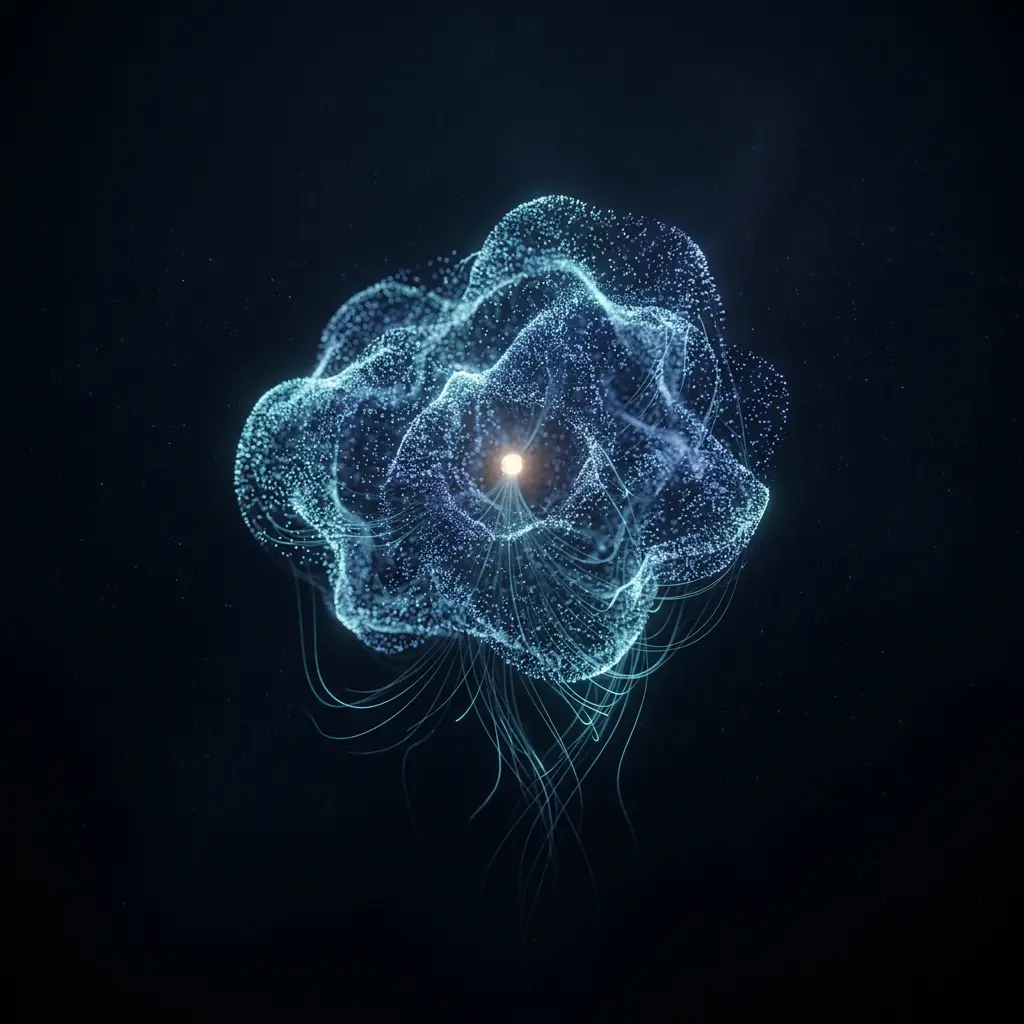
Researchers led by Zeheng Wang have developed a new framework that directly links the physical layout of CMOS quantum chips to their quantum behavior, offering a path toward more auditable qubit designs. The team’s “Poisson-kernel coupled-interface Green-function (PK-GF) model” achieves agreement with independent finite-volume solutions at the millivolt scale for two-dimensional problems without requiring any fitting to those solutions, suggesting a highly accurate electrostatic model. By modeling a jellybean quantum dot with between two and seventeen electrons at a magnetic field of five Tesla, they observed occupation-dependent charge localization resembling Wigner molecules. This workflow, connecting CMOS layout to quantum observables through both Unrestricted Hartree-Fock and Complete Active-Space Configuration Interaction calculations, supports and promises to streamline the development of future quantum devices.
The ability to accurately model electrostatic interactions within compact CMOS structures is now validated by this new analytical framework, representing a significant step toward auditable qubit design. The framework’s ability to accurately predict quantum behavior based solely on device geometry is a key advancement in the field of CMOS quantum computing. The team successfully modeled a jellybean quantum dot containing between two and seventeen electrons subjected to a magnetic field of five Tesla, observing occupation-dependent charge localization resembling Wigner molecules. The researchers state that this workflow provides an auditable modeling layer for CMOS-based qubit design and DTCO, potentially streamlining the development process by integrating design and fabrication considerations.
The pursuit of scalable quantum computing increasingly focuses on semiconductor-based qubits, but accurately modeling electron behavior within these devices presents significant challenges; connecting lithographic design to quantum properties remains a key hurdle. While Unrestricted Hartree-Fock calculations suggested potentially overestimated spin polarization, Complete Active-Space Configuration Interaction analysis revealed a low-spin branch within the tested active spaces, aligning with experimental results.
Source: https://arxiv.org/abs/2607.04876


See today’s quantum computing news on Quantum Zeitgeist for the latest breakthroughs in qubits, hardware, algorithms, and industry deals.