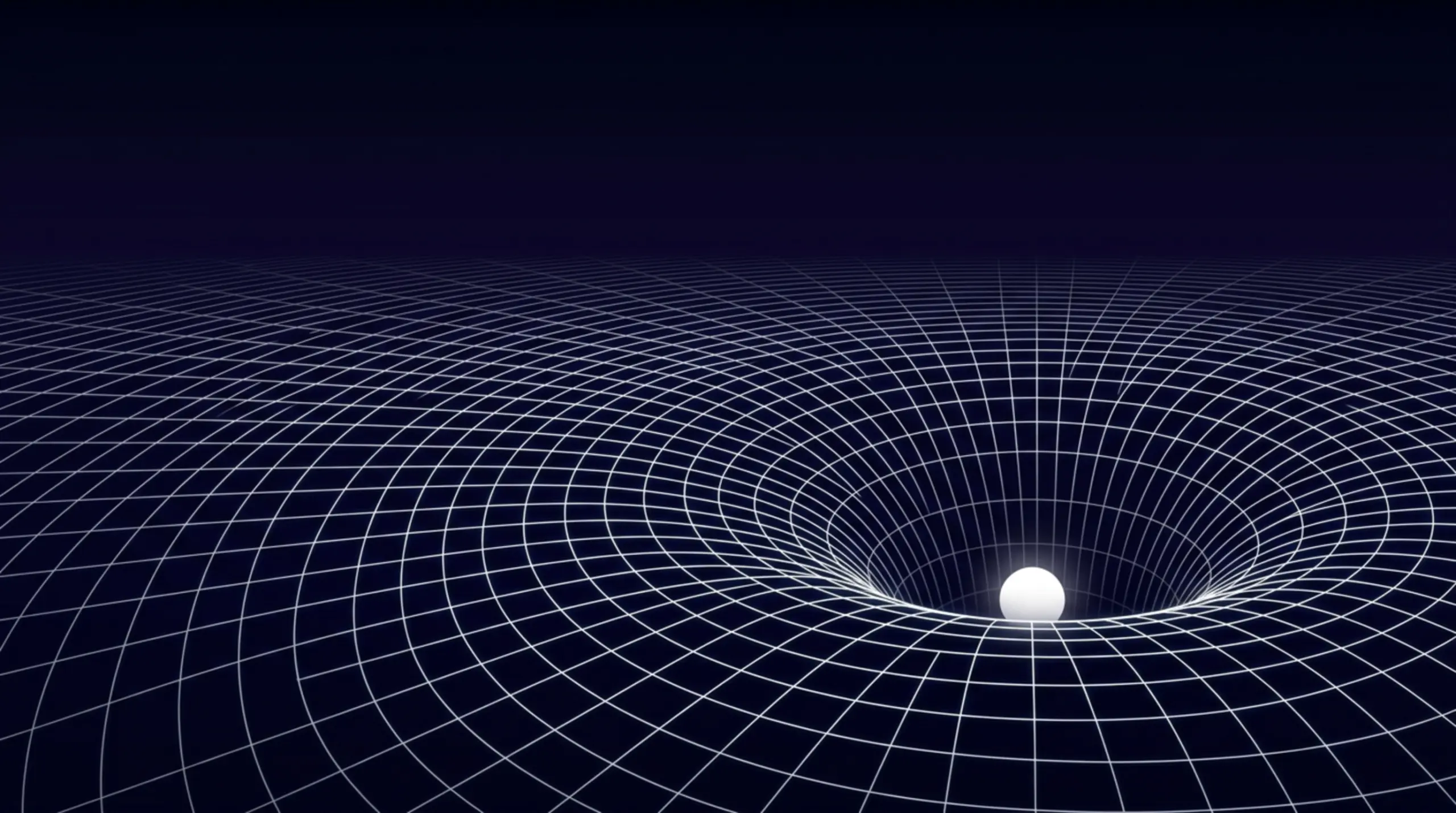
Calculations reveal that achieving maximum gravitational entanglement between two masses requires only two positions per mass, a surprisingly low number of states given the complexity of the force. Ekta Panwar and a colleague determined the maximum entanglement rate decreases with the inverse cube of the separation between the masses; doubling the distance reduces the rate by a factor of eight.
The work finds that continuous error correction, while protecting against disruptive forces, diminishes the entanglement rate to fall as the inverse seventh power and requires six positions arranged on a hexagon to reach 10% of the maximum rate at greater distances. The authors write that “gravity is weak, so the masses must stay coherent for seconds while random forces disturb them.”
Inverse-Cube Limit for Maximum Entanglement Rate
This inverse-cube relationship establishes a fundamental limit on how quickly gravity can link quantum states. Achieving 10% of the maximum entanglement rate at larger separations requires arranging the masses across six positions forming a hexagon; this configuration represents a trade-off between shielding the system from environmental noise and maintaining a high rate of entanglement. The researchers found that above a certain noise level, gravity’s influence can be mimicked by classical signals, limiting all entanglement strategies to a rate falling at least as the inverse fourth power.
👉 More information
🗞 The speed limit of gravitational entanglement and the cost of noise
✍️ Ekta Panwar and Anubhav Chaturvedi
🧠 ArXiv: https://arxiv.org/abs/2611.21546v1

See today’s quantum computing news on Quantum Zeitgeist for the latest breakthroughs in qubits, hardware, algorithms, and industry deals.