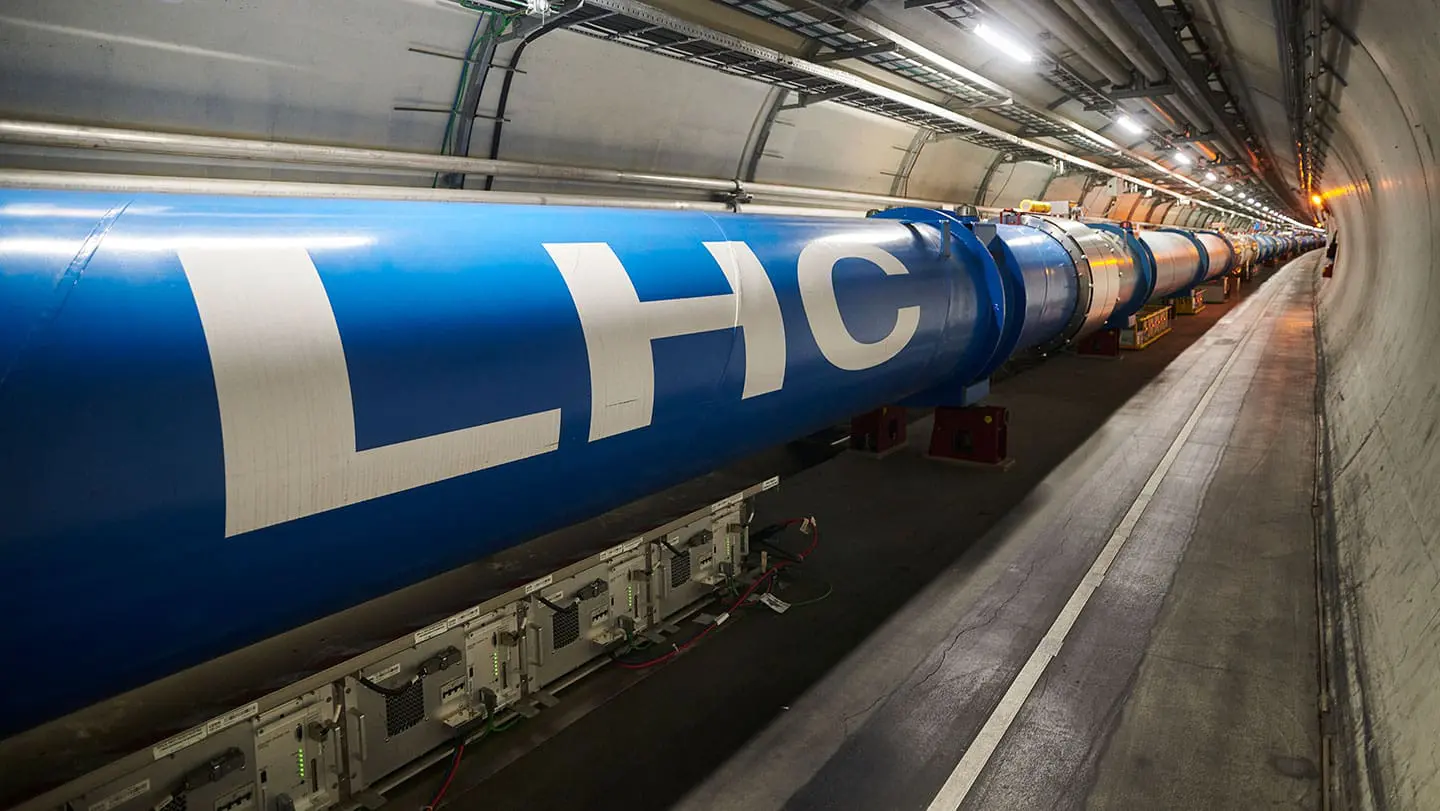
The end of an era for particle physics arrived on June 29, as CERN shut down the Large Hadron Collider in preparation for a substantial overhaul. The LHC, famed for enabling the discovery of the Higgs boson, will undergo a transformation into the High-Luminosity LHC, designed to increase the rate of proton collisions. This upgrade isn’t merely cosmetic; 1.2 kilometers of accelerator components will be removed and replaced within the 27-kilometer ring straddling France and Switzerland. The HL-LHC will achieve up to 10 times the original luminosity, promising a greater volume of data for physicists seeking to probe beyond the current Standard Model and investigate mysteries like dark matter.
Large Hadron Collider Enabled Higgs Boson Discovery
The Large Hadron Collider, responsible for confirming the existence of the Higgs boson, ceased operation on June 29 to begin a substantial upgrade process, transitioning from a completed mission to a period of intensive reconstruction and enhancement. This machine will not simply refine existing capabilities, but will feature the removal and replacement of 1.2 kilometers of accelerator components, a physical overhaul demonstrating the project’s ambitious scope and commitment to pushing the boundaries of particle physics. A key objective of the upgrade is to achieve a luminosity up to 10 times greater than the original LHC, meaning a tenfold increase in the rate of proton collisions within the detector. This surge in collision frequency promises a larger volume of data for physicists to analyze, potentially unlocking new insights beyond the Standard Model; researchers anticipate compiling data on approximately 380 million Higgs bosons, a significant leap from previous datasets.
According to Emily Conover, a senior physics writer, the HL-LHC is scheduled to start up in the future, though a specific date was not provided. The detectors will also undergo major revamps to handle the increased collision rate and data flow, ensuring that the instruments can accurately measure the outputs of these high-energy interactions. This enhanced capability is intended to address some of the most pressing mysteries in modern physics, including the nature of dark matter and the imbalance between matter and antimatter in the universe; the team hopes to identify effects that deviate from the predictions of the Standard Model, potentially revealing new particles or forces. A source states that supporting science journalism is more important than ever, highlighting the importance of continued investment in scientific research and communication.
With the HL-LHC, researchers expect to compile data on 380 million Higgs bosons.
High-Luminosity LHC Upgrade Increases Collision Rate
The scale of the High-Luminosity LHC (HL-LHC) upgrade is becoming clear as engineers begin a substantial physical overhaul of the 27-kilometer accelerator ring straddling France and Switzerland. The shutdown on June 29 marked the end of an operational period for the current LHC configuration, initiating a period of intense engineering work to prepare for the next generation of particle physics experiments. This boost in luminosity will not only allow for more precise measurements of known particles, but also open new avenues for exploring physics beyond the Standard Model, the prevailing theory describing fundamental particles and forces. The increased collision rate necessitates corresponding upgrades to the detectors surrounding the collision points, ensuring they can accurately capture and analyze the resulting particle showers.
The HL-LHC will have up to 10 times the original luminosity of its predecessor.




See today’s quantum computing news on Quantum Zeitgeist for the latest breakthroughs in qubits, hardware, algorithms, and industry deals.