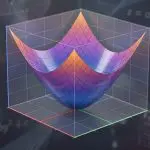
Introducing loss to bosonic systems restores constraints on how quickly information can spread through them; specifically, removing more than two photons from each site yields an operator-norm Lieb, Robinson bound. Information propagation is limited within these models and does not increase without limit as it would in closed systems lacking dissipation. A method exists to control information flow within quantum systems by intentionally introducing energy loss into bosonic lattices, structures where particles called bosons interact.
Previous models struggled because information could spread without limit, but this new approach establishes consistent limits on how quickly data travels regardless of initial conditions. This ‘uniform’ bound allows for more reliable simulation and manipulation of complex behaviours found in such quantum systems, offering greater predictability. The University of Cambridge and the University of Tübingen have uncovered a method to constrain information flow within quantum systems by deliberately introducing energy loss into bosonic lattices; these are structures representing interacting particles arranged in a grid-like pattern that gradually lose energy over time.
Yet, this new approach establishes consistent limits on how quickly changes affect different parts of the system regardless of its starting state, akin to imposing a speed limit for information transfer as nothing can exceed the speed of light. This ‘uniform’ bound is key for reliably simulating and manipulating complex behaviours found in such quantum environments, offering greater predictability than previously possible.
Photon Loss Enables Ballistic Bounds and Enhanced Control in Dissipative Bose-Hubbard
Researchers at the University of Cambridge and University of Tübingen achieved an almost-ballistic Lieb, Robinson bound through dissipation; previously, such bounds were only possible with state-dependent constraints or absent entirely in closed Bose-Hubbard models. Specifically removing more than two photons per site restored operator-norm control over information propagation within the dissipative Bose-Hubbard model, effectively imposing a speed limit on how quickly changes affect distant parts of the system. This restoration allows for applications like local adiabatic approximations and efficient digital quantum simulation independent of initial conditions, features unavailable in their non-dissipative counterparts.
Rapidly depleting highly occupied sites regularizes the state on a scale relating to local particle moments. Extending these ideas to ‘cat-code dissipation’ confirms that a local adiabatic approximation is uniform across total volume when starting from states encoded using this method. Consequently, analysis at the thermodynamic limit and efficient digital quantum simulation are possible uniformly across input states.
Controlling Boson Occupancy via Sobolev Regularisation and Energetic Constraints
Sobolev regularization tamed information spread within simulations; the mathematical process smooths fluctuations in particle density across the lattice structure, akin to applying friction to slow erratic movements. Focusing on energy dissipation through photon loss at each site controlled these local densities preventing unbounded growth in particle occupancy which previously allowed unrestricted data propagation. Analysing how quickly changes influence other locations established limits based not just on distance but also on the overall energetic state ensuring predictable behaviour even with complex boson interactions.
Dissipation introduces predictable behaviours into complex quantum systems
Controlling information flow within quantum systems is increasingly important for advanced technologies like more powerful computers and novel materials. The team overcame a longstanding challenge in bosonic lattices by demonstrating that controlled energy loss can regulate particle behaviour; formerly, data could propagate without limit hindering reliable simulations. Restoring Lieb, Robinson bounds, mathematical constraints governing predictability, allows consistent modelling regardless of initial conditions because unbounded information spread limited practical use of these lattices.
The University of Cambridge and Tübingen team established a method to predictably govern information transfer within complex bosonic systems, interacting particles arranged on a grid where energy gradually dissipates over time. Intentionally introducing photon loss exceeding two photons per site restored the aforementioned mathematical constraints enabling reliable modelling across large scales. This control unlocks possibilities unavailable in closed quantum systems such as thermodynamic analysis and efficient digital simulations requiring predictable behaviours.
This research demonstrated that incorporating local dissipation into bosonic lattice systems restores limits on how quickly information can propagate throughout the system. Previously, unbounded data spread prevented consistent modelling; however, controlled energy loss through photon emission successfully regulated particle behaviour. The team showed this approach works uniformly regardless of initial conditions, offering benefits for applications including thermodynamic limit calculations and more efficient digital quantum simulation. These findings provide a means to predictably govern complex interactions within these lattices, something not possible with isolated systems.
👉 More information
🗞 Dissipation-Enabled Operator-Norm Locality Bounds for Bose-Hubbard Hamiltonians
✍️ Marius Lemm and Tim Möbus (University of Tübingen)
🧠 ArXiv: https://arxiv.org/abs/2610.01669


See today’s quantum computing news on Quantum Zeitgeist for the latest breakthroughs in qubits, hardware, algorithms, and industry deals.