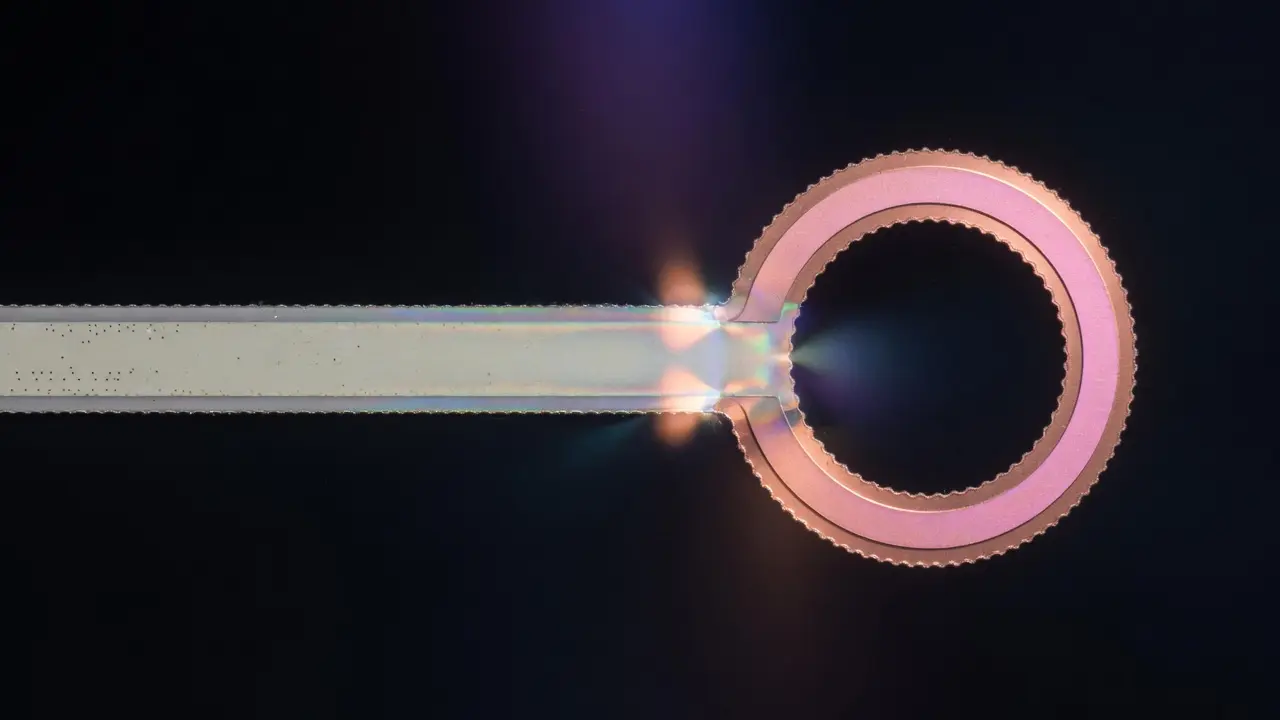
Researchers have developed a superconducting resonator capable of tuning its frequency by applying a DC current to a high-kinetic-inductance thin film. The work demonstrates dynamic bandwidth control achieved through parametric coupling to a low-Q buffer resonator, a key feature for functional quantum memory. Using this resonator, the team addressed an ensemble of bismuth donors at their clock transition, measuring a Hahn-echo coherence time of 450 milliseconds. A promising solution to the limited coherence times hindering superconducting quantum processors relies on dedicated quantum memory units capable of parallel storage of multiple qubit states over extended periods.
Bismuth Donor Clock Transitions Enable Extended Quantum Memory
Bismuth donors in silicon now sustain quantum information for up to 450 milliseconds, a duration enabled by a newly developed superconducting resonator capable of dynamically adjusting both frequency and bandwidth. This achievement, detailed in a recent report, positions bismuth as a strong candidate for building practical quantum memories, devices that are important for storing and retrieving quantum data over extended periods. This coupling allows for fine-tuning of how long quantum information remains stable within the bismuth donor ensemble, a critical parameter for functional quantum memory.
Researchers demonstrated radio frequency driving of the bismuth donor hyperfine transitions, confirming the resonator’s ability to interact with and manipulate the quantum states of the material. The demonstrated control over bandwidth is essential for optimizing storage times and minimizing signal degradation.
Beyond extending coherence times, the resonator also enables dynamic control over the quantum system itself. The team successfully silenced echo emission by tuning the resonator away from resonance during echo formation, a technique previously demonstrated for quantum memory protocols. This capability is vital for implementing advanced memory schemes that require precise timing and signal manipulation. The resonator facilitated spectroscopy of bismuth donor sub-gigahertz transitions using electron nuclear double resonance, providing valuable insights into the material’s quantum properties.
The design of the resonator uses the quadratic dependence of kinetic inductance on current, a property that allows for field-resilient frequency tuning. This is particularly advantageous for interfacing with spins at magnetic fields ranging from 200 to 500 mT. Calculations of the bismuth donor energy spectrum, as a function of the polarizing field, reveal the specific clock transitions that were characterized in the experiment.
These clock transitions, highlighted in the accompanying data, are key to achieving the observed extended coherence times. “We can address the Bi:Si donor spins at their CT, using a frequency-tunable resonator,” the researchers report, confirming the successful integration of the resonator and the bismuth donor ensemble. The extended coherence times demonstrated in this work address a key challenge in superconducting quantum processors, which are currently limited by the short duration quantum information can be reliably stored.
This limitation constrains the development of both noisy intermediate-scale quantum (NISQ) algorithms and more robust quantum error correction schemes. Solid-state spin ensembles, like bismuth donors, offer a promising pathway toward overcoming these limitations with their inherent multimodal storage capabilities and potential for second-long coherence. The ability to store multiple qubit states in parallel over extended periods is an important step toward realizing practical and scalable quantum computing.
Frequency-Tunable Resonator Design Using Kinetic Inductance
Comprised of 250-nanometer-wide nanowires, each extending over a substantial length to facilitate precise control over the resonator’s characteristics, the design incorporates a kinetic inductance coupler (KIC). Fabricated on a 50-nanometer-thick niobium titanium nitride (NbTiN) film, the circuit’s performance relies on the material’s measured kinetic inductance per square, a critical parameter for achieving the desired tunability. Cooling the device to 10 millikelvin within a dilution refrigerator minimizes thermal noise and optimizes signal clarity, essential for detecting subtle changes in the spin ensemble.
Resonator A, the primary component for interfacing with the spin ensemble, features an 800-nanometer-wide inductive wire designed to maximize kinetic inductance. This wire operates in parallel with a capacitor, forming a high-quality-factor resonator that helps maintain coherence. Complementing this is resonator B, an auxiliary component with a lower quality factor, functioning as a tunable microwave buffer for resonator A.
The KIC is the inductive link between the two resonators, enabling dynamic bandwidth control and precise manipulation of the quantum information stored within the bismuth donors. The circuit schematics reveal the interconnectedness of these elements, highlighting the role of the KIC in mediating the interaction between the two resonators. Measurements demonstrate a resonance frequency shift in response to sweeping DC bias current applied to both resonators, a key indicator of the system’s tunability.
Solid curves representing fits to Ginzburg-Landau theory confirm the predicted behavior of the kinetic inductance, validating the design’s effectiveness. Analysis of the loss rate reveals a narrow peak at 260 millitesla, tentatively attributed to dangling bond spins at the silicon dioxide interface, and a broader peak at 1.922, similar to a previously identified titanium-related defect.
These observations suggest the presence of additional paramagnetic impurities within the silicon substrate, which could influence the coherence properties of the bismuth donors. Researchers harnessed the capacity to send sub-gigahertz pulses to drive nuclear magnetic resonance (NMR)-like transitions between the energy levels of the bismuth donors. Measuring the amplitude of a Hahn echo as a function of the radio frequency pulse frequency reveals the energy level structure of the Bi:Si spins, confirming the successful addressing of the donor spins at their clock transition.
Bandwidth Control via Parametric Coupling to Buffer Resonator
This approach moves beyond fixed-frequency resonators requiring trial-and-error tuning, offering a scalable method for maintaining resonance with the clock transition frequency of quantum bits. The tunability of resonator A stems from applying a DC current through its microwire, while bandwidth adjustment relies on three-wave mixing with resonator B via the kinetic inductance component, both processes requiring low-frequency or DC bias.
Notch filters centered at the respective resonance frequencies of both resonators facilitate this precise control. Measurements of microwave reflection off port B demonstrate the resonance frequencies of both mode An and mode B, revealing the impact of sweeping a three-wave mixing pump frequency across the frequency difference between the two resonators.
Analysis of mode A’s linewidth, , reveals its dependence on the amplitude of the RF pump, measured under varying DC bias conditions applied to resonator B while maintaining a neutral bias on resonator A. This dynamic control extends to ringdown suppression, where resonant microwave pulses exhibit reduced amplitude as three-wave mixing pump pulses are delayed by increasing intervals of 10 nanoseconds, 20 nanoseconds, and 30 nanoseconds, as shown in inset pulse sequences. The demonstrated ability to manipulate resonator bandwidth is directly linked to successful addressing of spins within a solid-state system.
A silicon chip enriched with ^28Si and pre-implanted with ^ ions was bonded to the resonator, allowing for interaction with bismuth donors, which become neutral at low temperatures, and measurement of their spin Hamiltonian. The Hamiltonian, H = ( + γ_nI)B_z + AI·S, describes the interaction of electron and nuclear spins with an external magnetic field and hyperfine coupling, using gyromagnetic ratios of = -28 GHz/T and = 8 MHz/T, alongside a hyperfine coupling constant of A/2π = 1.47507 GHz.
450ms Hahn-Echo Coherence Measured in Bismuth Donors
Enhanced coherence times at specific magnetic fields, known as clock transitions, offer a pathway to extended quantum information storage in solid-state spin ensembles. Measurements reveal resonator A, the primary component for spin addressing, can be tuned over an approximate 80 MHz range, while the auxiliary resonator B shifts by less than 10 MHz as intended.
Critical current measurements of the microwire forming resonator An and the kinetic inductance component reached 9.53 mA and 5.73 mA respectively, confirming the resonator’s operational parameters. Spectroscopic analysis of the bismuth donors revealed distinct transitions, with the absorption spectrum measured by monitoring the internal loss rate of mode A.
The team observed absorption peaks at 2.1 mT, corresponding to the bismuth donor transitions, and extracted the linewidth of these peaks to assess the homogeneity of the magnetic field. The observed linewidth, influenced by the residual 29Si isotope, provides insights into the environmental factors affecting coherence. By driving the hyperfine transitions of the bismuth donors, researchers demonstrated the ability to manipulate the spin states and perform electron nuclear double resonance (ENDOR) spectroscopy. This level of control is a prerequisite for implementing quantum memory schemes.
Resonator Architecture: Coupling and DC Current Control
The superconducting resonator’s ability to independently control frequency and bandwidth stems from its architecture, using a high-kinetic-inductance thin film biased with a DC current. This design allows for a resonance frequency shift of approximately 80 MHz, a range confirmed by fitting measurements to Ginzburg-Landau theory and extracting a critical current of 9.53 mA for the microwire. Precise control over the resonator’s characteristics is further enabled by a low-Q buffer resonator coupled parametrically, facilitating dynamic bandwidth adjustments.
This extreme cooling minimizes thermal noise, a critical factor in preserving the delicate quantum states of the addressed spins. Bragg mirrors, constructed from alternating impedance coplanar waveguides, flank the dual resonator, maintaining high quality factors while permitting the passage of both DC current and radio-frequency pump tones. These mirrors are essential for isolating the resonator and enabling independent biasing of the microwire and kinetic inductance component, decoupling bandwidth and frequency tunabilities.
The silicon chip used in the experiment is enriched with silicon-28 and pre-implanted with bismuth-209 ions, creating a donor state within the silicon lattice. These bismuth donors, when neutral at low temperatures, possess a spin Hamiltonian described by H = ( + γ_nI)B_z + AI·S, where S and I represent the electron and nuclear spin operators, respectively.
The careful selection of materials and the precise control of the resonator’s bandwidth are important for maintaining the coherence of these spins. The ability to tune both frequency and bandwidth is not merely a technical achievement. It is a fundamental requirement for realizing functional quantum memory based on solid-state spin ensembles.
👉 More information
🗞 Deterministically addressing spins at clock transitions with a frequency- and bandwidth-tunable superconducting resonator
✍️ Yutian Wen, V. Ranjan, T. Lorriaux, D. Vion, B. Huard, A. Bienfait, E. Flurin and P. Bertet
🧠 DOI: http://link.aps.org/doi/10.1103/dcmn-v4by

See today’s quantum computing news on Quantum Zeitgeist for the latest breakthroughs in qubits, hardware, algorithms, and industry deals.